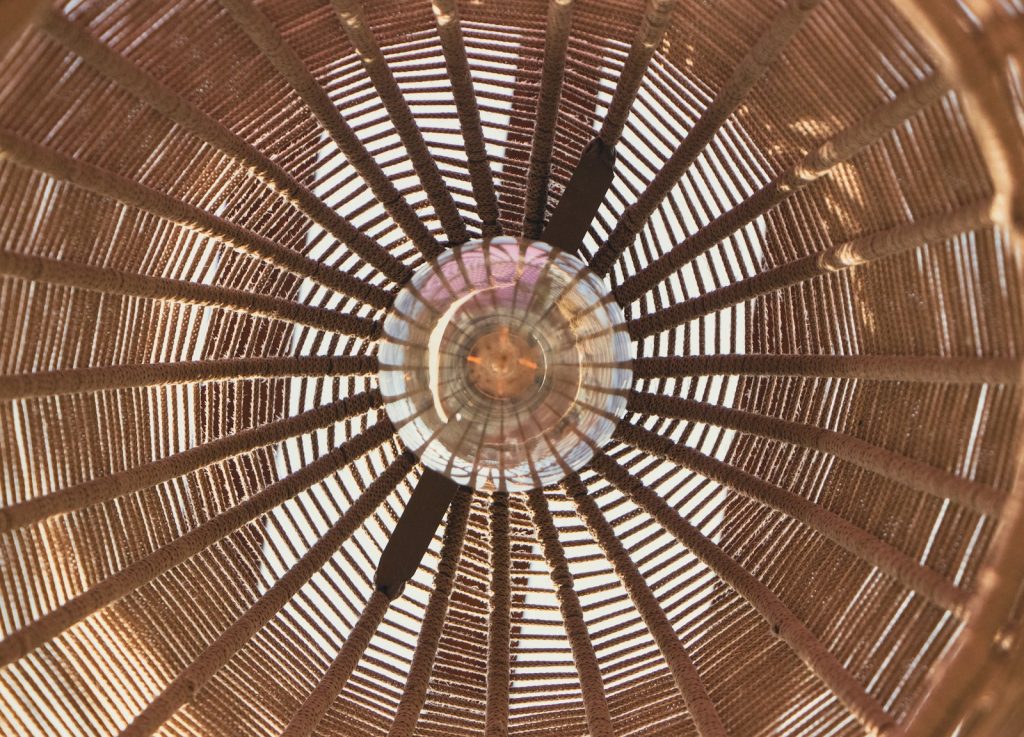
Honest buyer note: Our lamps are handwoven by village artisans in Bali and Java, so expect natural colour variation and a size tolerance of roughly ±1–3 cm on larger shades. All prices, MOQs, lead times and container counts are indicative ranges (2024–2025, FOB Indonesia) and final pricing is by quote. Standard wiring is E27 at 220–240 V; we can supply CE-compliant wiring or shade-only (no electrics) so you meet UL/UKCA or local standards in your market — we don’t imply certification we don’t hold. Natural fibre is moisture-sensitive, so we dry, treat and pack appropriately and recommend acclimatisation on arrival. Rattan is generally not CITES-listed. We coordinate vetted workshops and handle export documentation.
Who buys rattan lamps wholesale? In practice, the main rattan lamp buyers are importers, distributors, home décor brands, hospitality projects, online retailers and trade-only platforms that purchase by the pallet or container and resell into their own channels.
This page maps those buyer types, the volumes and specifications they usually need, and how they typically source from factories in Bali and Java like us at Bali Rattan Lamps.
As context: Bali Rattan Lamps is a B2B-first desk for handwoven pendant, floor and table lamps in natural rattan. Production is mainly in Bali and Cirebon (Java), using raw rattan from Kalimantan and Sulawesi. All commercial details below are based on our own operations plus current industry norms, and all ranges are FOB Indonesia, by quote, last verified June 2026.
—
## Main buyer types for wholesale rattan lighting
### 1. Lighting and home décor importers
These are classic wholesale lighting buyers who bring in containers and resell to retailers.
Typical profile
– Based in: US, Canada, EU, UK, Australia, Middle East
– Channels: sell to furniture stores, lighting showrooms, DIY chains, e‑commerce retailers
– Buying style: 1–3 containers per order, mixed SKUs; repeat if sell-through is good
Product focus
– High-volume “hero” pendants in 30–60 cm diameters
– Matching families (pendant, table, floor versions)
– Neutral tones: natural, light smoke, sometimes black wash
– 220–240V E27 wired for EU/UK/AU, shade-only for US/Canada
Volume and pricing patterns (indicative)
– MOQ by design: ~30–100 pcs, depending on size/complexity
– Mixed-SKU container: 10–40 SKUs per 20’–40′ HQ container is common
– FOB price ranges (by quote, June 2026):
– Small pendants (≤30 cm): ~US$8–18 FOB
– Medium pendants (35–45 cm): ~US$12–26 FOB
– Large feature pendants (50–70 cm): ~US$20–45 FOB
– Table lamps (shade + base, rattan only): ~US$18–40 FOB
– Floor lamps: ~US$35–85 FOB
Importers are usually very specific on:
– Carton efficiency and container loading plans
– Consistent shade size for planograms
– Wiring compliance (CE for EU/UK; they often handle UL/ETL in the destination market)
—
### 2. Furniture and lifestyle retail chains
These are multi-store brands that integrate rattan lamps as part of seasonal or permanent collections.
Typical profile
– Multi-branch brick-and-mortar and online
– Strong design direction and mood boards
– Need consistent repeatability and colour control
Product focus
– Collection-based stories: “Coastal”, “Japandi”, “Mediterranean”, “Boho Neutral”
– Coordinated weaves and shapes across pendants and lamps
– Custom finishes (e.g. whitewash, darker stains, custom cords, branded labels)
Volume and planning
– Per-SKU order: often 200–1,000 pcs for successful lines, sometimes more
– Season cycles: 2 main drops (SS, AW), plus smaller capsules
– Lead times:
– Development + sampling: 4–8 weeks
– Bulk production: 8–14 weeks depending on complexity and volume
Retail chains usually require:
– Pre-shipment inspections (either their QA agent or third party)
– Barcoding and custom packaging (swing tags, colour boxes for off-the-shelf retail)
– Detailed carton labelling to match DC requirements
—
### 3. Online-only lighting and décor brands
These rattan lamp buyers are often DTC brands or large marketplaces sellers.
Typical profile
– Strong product photography and content; dropship or warehouse model
– Deep understanding of their hero SKUs and returns metrics
– Margin-sensitive, especially on shipping and handling
Product focus
– Lightweight shades that reduce courier costs
– Flat-packable or nested sizes to optimise storage
– Differentiated weaves or shapes that photograph clearly
Order behaviour
– First order: often 1–3 pallets per design or a small LCL trial
– Scale: move to 20′ containers on proven SKUs
– Strong focus on:
– Shade-only for markets like the US (they assemble with compliant local wiring)
– Small revisions to reduce packing volume or damage in transit
—
### 4. Hospitality and project buyers
Hotels, resorts, restaurants and villa projects also buy rattan lamps wholesale, though often in smaller runs per design.
Typical profile
– Boutique hotels; resort groups; F&B groups; villa developers; interior design studios
– Project-based timelines and specific moodboards
– Often mixing rattan with other materials (fabric, metal, glass)
Product focus
– Statement pieces (large pendants, 60–90 cm+; clusters; custom shapes)
– Matching bedside lamps, floor lamps, wall sconces
– Outdoor-usage requests (for covered areas only; exposed outdoor use is high-risk for rattan)
Volumes and logistics
– Per-project order:
– Small boutique: 20–100 lamps total
– Large resort or F&B group: 100–500+ lamps across designs
– Shipping:
– For export projects, usually consolidate in LCL or share containers with FF&E
– For Bali/Indonesia domestic projects, truck/sea freight within the country
For project buyers, we spend more time aligning on:
– Photometric needs (shade density vs light output)
– Mounting systems (ceiling plates, cable lengths, swag hooks)
– Spare percentage (commonly +5–10% for maintenance and breakage over time)
—
### 5. Trade-only marketplaces and sourcing platforms
Some wholesale lighting buyers are platforms that aggregate multiple brands or white-label products.
Typical profile
– Trade marketplaces serving interior designers, architects, small retailers
– Generally prefer “private label” arrangements
– Highly price- and margin-driven; standardised specs
Product focus
– Fast-moving mid-size pendants with simple, repeatable weaves
– SKUs that can be used across many design typologies
– Shade-only or EU/UK standard wiring; consistent carton sizes across SKUs
Operational focus
– Large mixed-SKU containers with standardised inner boxes
– Stable repeat orders rather than one-off projects
– Robust QC documentation (photos, measurements, packing lists)
—
### 6. Small retailers and interior designers moving into wholesale quantities
Independent stores and studios sometimes graduate to MOQs that qualify as wholesale.
Typical profile
– Single or few-store retailers, concept stores, small interior design companies
– Previously buying via importers; now exploring direct factory sourcing
– Sensitive to MOQ and capital tied in inventory
Product focus
– 2–6 core designs that define their store aesthetic
– Smaller pieces or best-sellers their customers already buy
– Often partial to more artisanal and complex weaves
Volume and constraints
– First order might be:
– 1–2 m³ LCL (roughly 50–150 mixed lamps depending on size)
– Or share space in a 20′ container through a forwarder
– Need support on:
– Freight options (LCL vs FCL)
– HS codes and import context
– Packing standards and how to handle natural-material variance
If this sounds like your profile, you can plan your trip to our Bali office or start via WhatsApp to discuss a first RFQ and MOQ fit.
—
## What wholesale rattan lamp buyers typically care about
### Product, compliance and quality priorities
1. Handmade variance
Rattan lamps are fully handwoven. Even with jigs and standard patterns, expect:
– Size variance: typically ±1–2 cm on diameter/height
– Colour variance: natural rattan can differ between batches and even within a single lamp
– Weave tension: slight differences from artisan to artisan
Trade buyers usually accept this as part of the material’s character, provided the range is controlled and agreed upfront in specs.
2. Moisture and mould risk
Rattan is a natural fibre and absorbs moisture. Buyers should plan for:
– Proper drying and curing before weaving and after finishing
– Silica gel or desiccant packs in export cartons for humid routes
– Avoiding long-term storage in damp warehouses or non-climate-controlled basements
We prioritise kiln-drying and good airflow in storage, but once goods leave Indonesia, handling conditions at transshipment ports and destination warehouses matter. Light surface mould can be cleaned; deep mould or fibre degradation is harder to remediate, so prevention is key.
3. Wiring and certification
For export wiring we typically work with:
– Voltage: 220–240V systems
– Socket: E27, usually with PVC cable and simple metal or plastic fittings
– Regions: EU, UK, parts of Middle East, Australia/NZ (subject to local electrician sign-off)
For the US and Canada:
– Most buyers prefer shade-only (no wiring)
– They either:
– Add their own UL/ETL-listed cord sets and hardware, or
– Use the shades with off-the-shelf fixtures that are already certified
We do not issue UL/ETL certificates from Indonesia. For CE, we can align wiring components with CE norms, but final conformity and labelling is typically handled by the importer under their own brand.
4. Material origin and legality
– Main weaving locations: Bali and Cirebon (Java)
– Main rattan raw material origin: Kalimantan and Sulawesi
– HS code commonly used by importers:
– HS 9405.10 / 9405.20 for lamps and lighting fittings
– Some customs brokers may opt for 9403 (furniture) or 4602 (baskets/ware) for certain categories; this is a buyer–broker decision based on product form
Most commercial rattan species used in these lamps are not CITES-listed, so they generally don’t require CITES permits. Buyers should still check with their broker for any updated regulations in their country.
We do not claim blanket FSC or PEFC certification; certified material can be sourced on certain projects by arrangement, but it affects costs and lead time and must be agreed case-by-case.
—
## Typical MOQs, FOB ranges and container loading
Below is a compact reference for common product and logistics parameters for wholesale rattan lamp buyers. All figures are indicative and will vary by design, packing spec and time of year.
| Item | Indicative Range / Fact | Notes (FOB Indonesia, by quote, June 2026) |
|---|---|---|
| MOQ per design (pendants) | 30–100 pcs | Smaller MOQs possible for large/complex pieces at higher unit cost |
| MOQ per design (table/floor lamps) | 20–60 pcs | Includes rattan base; wiring or shade-only as agreed |
| Small pendants (≤30 cm Ø) | ~US$8–18 FOB/pc | Simple weaves, nested packing improves pricing |
| Medium pendants (35–45 cm Ø) | ~US$12–26 FOB/pc | Most common size for retail; cost flexes with weave density |
| Large pendants (50–70 cm Ø) | ~US$20–45 FOB/pc | Higher cube; carton optimisation important |
| 20′ container capacity | ~250–700 lamps | Depends strongly on size and nesting; large domes reduce count |
| 40′ HQ container capacity | ~600–1,800 lamps | Optimised for mixed SKUs and nesting strategies |
| Sample lead time | 2–6 weeks | From confirmed drawings/brief, excluding shipping |
| Bulk production lead time | 8–14 weeks | After deposit and final approval; add sea transit time |
| Standard deposit | 30–50% | Balance before shipment against final docs |
All pricing is indicative and confirmed only by formal quote against a specific design, quantity and packing specification.
—
## Export documentation, fumigation and shipping basics
### Export and customs
Most wholesale rattan lamp buyers require:
– Commercial Invoice and Packing List
– HS codes and Incoterms (we generally quote FOB Indonesian port)
– Certificate of Origin (FORM D/EUR.1 or similar if requested and applicable)
Rattan lamps usually go under HS 9405.1x/9405.2x (lighting fittings) for customs. Check with your broker; misclassification can affect duty rates.
### Fumigation and phytosanitary
For most rattan lamps:
– ISPM-15 requirements primarily apply to wooden pallets and crates.
– Some countries (or specific customs officers) may request fumigation certificates for natural fibre goods.
We can arrange:
– Fumigation with standard methods accepted by destination countries
– Fumigation certificate issued by an authorised provider
Phytosanitary certificates are not normally required for processed rattan products, but some buyers in stricter jurisdictions ask for additional documentation; this must be clarified during RFQ.
### Freight modes
Rattan lighting is volumetric, not heavy. Freight cost is dominated by cube:
– LCL: sensible for trial orders or small buyers; higher per‑m³ cost
– 20′ FCL: often optimal once consistent volume is reached; balances risk and cost
– 40′ HQ FCL: best cost-per-unit but higher inventory exposure
Most professional rattan lamp buyers work with their own freight forwarders. We coordinate with your nominated forwarder for stuffing, VGM, and cut-off times.
—
## OEM and custom development: who it suits
Not every buyer profile is ready for OEM/custom. Those who benefit most:
– Retail chains and strong DTC brands that can commit to repeat volumes
– Hospitality and project buyers needing specific sizes/forms
– Importers wanting differentiated catalogues vs competitors
Typical OEM process:
1. Brief and sketches – you share drawings or reference photos with dimensions.
2. Costing and feasibility – we indicate weave options, expected FOB range and MOQ.
3. Prototype – 1–3 physical samples, with photos for approval, then couriered if required.
4. Refinement – adjust size, weave density, rattan shade, or finishing.
5. Bulk production – following sign-off, with agreed QC checkpoints and packaging spec.
Because of sampling investments and development time, OEM/custom works best for buyers planning at least a few hundred units per SKU over the product’s life.
You can plan your trip to visit workshops, review prototypes in person, or start OEM discussions via WhatsApp for faster iteration.
—
## FAQs on who buys rattan lamps wholesale
Who are the main wholesale buyers of rattan lamps?
The main buyers are lighting and décor importers, furniture and lifestyle retail chains, online-only brands, hospitality and project specifiers, trade-only marketplaces, and growing independent retailers or interior designers that can meet MOQs.
What is the typical MOQ for wholesale rattan lighting?
For pendants, most factories work with 30–100 pcs per design; for table and floor lamps, 20–60 pcs per design is common. Exact MOQ depends on size, complexity and whether items can be nested to optimise packing.
Do wholesale rattan lamp buyers prefer wired or shade-only?
For EU, UK, and Australia, many buyers take 220–240V E27 wired versions and manage CE conformity under their own brand. For US and Canada, shade-only is more common, with buyers adding locally certified cord sets or using existing fixtures.
What Incoterm and HS code are usually used for rattan lamps?
Most trade is done FOB Indonesian ports, with buyers arranging sea freight. HS 9405.10 or 9405.20 is commonly used for lamps and lighting fittings, though some brokers may classify certain items under other headings depending on product design.
Can small shops or designers buy direct from Bali Rattan Lamps?
Yes, provided they can meet the MOQ per design and overall volume that makes export practical. For very small quantities it may be more efficient to buy from importers in your country, but we regularly support first-time direct-import buyers with LCL or shared-container shipments.