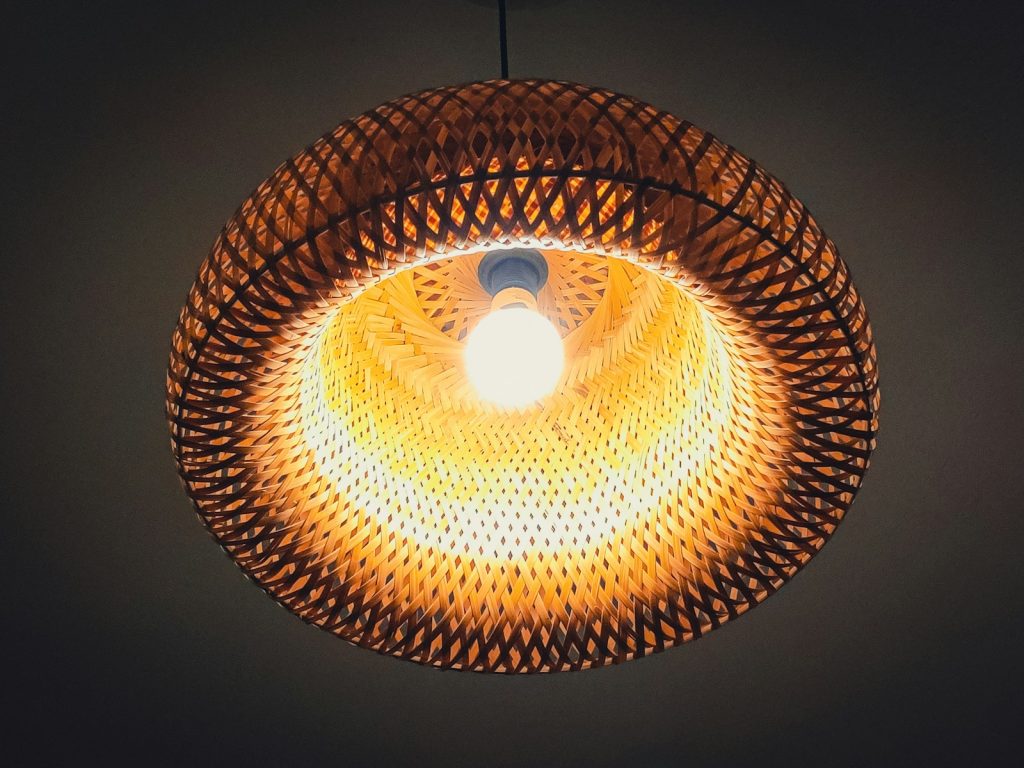
Honest buyer note: Our lamps are handwoven by village artisans in Bali and Java, so expect natural colour variation and a size tolerance of roughly ±1–3 cm on larger shades. All prices, MOQs, lead times and container counts are indicative ranges (2024–2025, FOB Indonesia) and final pricing is by quote. Standard wiring is E27 at 220–240 V; we can supply CE-compliant wiring or shade-only (no electrics) so you meet UL/UKCA or local standards in your market — we don’t imply certification we don’t hold. Natural fibre is moisture-sensitive, so we dry, treat and pack appropriately and recommend acclimatisation on arrival. Rattan is generally not CITES-listed. We coordinate vetted workshops and handle export documentation.
A seagrass pendant light wholesale program means buying handwoven seagrass and other natural‑fiber lamp shades in volume directly from Indonesian workshops, with clear specs, indicative FOB ranges, MOQs and export support. At Bali Rattan Lamps, we coordinate design, weaving, finishing and consolidation for seagrass and mixed‑fiber pendants from Bali and Java for importers, lighting brands, retailers and project buyers.
Seagrass & Natural-Fiber Pendant Program Overview
Seagrass is one of the most requested materials in our coastal and boho collections. In practice, “seagrass” in the trade usually means:
– True marine seagrass or similar coastal grasses, sun‑dried and twisted into ropes
– River grasses and wild reeds treated and used in the same way
– Often blended with cotton cord or rattan peel for strength
We group seagrass with other soft natural fibers that behave similarly in weaving and in long‑term use:
– Water hyacinth (encroaching aquatic plant, dried and twisted)
– Abaca (banana plant fiber, stripped, twisted or braided)
– Mendong (wetland grass from Java, also called “rush” in some catalogues)
On this page we cover:
– Seagrass pendant styles, sizes and constructions we can produce
– How seagrass, water hyacinth, abaca and mendong differ in weave and durability
– Indicative 2024‑2025 FOB Indonesia price ranges and MOQs by type
– Container loading, lead times and QC for natural‑fiber lamp shades
– Honest guidance on moisture, mould risk and handmade variation
– Wiring and certification options for EU, UK, US and other markets
All details below are based on our 2024–2025 production with village workshops in Bali and Java (mainly Cirebon area), with final QC and export coordination in Bali. Prices and MOQs are indicative ranges, FOB Indonesia, by quote, last verified June 2026.
Seagrass Pendant Designs & Weaves We Produce
Our seagrass and mixed‑fiber pendants fall into a few main construction styles. Within each style we can vary diameter, height, weave density and fringe/edge treatments.
1. Open-Weave Seagrass Basket Pendants
– Shape: Bell, dome, drum and tapered basket forms
– Weave: Loose, airy lattice using 3–5 mm seagrass rope or flat plaited strips
– Light effect: Visible bulb, strong shadow play; good for decorative, not task, lighting
– Typical dimensions:
– Small: Ø 25–30 cm x 20–25 cm high
– Medium: Ø 35–45 cm x 25–35 cm high
– Large: Ø 50–60 cm x 35–45 cm high
– Construction: Welded wire frame (mild steel), anti‑rust coated, then hand‑laced with seagrass; or fully free‑form without metal for lighter pieces
Indicative 2024‑2025 FOB range (shade only, ex‑factory Indonesia, by quote):
– Small: ~US$6–10
– Medium: ~US$9–15
– Large: ~US$14–24
Open weaves are faster to produce and ventilate better, which helps in more humid destinations and in covered outdoor areas (still under a roof, never direct rain).
2. Tighter Seagrass Drum & Barrel Pendants
– Shape: Straight drum, barrel and low “UFO” discs
– Weave: Half‑open plait or close‑coil wrap around metal frames
– Light effect: Softer diffusion, less shadow; good above dining tables and counters
– Typical dimensions:
– Ø 30 x 22 cm
– Ø 40 x 28 cm
– Ø 50 x 30–35 cm
– Construction: Round or polygonal steel frames, powder‑coated; seagrass stitched in spiral or vertical panels
Indicative 2024‑2025 FOB range (shade only):
– Ø 30 cm: ~US$8–13
– Ø 40 cm: ~US$11–18
– Ø 50 cm: ~US$16–26
Tighter weaves are more labour‑intensive and use more material, which drives price and lead time. They also hold shape better for larger diameters.
3. Mixed-Fiber Seagrass + Rattan or Cotton Pendants
– Shape: Domes and drums with banding or striping
– Weave:
– Seagrass bands alternating with rattan core or peel
– Seagrass over cotton rope for smoother texture
– Light effect: Varied; often semi‑open with decorative stripes
– Typical use: Gives a “fuller” look than pure seagrass; popular in coastal US/EU markets
Indicative 2024‑2025 FOB range (shade only):
– Ø 30–40 cm: ~US$10–17
– Ø 45–55 cm: ~US$15–27
Mixed weaves improve structural stability and help control warping, especially in climates with big humidity swings.
4. Water Hyacinth Pendant Wholesale Range
Water hyacinth is bulkier than seagrass and has a softer, thicker braid.
– Styles: Fat bell shapes, double cones, “beehive” pendants
– Weave: Thick 6–10 mm braids over metal frames, often with decorative plaits at rim
– Light effect: Warm and diffuse; the fiber volume blocks more direct glare
– Sizes:
– Ø 30–35 cm small bells
– Ø 40–50 cm medium
– Ø 55–65 cm statement pendants
Indicative 2024‑2025 FOB range (shade only):
– Smaller sizes: ~US$9–15
– Medium: ~US$13–22
– Large: ~US$20–32
Because water hyacinth is heavier and holds more moisture, we are stricter on drying and packing, which is reflected in QC and cost.
5. Abaca Lampshade Export Styles
Abaca fibers give a more refined, rope‑like look.
– Styles:
– Fine wrapped drums for hotel rooms and restaurants
– “Grass skirt” fringe pendants combining abaca and seagrass
– Weave:
– Tight spiral wrapping around a frame for clean drums
– Knotted and fringe techniques for boho pieces
– Sizes: From small Ø 20–25 cm bedside pendants up to Ø 60 cm lobby feature shades
Indicative 2024‑2025 FOB range (shade only):
– Small contract drums (Ø 20–25 cm): ~US$7–11
– Medium drums (Ø 30–35 cm): ~US$9–15
– Large fringe/focal pendants (Ø 45–60 cm): ~US$16–30
Abaca lampshade export buyers often request more exact repeatability and colour consistency. We pre‑select yarn lots and standardize frame jigs for these lines.
6. Mendong & Mixed Rush Pendants
Mendong is used where a very tight, flat weave is needed.
– Styles:
– Flat‑sided drums with “woven mat” look
– Shallow saucer pendants
– Weave: Fine over‑under matting over frame, sometimes double‑layered
– Use: Often for more minimalist, Japanese or Nordic‑inspired lines
Indicative 2024‑2025 FOB range (shade only):
– Ø 30–40 cm: ~US$9–16
– Ø 45–55 cm: ~US$14–24
Specs, Sizing & Handmade Tolerances
Every shade is hand‑woven around a frame or free‑formed, so some variation is normal. We engineer frames and jigs to control this, but natural fiber and hand tension introduce tolerances.
Typical tolerances for larger shades:
– Diameter: approx. ±1–3 cm
– Height: approx. ±1–2 cm
– Color: slight variation between batches depending on harvest and sun‑drying
If your clients or projects need stricter tolerances (e.g. multi‑pendant linear installations at exact heights), tell us during RFQ. We can:
– Tighten frame jigs and QC thresholds
– Recommend fibers less prone to stretch (e.g., mixed seagrass + rattan)
– Avoid the largest sizes for very strict fit‑outs
Available Finish Tones
Without dyes or chemical stains, the palette is naturally limited and honest:
– Seagrass:
– Light straw to mid honey when new
– Gradual mellowing and slight darkening over years with UV exposure
– Water hyacinth:
– Light beige to medium tan, often with more visible fibre texture
– Abaca:
– From pale cream (bleached) to deeper golden tones
– Mendong:
– Pale straw; we can achieve darker tones using smoke/heat treatments, but not exact Pantone matches
We can supply small lab‑dipped reference swatches, but expect variation between production batches. Clients sensitive to colour drift should build this into their merchandising or design plans.
Seagrass vs Rattan, Water Hyacinth & Abaca: Practical Comparison
| Material | Feel & Look | Best For | Relative Durability Indoors | Moisture Sensitivity |
|---|---|---|---|---|
| Seagrass | Rope‑like, slightly coarse, visible twists | Coastal/boho pendants, open weaves | Good with normal indoor humidity | Moderate – can swell if very damp |
| Water hyacinth | Thicker braids, soft rounded texture | Chunky statements, diffused light | Fair – heavier, can sag if damp repeatedly | Higher – needs careful drying/packing |
| Abaca | Finer rope, neater wraps and fringe | Refined drums, fringe and hospitality | Good – strong fibre, holds tension | Moderate – similar to seagrass |
| Mendong | Flat, mat‑like, tight weave | Minimalist drums, saucers | Good – stable in flat weaves | Moderate – flat panels can warp if very wet |
| Rattan (for comparison) | Firm cane/peel, more rigid frameworks | Structural frames, long pendants | Very good indoors | Lower – but still not rain‑proof |
Rattan used in our mixed pendants comes primarily from Kalimantan and Sulawesi, processed in Java. As of mid‑2026, commonly used commercial rattan species for furniture and lighting are generally not CITES‑listed. Local harvest and transport rules still apply, and we work with established suppliers familiar with Indonesian regulations.
FOB Price Ranges, MOQs & Container Loading
We aim to give trade‑credible ranges, not fixed promises. All pricing is indicative 2024–2025, last verified June 2026, FOB Indonesia (usually Tanjung Priok or Tanjung Perak ports), by confirmed quote after specification.
Indicative FOB Ranges by Category (Shade Only)
- Seagrass open‑weave pendants
- Approx. US$6–24 per piece from Ø 25 to 60 cm, depending on design and order mix.
- Tight‑weave seagrass drums/barrels
- Approx. US$8–26 per piece for Ø 30–50 cm.
- Water hyacinth pendant wholesale range
- Approx. US$9–32 per piece for small to large bells and beehive shapes.
- Abaca lampshade export drums & fringe
- Approx. US$7–30 per piece from small contract drums to large fringed feature pendants.
- Mendong & rush pendants
- Approx. US$9–24 per piece for Ø 30–55 cm tight‑weave designs.
Adding complete wiring sets (E27 lampholder, cable, ceiling cup) typically adds ~US$1.20–3.00 per pendant depending on spec and certification requirements, or you can import shade‑only and wire locally.
MOQs & Assortment Strategy
We work primarily B2B with:
– Importers and wholesalers
– Retail chains and concept stores
– Lighting and interior brands
– Hospitality and project buyers
Typical MOQs (can vary by design and workshop):
– Per individual SKU: 30–50 pieces per size/colour
– Per mixed order: 150–300 pieces total across a seagrass/natural‑fiber range
– For OEM/custom designs: Practical starting point is 100–150 pieces per new design across all sizes for the first run
For LCL (less‑than‑container) orders we still need enough volume to pack safely and make freight reasonable. Very small trial orders are usually managed as paid samples plus courier shipping.
Container Loading Estimates
How many seagrass pendants you can load depends strongly on nesting (small inside medium inside large) and whether electrics are pre‑installed. As a working guideline:
– 20‑foot container:
– Roughly 700–1,200 mixed seagrass/water hyacinth shades (nested, shade‑only)
– 40‑foot HQ container:
– Roughly 1,800–3,000 shades (nested, shade‑only)
High‑volume abaca and mendong drums (with less nesting) reduce these numbers. For confirmed projects, we produce a packing simulation once the range plan is fixed.
To scope your range and estimate landed cost, you can plan your trip through a WhatsApp or video call with our team to align designs, volume and container strategy before we quote.
OEM & Custom Design Options
Many of our seagrass pendant light wholesale customers start from mood boards or existing SKUs and adapt for their brand.
What We Can Customise
– Shape: Dome, bell, conical, drum, barrel, capsule, saucer
– Size: Within practical limits — up to about Ø 70 cm in seagrass/water hyacinth for safe export; larger sizes case‑by‑case
– Weave pattern:
– Open lattice vs. semi‑open vs. tight wrap
– Mixed bands of seagrass, rattan, abaca
– Vertical vs. horizontal pattern orientation
– Edge details:
– Clean cut edges
– Rolled rims
– Fringe lengths and density (for abaca/seagrass fringe pendants)
– Color accents:
– Natural tone focus
– Limited use of non‑toxic stains or wrapped coloured yarns (with the understanding they are not UV‑proof like synthetic cords)
We generally prototype on existing frames where possible to save tooling cost. For new metal frame geometries, there can be a one‑time jig/frame development fee and a higher first‑order MOQ.
Development Timeline
For a new OEM seagrass or mixed‑fiber pendant:
– Design brief to first samples: ~3–5 weeks
– Sample approvals and adjustments: ~2–4 weeks (depending on feedback cycles)
– First production run:
– 45–70 days for up to ~1,000 pcs mixed range
– Larger volumes to be phased or extended
Shipping time from Indonesia will depend on route and current freight conditions; as of mid‑2026 most EU/US sea freight lanes run ~4–6 weeks port‑to‑port, subject to change.
Production, QC & Export Workflow
Our role is to connect your brand or project with reliable workshops and manage consistency.
Where & How Your Shades Are Made
– Weaving:
– High‑volume seagrass, water hyacinth, abaca and mendong work: mainly in village clusters around Cirebon, Java
– Smaller runs, prototypes and more complex mixed weaves: Bali and Java as appropriate
– Frames:
– Metal frames fabricated and coated in Java; jigs stored for repeatability
– Design, finishing, consolidation:
– Coordinated from Bali, where our team handles finishing checks, documentation and export liaison when shipments move via Bali
– For Java‑direct shipments we align QC at source and at the consolidation warehouse
Quality Control Focus Points
For natural‑fiber pendants, QC is especially strict on:
– Frame alignment and symmetry
– Evenness and tightness of weave (no loose loops or gaps beyond design intent)
– Fibre dryness before packing (critical for mould prevention)
– Secure attachment of hanging loops or frame hooks
– Dimensional checks against spec within agreed tolerances
For ongoing programs, we create signed reference samples to lock in finish expectations.
Wiring, Certification & Shade-Only Options
We supply most seagrass and natural‑fiber pendants either:
– As shade‑only, for you or your local electrician to wire to your market’s standards; or
– With basic wiring sets installed, where regulation allows and where it makes logistical sense.
Standard Wiring Options
– Lampholder: E27 as the default
– Voltage: 220–240V regions
– Cable: PVC or textile cable per your spec, usually 1–2 m length
– Canopy/ceiling cup: Metal or plastic, colour‑matched as requested
For EU customers, we follow CE‑compliant component sourcing and basic assembly practices, but certification of the complete luminaire in your market remains your responsibility.
For UK, US, Canada and other regions with specific schemes (UKCA, UL, ETL, etc.):
– We can ship shade‑only for local wiring
– You or your local partner handle any formal testing/approval
– We can adjust frame details (e.g. cable entry points, strain relief space) to make local wiring easier and more compliant
We do not claim blanket UL, ETL, UKCA or other market‑wide certification for all products. Compliance is confirmed case‑by‑case by the importer or brand.
Moisture, Mould Risk & Care in Real Use
Natural fibers are not plastic. They respond to moisture, temperature and light.
Before and During Shipping
To manage moisture and mould risk we:
– Sun‑ and air‑dry fibers thoroughly before weaving
– Avoid packing shades immediately after weaving; they rest to equalise moisture
– Use desiccant and ventilated carton designs where helpful
– Aim to avoid long storage in non‑ventilated, humid warehouses before container stuffing
Even with good practice, shipping through tropical and temperate zones can introduce humidity spikes. We plan packing and documentation so your warehouse team knows to unpack and ventilate on arrival.
On Arrival & In Use
We recommend importers and retailers:
– Unpack promptly once the shipment clears customs
– Store in a dry, ventilated space; avoid placing cartons directly on damp floors
– Allow shades to acclimatise for 24–72 hours before installation in air‑conditioned interiors
End‑user care guidelines you can pass on:
– Use indoors or in covered, well‑ventilated outdoor areas only
– Avoid direct rain, prolonged high humidity without airflow, or positioning directly above steam sources
– Dust with a soft brush or vacuum with soft brush attachment
– Spot‑clean lightly with a damp cloth only when necessary, then dry thoroughly
Water hyacinth in particular holds more moisture and is more prone to mould if stored very damp. For high‑humidity markets or bathrooms/spas, we may suggest tighter‑weave seagrass or mixed rattan options instead.
Why Work With Bali Rattan Lamps for Seagrass & Natural Fibers
– Focused B2B desk: We work with importers, brands and projects; our communication, sampling and QC are organised for trade, not souvenir retail.
– Material depth: We handle rattan, bamboo and seagrass/water hyacinth/abaca/mendong, so we can match your design to the fiber that will perform best in your market, not just what is fashionable.
– Honest limits: We will tell you if a design is too large, too tight, or too exposed for seagrass or water hyacinth in your climate, and suggest alternatives.
– Integrated export support: Coordination with vetted workshops in Bali and Java, consolidation, packing specs, and liaison with your forwarder or nominated agent.
To start a range plan, request our current catalogue or arrange a sample run, you can plan your trip with us via email or WhatsApp so we understand your market, channels and volume targets before quoting.
FAQs: Seagrass & Natural-Fiber Pendant Lights Wholesale
What is the difference between seagrass and rattan for pendant lights?
Seagrass is a softer, rope‑like fiber twisted from dried coastal or river grasses. It gives a more casual, coastal texture and is usually woven around a frame. Rattan is a solid climbing palm cane or its outer peel; it is more rigid and used both as a structural frame and as a weaving material. Rattan generally offers higher structural strength and dimensional stability for very large or long pendants, while seagrass gives a looser, more relaxed look but is more sensitive to humidity and requires careful drying and use.
How durable are water hyacinth pendants compared with seagrass?
Water hyacinth pendants feel chunkier and softer because the braids are thicker. Indoors in normal humidity they perform well, but water hyacinth holds more moisture than seagrass and is more prone to sagging or mould if it stays damp for long periods. Seagrass pendants, especially mixed with rattan or abaca, are generally lighter and slightly more dimensionally stable. For very humid markets or covered outdoor spaces, we often recommend seagrass or mixed‑fiber designs instead of pure water hyacinth for better long‑term shape retention.
What are your typical FOB prices and MOQs for seagrass lamp shade bulk orders?
Indicatively for 2024–2025, most seagrass pendant shades for bulk orders fall between about US$6 and US$26 FOB Indonesia per piece, depending on size, weave complexity and volume mix, with water hyacinth and abaca pendants reaching up to around US$30–32 for larger or more complex designs. Typical MOQs are 30–50 pieces per SKU and 150–300 pieces total per mixed order, with higher starting MOQs for completely new OEM designs. All pricing is indicative, FOB Indonesia, by quote and last verified June 2026; we confirm exact ranges once we review your specifications and volume.
How should I manage moisture and mould risk in seagrass and other natural-fiber pendants?
We manage drying and packing at source, but you still need to handle arrivals carefully. Unpack promptly after customs clearance, store in a dry and ventilated warehouse, and allow shades to acclimatise before delivery to stores or installation. Avoid long‑term storage in damp or unventilated conditions. For end users, recommend covered, dry locations; no direct rain; and regular light cleaning rather than soaking or heavy washing. In very humid climates or bathroom/spa applications, consider tighter weaves and mixed‑fiber designs, or shift some SKUs to rattan for greater stability.
Can you supply wired pendants with CE or UL certification, or should we import shade-only?
We can supply basic 220–240V E27 wiring sets using CE‑compliant components for EU‑focused projects, but final certification of the complete luminaire in your market is the importer’s responsibility. For UL, ETL, UKCA and similar schemes, most buyers choose shade‑only and wire locally to match their specific standards and testing procedures. We can adapt frames to make local wiring easier (e.g. cable routing and strain relief). We do not claim blanket UL, ETL or UKCA certification across our catalog; compliance is verified case‑by‑case by you or your appointed lab.