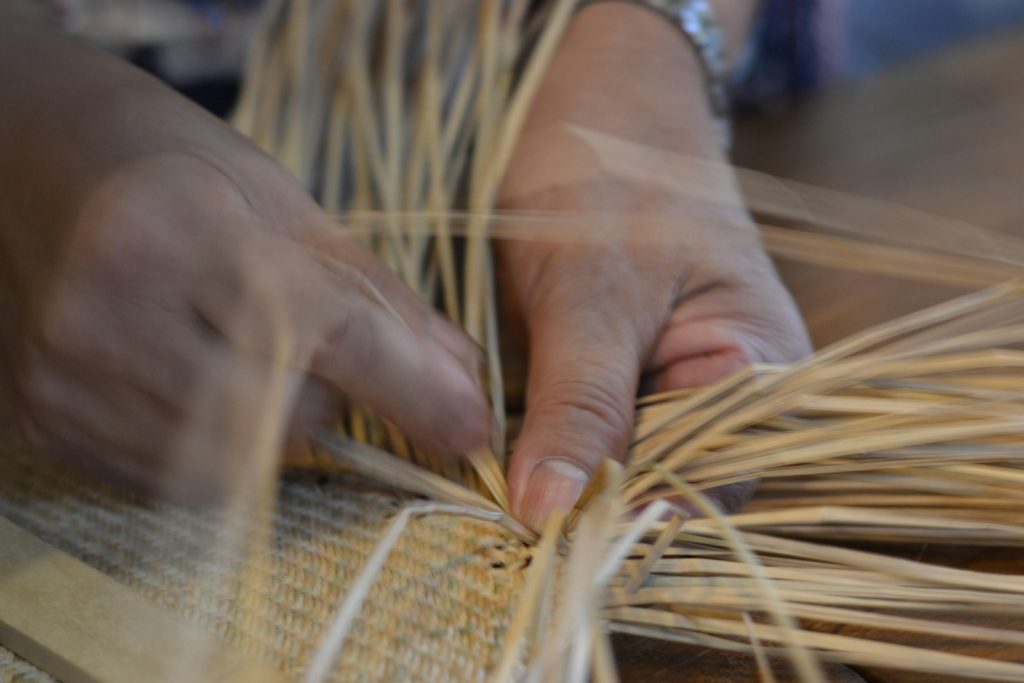
Bali Rattan Lamps is a bali rattan lighting supplier focused on honest B2B trade: wholesale, OEM and custom rattan pendant, floor and table lamps, exported from Indonesia. We act as a specialist export and QC desk, coordinating vetted village workshops in Bali and Java for overseas retailers, brands, designers and importers who want rattan lighting with clear specs, realistic lead times and transparent risks.
About Bali Rattan Lamps — who we are and what we actually do
“About Bali Rattan Lamps” is simple: we are a rattan lighting export team based in Bali, not a single factory and not a marketing agency. We sit between:
– Village weavers and finishing units in Bali and Cirebon (Java)
– Established Indonesian exporters and consolidators
– B2B buyers who need trade-level information, not tourist prices
Our role:
– Curate and develop ranges of handwoven rattan and natural-fiber lampshades and wired lamps
– Set and negotiate realistic FOB ranges and MOQs with workshops/exporters
– Standardise materials, finishing, wiring and QC for international orders
– Explain the realities of handmade natural-fiber goods: variance, moisture risk, and certification limits
We specialise only in rattan and related natural fibers (bamboo, seagrass, water hyacinth, banana fiber) for lighting — pendants, floor lamps, table lamps and wall lights — not furniture, not decor.
You can treat us as an “honest rattan supplier Indonesia” desk: one point of contact, multiple vetted makers, one export flow.
How our rattan lighting supply chain is structured
Where weaving and finishing happen
We work along a consistent geographic split that many serious Indonesian lighting exporters use:
– Design, sampling, finishing and QC: primarily in Bali
– Volume weaving: mainly in Cirebon and surrounding villages in Java
– Raw rattan sourcing: from Kalimantan and Sulawesi, supplied through licensed traders
This division lets us combine:
– Bali’s design sensibility and finishing control
– Java’s capacity and cost-efficiency for large orders
All products are made in Indonesian village workshops, not industrial metal factories. Frames (if used) are handmade in simple jigs; weaving and binding are all done by hand.
Materials we use (and what we avoid saying)
We work primarily with:
– Natural rattan peel (slimit / sega) – for finer weaves and bindings
– Core rattan (batang) – for structural rings and frames
– Bamboo – sometimes combined for ribs on larger domes
– Seagrass and water hyacinth – braided covers over rattan frames for certain OEM looks
Clarity points:
– Rattan and CITES: The commercial species we use are generally not CITES-listed, so they are normally exportable without CITES permits. Local harvest regulations and Indonesian forestry rules still apply, and we follow exporter documentation requirements.
– Sustainability claims: Rattan is fast-growing and supports rural livelihoods, but we do not label products “certified sustainable” unless tied to a specific FSC/PEFC certificate from the supplier. We do not greenwash.
– Finishing: Clear and tinted water-based lacquers, sometimes PU for darker tones; optional flame-retardant topcoat only if requested and documented (for commercial projects, subject to test reports).
What “honest” means in our B2B context
Indicative FOB ranges, not fantasy pricing
We publish and quote prices as ranges, always flagged along the lines of:
“Indicative 2024–2025 range, FOB Indonesia, by quote, last verified June 2026.”
Typical order-level patterns (all ranges are indicative only):
– Small–medium handwoven pendants (Ø25–40 cm):
~USD 7–15 FOB per piece at 200–500 pcs mixed styles
– Large pendants (Ø50–70 cm):
~USD 14–32 FOB at 100–300 pcs
– XL statement shades (Ø80–100+ cm):
~USD 30–70+ FOB, depending on complexity and frame
– Floor lamps (with metal base & rattan shade):
~USD 35–90 FOB at 50–200 pcs
– Table lamps (with rattan shades, basic bases):
~USD 16–45 FOB at 100–300 pcs
These are not fixed price lists. Final costing depends on:
– Exact size, weave density and frame complexity
– Finish (raw, bleached, colored, protected)
– Wired vs shade-only
– Packing standard and drop-test requirements
– Volume per SKU vs mixed loads
We quote formally only after checking your brief with the relevant workshop/exporter.
MOQs and lead times as ranges
Common patterns we see across our vetted partners:
– MOQ per design: typically 30–50 pcs per size/color for standard pendants
– Mixed-order MOQ: around 100–150 pcs total per shipment for economical FOB terms
– Lead times:
– 4–6 weeks for repeat orders in low season
– 8–12+ weeks in high season or for new/OEM designs
Again, these are indicative 2024–2025 ranges only. For any serious RFQ, we confirm workable MOQs and lead times by quote and in writing.
Funding and how we get paid
We are a commercial B2B desk. Revenue comes from:
– Margin on products when you buy through us as the supplier/export coordinator; and/or
– Commission from the Indonesian exporter we place your order with
We only work with exporters and workshops we’d be comfortable attaching our name to, and no one can pay to change what we publish; if you proceed with our partner they may pay us a referral fee at no extra cost to you.
Wiring, certification and shade-only options
This is a critical part of our role as a rattan lighting export team. We stay very clear here.
Standard electrics we can provide
For wired lamps we typically specify:
– Lampholders: E27 (most common for EU and many global markets)
– Voltage: 220–240V systems
– Cable: PVC or textile-covered flex, lengths and colors by specification
– Canopy / ceiling rose: metal (often powder-coated) or matching finish
We work only with Indonesian component suppliers whose parts are designed to be CE-compliant for EU use, but the finished lamps themselves are not individually certified by a notified body by default.
CE, UL, UKCA – what we can and cannot claim
– CE for EU:
– We can help build to CE-oriented standards (E27, 220–240V, earthing where required, proper strain relief, labeling).
– Some component makers provide CE documentation for their parts.
– We do not claim blanket CE certification for every finished lamp, as third-party lab testing and documentation must be arranged per model and per buyer/project.
– UL (North America) and UKCA (UK):
– We do not ship lamps as UL- or UKCA-certified products.
– US, Canadian and UK buyers usually import shade-only or rewire locally using their own certified factories.
– Commercial projects:
– For hotels/hospitality, we usually recommend shade-only export, and you handle wiring and certification with your regional partner to meet local codes.
We will never write “all our lamps are CE/UL/UKCA certified” because that would simply not be true.
Shade-only export
A large share of our shipments go out without any electrics, especially for:
– US/Canada
– UK and some EU clients with their own wiring partners
– Buyers focused on shades for Ikea-type bulb sets
Shade-only benefits:
– Avoids certification ambiguity
– Reduces damage risk in transit (no delicate metal canopies, no glass)
– Cuts per-unit weight and shipping cost
If you want wired samples and shade-only bulk, we can split orders accordingly.
Quality control and realistic tolerances
As Materials, Finishing & QC Editor, this is my daily work.
Size and shape variance
These are handmade natural-fiber goods built on simple frames and jigs. A perfectly identical “clone” is not realistic.
Typical tolerances we insist our workshops maintain:
– Diameter / height tolerance: approx ±1–3 cm on large shades (Ø50 cm and above)
– Ovality / roundness: slight variation is normal on very open weaves
For tight retail programs or big-box retail, we can refine jigs and introduce additional gauges, but absolute millimetric consistency is not feasible for village weaving at trade-viable pricing.
Color and surface variance
Natural rattan is not uniform:
– Color bands and “tiger stripes” from the vine are normal
– Sun-drying can create tone shifts within a batch
– Bleached finishes may show subtle marbling from fiber density differences
Our approach:
– Work to color families, not Pantone-perfect matches
– Use reference samples and photos to align expectations
– Flag up-front if a client requests an unrealistically narrow tolerance for a natural material
Moisture and mould risk – how we manage it honestly
Rattan is hygroscopic. Moisture is the number one enemy in export.
Key risk points:
– Humid weaving environments
– Insufficient pre-export drying
– Long sea transit in tropical shoulder seasons
– Condensation in unventilated containers and warehouses
What we do with our vetted partners:
1. Drying:
– Sun-drying and/or kiln-assisted drying before weaving for thicker components
– Post-weaving airing in dry, covered spaces before packing
2. Finishing:
– Sealing coats that slow moisture ingress (they don’t make rattan “waterproof”)
3. Packing:
– Anti-mould sachets in each master carton
– Vent holes where appropriate
– Polybags only as necessary (too much plastic traps moisture)
4. Pre-shipment checks:
– Spot checks with moisture meters on frames and dense weaves
– Visual smell and surface inspection for early mould signs
Your role as a buyer:
– Plan acclimatisation time on arrival; do not move cartons straight from container to high-AC retail floors.
– Store in well-ventilated, dry spaces; open cartons if conditions are very humid.
We will discuss moisture risk openly for every lane and season, particularly for long routes.
How we work with B2B buyers
Typical buyer profiles
We mainly serve:
– Importers and wholesalers building rattan lighting ranges
– Furniture and decor retailers adding lighting to an existing category
– Interior designers and hospitality procurement teams
– Brands needing OEM/private-label collections made in Indonesia
Order sizes range from mixed LCL shipments for first trials to full 20ft/40ft containers for programs.
Process from enquiry to shipment
1. Initial brief:
– Target markets (EU, UK, US, etc.)
– Product types (pendant, floor, table, wall)
– Price bands and target FOB ranges
– Wired vs shade-only
2. Material & spec alignment:
– Discuss material options, weave styles, finishes
– Agree realistic tolerances and QC points
3. Indicative pricing & MOQ ranges:
– Share design-by-design or family-by-family ranges
– Adjust specs to meet budgets where possible
4. Sampling:
– Paid samples on standard lead times
– Feedback loop on materials, finish, dimensions
5. Order and production:
– Formal PO with acknowledged specs, tolerances and QC stages
– Mid-production photo/video updates on request
6. Pre-shipment QC:
– Sampling-based inspections against spec sheets
– Packing checks (labels, barcodes, carton markings if required)
7. Export & logistics coordination:
– Work with your nominated forwarder or introduce reliable export partners
For a detailed discussion of your project, you can plan your trip through Bali Rattan Lamps — or simply WhatsApp our export desk for faster RFQs and sample planning.
Container loading, packing and logistics
How many rattan lamps fit in a container?
It varies by design, nesting and packing spec, but indicative 2024–2025 ranges:
– 20ft container:
– Roughly 300–700 large pendants (Ø50–70 cm) nested
– Up to 1,000+ small pendants (Ø25–35 cm) if designs nest well
– 40ft container:
– Roughly 700–1,500 pendants, depending on mix and nesting
Non-nesting shapes (drums, squares) drastically reduce counts. Adding floor lamps with bases also reduces counts and raises packing complexity.
Packing standards
We usually work with:
– Bulk nested packing in export cartons for B2B wholesale
– Individual polybags and labels on request
– Retail boxes and drop-test specs if you provide dimensions and standards
Carton-level:
– Double-wall cartons for export
– Clear external markings (item code, color, qty, “Made in Indonesia”)
– Anti-mould bag per carton as default
Export terms
Most partners quote on:
– FOB main Indonesian ports (e.g., Tanjung Priok for Java production, with consolidation as needed)
– Occasionally Ex-works for buyers with established Bali consolidation hubs
We align with your forwarder’s requirements and deliver cargo ready at port with standard documentation.
Our editorial team and roles
We use the word “editor” deliberately. We treat product specs and expectations like an editorial process, not a brochure.
– Materials, Finishing & QC Editor (Kadek Mahendra):
– Raw materials, drying, finishing systems
– Size/color tolerances and multi-stage QC design
– Moisture/mould risk management and packing standards
– Design & OEM Editor:
– Range building, trend alignment and technical drawings
– OEM/private-label development with brands and retailers
– Export & Compliance Editor:
– Documentation, HS codes, packing lists, invoices
– Wiring specs, CE-oriented builds and shade-only structures
Person schema on our site links these names and roles transparently so you know who actually handles your project.
Why work with an “honest rattan supplier Indonesia” desk instead of a random factory?
- Factory-direct
- Lowest per-unit price, but often limited design depth, inconsistent QC, and little support on certification or moisture issues.
- Bali-only artisan
- Beautiful craft, but typically higher costs, limited capacity, and weak export/logistics capability at scale.
- Our coordinated desk
- Village production in Bali/Java, export-grade finishing/QC in Bali, and a single B2B contact that understands FOB ranges, MOQs, wiring and policy constraints.
We don’t pretend to be the cheapest offer on every SKU. Our value is in:
– Realistic quoting that survives from sample to container
– Clear QC and tolerance rules before you commit
– Honest talk about what rattan can and cannot do in your market
If this sounds like the way you want to work, you can plan your trip with us — send an RFQ, request our current catalogue, or arrange WhatsApp calls to walk through your range and timelines.
FAQs about Bali Rattan Lamps
Are you a factory?
No. We are a B2B export and QC desk coordinating multiple vetted village workshops and exporters in Bali and Java. We centralise design, finishing standards, quality control and communication so you don’t have to manage many small suppliers individually.
Are your lamps certified (CE, UL, UKCA)?
No blanket certification applies to all products. We use E27 and 220–240V components designed for CE compliance and can supply component documentation, but finished lamps are not automatically CE, UL or UKCA certified. Many buyers import shade-only and handle wiring and local certification with their own partners.
How are you funded?
We earn margin on products and/or commission from Indonesian exporters when you place orders through us. No one can pay to change what we publish; if you proceed with our partner they may pay us a referral fee at no extra cost to you.
What kind of handmade variance should I expect?
On large shades, expect size tolerances around ±1–3 cm and minor shape irregularities. Color can vary slightly within and between batches because rattan is a natural material. We define acceptable tolerances and QC checks with you before production.
How do you manage moisture and mould risk in rattan lamps?
We enforce pre-weaving and post-weaving drying, use appropriate sealers, include anti-mould sachets in cartons, and run moisture and visual checks before shipment. Even with this, natural rattan can absorb moisture in transit, so we advise buyers to acclimatise goods on arrival and store them in dry, ventilated areas.