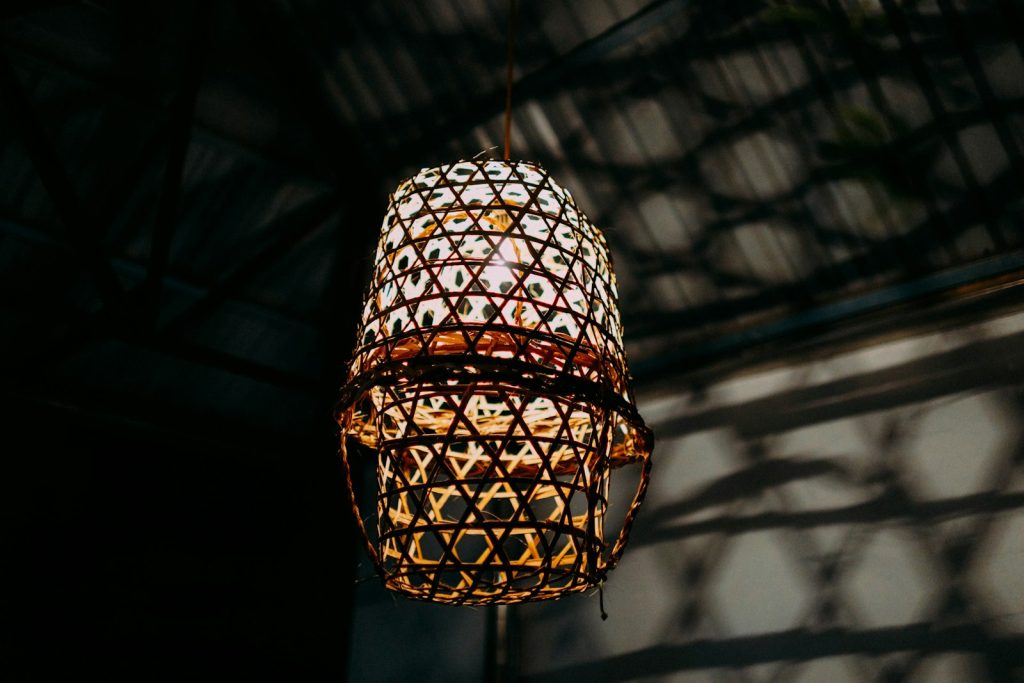
Honest buyer note: Our lamps are handwoven by village artisans in Bali and Java, so expect natural colour variation and a size tolerance of roughly ±1–3 cm on larger shades. All prices, MOQs, lead times and container counts are indicative ranges (2024–2025, FOB Indonesia) and final pricing is by quote. Standard wiring is E27 at 220–240 V; we can supply CE-compliant wiring or shade-only (no electrics) so you meet UL/UKCA or local standards in your market — we don’t imply certification we don’t hold. Natural fibre is moisture-sensitive, so we dry, treat and pack appropriately and recommend acclimatisation on arrival. Rattan is generally not CITES-listed. We coordinate vetted workshops and handle export documentation.
Rattan pendant lights wholesale means sourcing handwoven rattan hanging lamps in bulk directly from producers in Indonesia, with clear FOB pricing, MOQs, and export handling. At Bali Rattan Lamps, rattan pendant lights wholesale is exactly that: honest B2B supply of handwoven shades and complete lamps, made in Bali and Java, finished and consolidated in Bali, shipped FOB Indonesian ports.
Rattan Pendant Lights Wholesale — What We Actually Supply
As lead editor for rattan lighting, I spend most days in workshops between Bali and Java. What we offer is straightforward:
– Handwoven rattan pendant lamps and lampshades, FOB Indonesia
– Dome, bell, drum, birdcage, cone, cluster and organic shapes
– Diameters from ±20 cm up to ±100 cm (±8″–40″), height to match proportion
– Wholesale rattan pendant lamp orders from ±20–50 pcs per design
– OEM & custom design development for brands, retailers and hospitality projects
– Shade-only or wired pendants with E27 fittings, 220–240V as standard
We are not a marketplace. We coordinate a small network of vetted workshops in Bali and Java (Cirebon area for volume weaving), finish and QC in Bali, and work with experienced exporters for documentation and container loading.
All numbers below are indicative ranges for 2024–2025, FOB Indonesia, and must be confirmed by quote.
Shapes, Sizes and Applications
Rattan pendant lighting is built around a steel or rattan frame, then woven by hand. Shape choice affects both aesthetics and loading efficiency.
Main Pendant Shapes We Produce
- Dome / Bell – classic “upturned bowl” or “bell” profiles, very common for dining tables, cafes and villas. Good light spread and efficient nesting.
- Drum / Cylinder – straight sides, modern profile. Works well in rows over bars or counters. Slightly less nesting efficiency than domes.
- Birdcage / Lantern – vertical ribs, often open-weave. Good for higher ceilings, hotel lobbies, and entry spaces.
- Organic / Gourd / Teardrop – curved silhouettes built with steam-bent rattan. Popular for hospitality projects where a softer profile is needed.
- Cluster & Multi-drop – families of smaller pendants (Ø20–35 cm) meant to be hung together from a single canopy. Shipped as multiple individual shades for packing efficiency.
Common Size Ranges
We work within the physical limits of rattan and normal doorframes/workshop space:
- Small pendants
- Approx. Ø20–30 cm, height 18–30 cm. Typical for cluster sets, bedrooms, low ceilings, or over bars in series.
- Medium pendants
- Approx. Ø35–50 cm, height 30–45 cm. Our volume sweet-spot for retail and general hospitality lighting.
- Large pendants
- Approx. Ø55–80 cm, height 40–60 cm. Dining tables, lobby zones, villas with higher ceilings.
- XL pendants
- Approx. Ø85–100 cm (sometimes up to 110 cm on request). Feature pieces in resorts, restaurants, or atriums. Loading and MOQs differ.
Handmade tolerance: for larger shades (Ø60 cm+), expect typical size variation around ±1–3 cm. Frames are jigged, but natural rattan has some flex and each piece is woven by hand.
Weaving Styles and Materials
Most of our pendant shades are woven in Java (Cirebon region) where the rattan weaving tradition for export is well established, with design control and finishing in Bali.
Core Materials
- Natural rattan peel – the outer skin, split into narrow strands (2–5 mm) for finer weaving. Good for tight wicker and mid-century styles.
- Rattan core / reed – the inner part, round or half-round, used for frames and chunky open weave.
- Rattan pole – thicker canes (12–25 mm) bent to form frames for domes, gourds, and birdcages.
Raw rattan is typically sourced from Kalimantan and Sulawesi via established suppliers. Most commercial rattan species used in furniture and lighting are not CITES-listed, but Indonesian harvest and transport rules still apply. We do not label any product “certified sustainable” unless it carries a valid scheme such as FSC or PEFC; most rattan lighting in the market does not.
Weave Types for Rattan Hanging Lamp Orders
We typically work in three weave categories:
- Open weave / lattice
– Spaced ribs and cross-lashing, or simple grid patterns
– Strong ambient light; visible bulb outline (use filament bulbs or frosted)
– Good for casual cafes, restaurants, coastal or boho interiors
– Very efficient for nesting in containers - Semi-tight / basket weave
– Over-under patterns with small gaps
– Softer light diffusion, less direct glare
– Often used on domes and drums for living areas and bedrooms - Tight weave
– Fine rattan peel, dense patterns (e.g. herringbone or closed wicker)
– More complex labor, higher FOB range
– Softer, more directional lighting; the lamp becomes an object even when off
We also combine materials (for example rattan with seagrass wrap on the rim, or bamboo slats in the frame) on OEM projects, but pure-rattan pendants remain the bulk of orders.
Finishes and Color Options
Most wholesale clients order within these finishes:
- Natural clear – light sanding, clear topcoat or natural finish. Color will vary between pale honey and slightly warmer tones between batches.
- Light wash / whitewash – thinned paint with a brushed or wiped-off effect, leaving grain visible.
- Mid brown / “honey” stain – solvent or water-based stain plus clear coat; moderate color variation is normal.
- Dark brown / espresso – more pigment, used sparingly now as many brands move to lighter palettes.
- Solid paint – white, black, or custom Pantone-type colors on request; higher QC attention needed for chip-free coating.
Because rattan is a natural fiber, finish color shifts slightly with each batch and also matures over time with light exposure. For volume programs we hold reference masters in Bali and ask workshops to match as closely as practical.
FOB Price Ranges (Indicative 2024–2025, Indonesia)
We only quote by RFQ once designs, sizes, and quantities are clear. Still, buyers need planning numbers. Below are realistic wholesale ranges for handwoven pendant lampshades FOB Indonesia, last verified June 2026.
| Pendant size & complexity | Example diameter | Typical weave | Indicative FOB range / pc* |
|---|---|---|---|
| Small, simple open weave | Ø20–30 cm | Open lattice, basic frame | US$8–14 |
| Medium, open or semi-tight | Ø35–45 cm | Lattice or basket weave | US$12–22 |
| Medium, tight weave / custom finish | Ø35–50 cm | Dense wicker, finer peel | US$20–35 |
| Large open-weave feature | Ø55–70 cm | Open birdcage/dome | US$28–55 |
| XL statement pendants | Ø80–100 cm | Complex frames, more labor | US$60–120+ |
*Ranges are indicative 2024–2025 FOB Indonesia, excluding wiring, packing upgrades, and export documentation; confirmed by quote only.
What moves a piece up or down within a band:
- Weaving time (tight, complex patterns cost more than open lattice)
- Frame complexity and thickness
- Finishing steps (wash + topcoat vs stain vs solid paint)
- Order volume per design (setup of jigs and samples spreads over more units)
- Packing specification (basic export carton vs retail-ready individual boxing)
For a precise quote, send drawings/photos, target diameters, finish target and quantity to our wholesale desk via plan your trip; WhatsApp coordination is fine for faster back-and-forth on specs.
MOQ and Order Structure
Rattan pendant lights wholesale relies on consistent patterns and jigs. MOQs help keep frame bending and weaving efficient.
Standard MOQs
As a general guide:
- Small pendants (Ø20–30 cm): typically MOQ 40–50 pcs per design/size/finish.
- Medium pendants (Ø35–50 cm): typically MOQ 30–40 pcs per design/size/finish.
- Large & XL pendants (Ø55–100 cm): typically MOQ 20–30 pcs per design/size/finish, depending on complexity.
We can sometimes combine close sizes in a family (e.g. 35/45/55 cm of the same model) to hit a shared MOQ if frames and weave are identical apart from scale.
Smaller “test” runs are possible for new OEM designs, but unit cost will be higher and development fees (sampling and jigs) may apply.
Assortment Planning
For a 20- or 40-foot container, most buyers will mix:
- 1–3 hero shapes in 2–3 sizes
- 1–2 “price entry” open-weave domes
- Possibly one tighter weave or painted range as a premium tier
We help adjust diameters slightly so different ranges nest inside each other efficiently while still matching your line plans.
Container Loading, Nested Packing and Freight Efficiency
Shipping rattan pendant lampshades is mostly about loading air. Good nesting design keeps your landed cost viable.
Nesting and Carton Strategy
We design frames specifically for nesting:
- Smaller domes slide into medium, then into large of the same shape.
- Birdcage and organic shapes can nest with slight diameter adjustments.
- Drums can be nested if heights are stepped and diameters staggered.
Typical packing:
- Bulk export: nested stacks of 3–8 pieces in a master carton, with protective wrap on edges and contact points.
- Retail-ready: individual inner boxes, then multiple inner boxes to a master; higher carton count and space usage.
For planning, as a very rough rule of thumb on mixed, nested pendant orders:
- 20-ft container: often holds in the range of ~500–1,200 mixed-size pendants (more if predominantly small, fewer if many XL).
- 40-ft HQ container: often holds in the range of ~1,200–2,500 mixed-size pendants.
These are broad ranges; actual counts depend heavily on your size mix, nesting efficiency, and box spec. We work up a preliminary loading plan with our exporter once your SKU list is firm.
FOB Ports and Documents
We consolidate and QC in Bali, then typically ship:
- FOB Surabaya or Semarang (Java) for containers mainly woven in Java.
- FOB Benoa (Bali) or via Bali–Java trucking for smaller LCL shipments or Bali-heavy orders.
Exporters we coordinate with handle:
- Commercial invoice and packing list
- Certificate of origin where required
- Fumigation certificates for wood pallets (if any)
Ocean freight and insurance are usually arranged by your forwarder, but we can introduce forwarders familiar with rattan lighting to many major destinations. No one can pay to change what we publish; if you proceed with our partner they may pay us a referral fee at no extra cost to you.
OEM & Custom Pendant Lampshade Development
Most of our business on wholesale rattan pendant lamp programs is OEM — your design language, our workshops.
How the Development Process Works
1. Brief & references
You send drawings, sketches, or reference photos with notes on:
– Target diameters / heights
– Desired profile (e.g. “squashed dome”, “tall birdcage”, “asymmetrical”)
– Weave type and density
– Color/finish and inside surface (raw or coated)
– Target ex-works or FOB band, and annual volume if known
2. Feasibility & ballpark
We review with Bali design and Java frame makers:
– Structural feasibility (rattan frame vs mild steel)
– Nesting possibilities across size runs
– Estimated price band and realistic MOQ
3. Sampling
– 1–2 prototype rounds to refine profile and weave
– Sample lead-time commonly 3–5 weeks depending on complexity
– Sample charges usually at cost + courier, partially credited against bulk PO on approval (by prior agreement)
4. Production
– Once approved, production lead-time for first order is typically 8–12 weeks ex-FOB for standard volumes, subject to workshop load and season.
– Repeat orders are often slightly faster.
For pendant lampshade wholesale Indonesia programs over multiple seasons, we maintain jigs and master samples in Bali, and conduct periodic retraining in Cirebon workshops to keep shape and weave consistent.
Wiring, Sockets and Certification (Honest Version)
Rattan shades are one part of a complete lighting product. The electrics need as much attention as the weaving.
Standard Electrical Options
We normally offer three routes:
- Shade-only (no electrics)
– You or your local lighting partner supply cord sets and ceiling canopies.
– This is the simplest for markets needing UL, ETL, or UKCA certification handled domestically. - Wired pendants with basic E27 sets
– 220–240V E27 lampholders, PVC cable, and ceiling plate as specified.
– Suitable for many markets in Asia-Pacific, the Middle East, and others where importers manage compliance case-by-case. - EU-focused sets with CE-compliant components
– Use of CE-marked components and practices aligned with EU norms.
– Final product conformity assessment is still your responsibility in your jurisdiction.
We do not claim blanket UL, ETL, or UKCA certification on every rattan hanging lamp bulk shipment. These marks are typically tied to specific SKUs and must be arranged or verified by the importer or a specialist testing lab in your market.
Heat and Bulb Choices
Rattan is a natural fiber. Guidance we give all clients:
- Specify LED bulbs with low heat output wherever possible.
- Allow sufficient clearance between bulb and shade; we adjust frame depth if needed.
- Advise end-users not to use high-wattage incandescent bulbs in enclosed or tight-weave shades.
We can adjust spacing and shape to improve airflow for tightly closed designs.
Quality, Variance and Moisture Risks
A handmade, natural-fiber pendant will never be identical to a plastic injection-molded light. We work to control, not eliminate, variance.
What “Handmade Variance” Really Means
Typical, acceptable differences:
- Size: frame jigs keep us within about ±1–3 cm for large pendants; smaller pieces usually within ±1 cm.
- Shape: minor deviation in curve tension; visually checked against master in QC.
- Color: rattan cane from different harvests varies in tone; stains and washes even this out but not perfectly.
- Weave tension: we reject extremes, but slight looseness or tightness between pieces is normal.
We run QC in Bali, sampling orders by SKU for:
- Frame symmetry and level hanging point
- Weave density vs master sample
- Finish coverage and drips on painted items
- Sharp ends or exposed wires on wired versions
Moisture, Mould and Acclimatisation
Rattan is hygroscopic: it absorbs and releases moisture. Indonesia is humid; your warehouse may not be.
Risks and how we manage them:
- Drying & storage before packing – we avoid packing during or immediately after heavy rain periods when humidity is highest, and air-dry pieces thoroughly.
- Anti-mould packing measures – use of desiccant sachets and, where agreed, anti-mould paper or treatments considered acceptable in your market.
- Transit & arrival – containers can sweat during ocean shipping. We encourage buyers to open cartons as soon as possible after arrival to vent moisture.
- Acclimatisation – allow shades to stabilise in your warehouse climate before sealing them in retail packaging.
We cannot eliminate mould risk entirely on sea freight, but we build processes to minimise it and will discuss options frankly during RFQ so you can choose the level of protection that fits your brand and margin.
Why Source Rattan Pendant Lamps from Bali & Java
Workshop Ecosystem
Java (especially Cirebon) and Bali together form a working ecosystem:
- Java (Cirebon region): high-volume weaving, frame fabrication, and long experience with export requirements.
- Bali: design development, finishing, QC, consolidation, and more experimental small-batch work for design brands and hospitality projects.
Many village workshops are family-run. Rattan is a renewable vine, but cutting cycles and local regulations matter. We work with suppliers who operate within Indonesia’s legal export framework; for verified sustainable-certification programs we specify that explicitly.
What We Don’t Overclaim
We avoid vague “eco” slogans. What we can say with confidence:
- Rattan grows back faster than timber and is usually harvested without killing the host trees.
- Hand weaving creates rural employment and supports artisan livelihoods in Bali and Java.
- Most rattan lighting on the market is not under formal forest-certification schemes; neither are we, unless agreed and documented for specific lines.
If your brand needs certified materials or traceability beyond standard practice, we discuss that openly at the start of a project.
How to Request a Quote (RFQ)
For rattan pendant lights wholesale, clear specs save weeks. Before you write, gather:
- Any sketches or reference photos per design
- Target diameters and heights (cm or inches)
- Target finish (natural, stain color, wash, paint)
- Desired weave openness (open / semi-tight / tight)
- Shade-only or wired, and destination market
- Estimated quantity per SKU and total order size
- Target FOB price band if you have one
Then send an RFQ via plan your trip. If you prefer to brief verbally, you can ask for our WhatsApp contact in your message and we’ll move the detail work there once basic information is on email.
What You Can Expect After RFQ
- Clarifying questions within a few working days.
- Indicative FOB ranges by design, with MOQs and estimated lead-times.
- Notes on any designs that may be hard to nest or risky in production.
- Suggestion of adjustments (sizes, curves, weave) to help hit your price and loading targets.
From there, we move into sampling for new designs or straight to PO on existing models.
For a detailed quote, container plan, or to start an OEM collection in rattan, send your brief via plan your trip and mention if you’d like to coordinate specs and images over WhatsApp.
FAQs: Rattan Pendant Lights Wholesale
What pendant sizes do you recommend for retail vs hospitality?
For retail, we usually see Ø30–40 cm domes and bells as volume drivers, with a few larger Ø50–60 cm options as premium choices. Hospitality projects tend to push larger: Ø40–60 cm over dining tables, Ø60–80 cm for lobbies and high ceilings, and selected XL pieces around Ø90–100 cm as feature lights. We can propose a size ladder per design so your assortment feels coherent while nesting efficiently for freight.
What are your typical FOB price ranges by size?
Indicatively for 2024–2025, simple small pendants around Ø20–30 cm in open weave often fall around US$8–14 FOB Indonesia, medium Ø35–45 cm open or semi-tight weaves around US$12–22, tighter or more complex weaves in medium sizes around US$20–35, large open-weave pieces Ø55–70 cm around US$28–55, and XL designs Ø80–100 cm from about US$60–120+ depending on labor and complexity. These are guide ranges only and are confirmed by quote for your exact design, finish, and volume.
What are your MOQs for rattan pendant lamp wholesale orders?
As a guideline, small pendants (Ø20–30 cm) usually run 40–50 pcs per design/size/finish, medium pendants (Ø35–50 cm) about 30–40 pcs, and large/XL pendants (Ø55–100 cm) around 20–30 pcs. We may combine very similar sizes within a family to achieve practical MOQs, and we discuss this case-by-case in your RFQ.
Can you make fully custom pendant shapes and weaves?
Yes. OEM and custom work is a large part of our business. We can translate your drawings or references into workable rattan frames, adjust profiles for strength and nesting, and match many weave patterns. Complex or very tight weaves may increase cost and lead-time. Sampling typically takes 3–5 weeks, with sample charges and minimums agreed in advance.
How do you handle wiring and safety certifications?
We supply shade-only pendants or wired sets using E27 lampholders and 220–240V components as standard. For EU-focused orders we source CE-marked components and follow good practice, but final compliance and certification in your market remains your responsibility. For markets requiring UL, ETL, or UKCA, most buyers either take shade-only and wire locally, or work with certification labs on specific SKUs. We do not claim universal UL/UKCA certification across all models.