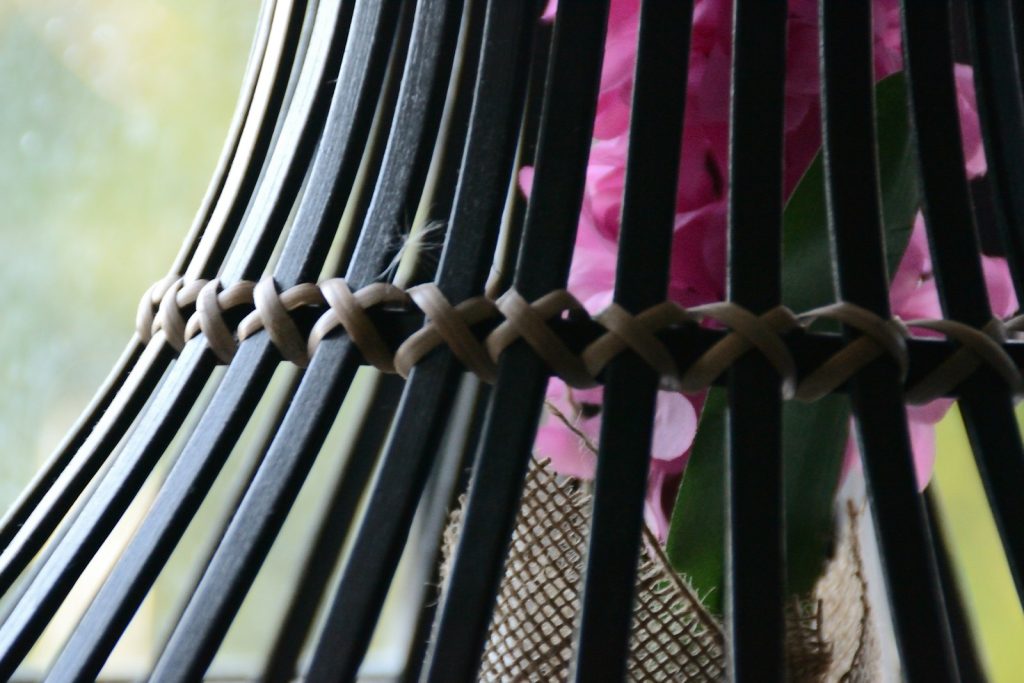
Honest buyer note: Our lamps are handwoven by village artisans in Bali and Java, so expect natural colour variation and a size tolerance of roughly ±1–3 cm on larger shades. All prices, MOQs, lead times and container counts are indicative ranges (2024–2025, FOB Indonesia) and final pricing is by quote. Standard wiring is E27 at 220–240 V; we can supply CE-compliant wiring or shade-only (no electrics) so you meet UL/UKCA or local standards in your market — we don’t imply certification we don’t hold. Natural fibre is moisture-sensitive, so we dry, treat and pack appropriately and recommend acclimatisation on arrival. Rattan is generally not CITES-listed. We coordinate vetted workshops and handle export documentation.
Rattan lampshades wholesale means buying handwoven rattan shades in bulk directly from Indonesian workshops for your own wiring and assembly. At Bali Rattan Lamps, “shade-only, no electrics” is one of our core export lines for retailers, brands, and lighting manufacturers who need woven lampshade bulk supply with clean documentation and predictable quality.
As Lead Editor for Rattan Lighting & Weaving, I’ll walk you through exactly what you can expect from our rattan shade-only export: shapes and sizes, weave types, fittings, MOQs, indicative FOB ranges, and the honest realities of handmade natural-fibre production.
—
Why Choose Shade-Only Rattan Lampshades for Wholesale
Buying wholesale rattan lamp shade products as “shade-only, no electrics” gives you flexibility, faster certification, and simpler logistics.
1. Local Wiring for UL, UKCA and Your Market’s Standards
Our default export setup for many markets is rattan shade only export with no electrics included. You then:
– Fit your own E27/ES, E26, BC/B22 or GU10 hardware locally
– Use your market’s approved cables, lampholders, and ceiling roses
– Certify the complete luminaire under UL, UKCA, ETL, SAA or your relevant scheme
We can supply CE-compliant E27, 220–240V wiring for EU projects by quote, but for North America and UK/IE we strongly recommend shade-only, wired and certified in your own country.
We do not claim blanket UL or UKCA certification on exports. Verification remains the buyer’s responsibility.
2. Easier Customs Classification & Import
Shade-only woven lampshades typically ship under HS codes for “parts of lamps” or “lamp shades of other materials” (exact code confirmed with your customs broker). In many cases, this is:
– Simpler than importing complete electrical fittings
– More flexible for combining with your existing lighting lines
We routinely support customers and their forwarders with packing lists and HS descriptions that clearly state “shade only – no electrical components”.
3. Design Control: Mix Our Weaves With Your Hardware
You control:
– Cord sets (fabric cable, chain, rigid stems)
– Canopies/roses and ceiling plates
– Dimmers, smart modules, and drivers
– Socket type and wattage limits
We supply the handwoven part: the rattan dome, drum, bell, cone, cigar or custom shade that becomes the visual signature of your lighting line.
—
How Our Rattan Lampshades Are Actually Made
All our rattan shades are woven in Indonesian village workshops. Design, finishing, QC and export coordination are managed from Bali; volume weaving is primarily in Java (especially the Cirebon area), using raw rattan sourced from Kalimantan and Sulawesi.
From Cane to Lampshade
1. Raw rattan selection
– Species typically: *Manau*, *Tahan*, and similar large-diameter canes for frames; split rattan for weaving.
– Rattan is generally not CITES-listed, but local Indonesian harvest, transport and processing rules still apply and are followed by our partner workshops.
2. Stripping and preparation
– Thick canes steamed and bent into frames (rings, ribs, and spines).
– Thin cores and outer skins split into weaving strands, then hand-sanded.
– Optional pre-stain or smoke-firing for darker tones.
3. Frame building
– Steel or rattan rings for the top and bottom.
– Central E27 ring carrier sized to your spec (most commonly 42 mm internal diameter for European E27).
– Structural ribs matched to the final silhouette: dome, cone, drum, onion, tulip, etc.
4. Weaving styles
– Open weave / lattice – airy, visible bulbs, strong shadows.
– Cross / diamond lattice – classic Cirebon look for pendants.
– Semi-tight basket weave – moderate diffusion, still breathable.
– Tight wicker weave – strongest diffusion, more fabric-like in appearance.
5. Finishing
– Sanding of protruding fibres and rough joints.
– Optional clear lacquer, natural/oak/teak stain, or painted finish (white, black, custom RAL by quote).
– Air-drying in covered spaces to reduce moisture.
6. QC and packing
– Size checks with tolerance typically ±1–3 cm on larger shades, a standard reality of hand-bent frames.
– Colour/tonal variance between batches explained and documented (see below).
– Cartonisation based on your packing preferences and container plan.
—
Shapes, Sizes and Weave Options for Shade-Only Orders
We keep our catalogue aligned to what we know weavers in Bali and Java can produce consistently at scale. Below is a summary of common shade families you can specify for woven lampshade bulk orders.
Common Pendant & Ceiling Shade Shapes
– Domes & Bells
– Diameters: ~25–60 cm, heights proportional
– Weaves: open lattice or semi-tight
– Use: general pendants over tables, bars, kitchen islands
– Drums & Barrels
– Diameters: ~30–70 cm, height 20–40 cm
– Weaves: tight weave or semi-tight with vertical ribs
– Use: hotel rooms, restaurants, retail ceilings
– Cones & Funnels
– Diameters: ~20–45 cm, height 25–50 cm
– Weaves: open or semi-open lattices
– Use: bar counters, cluster pendants, task areas
– Onion, Tulip, Organic Forms
– Diameters: ~30–60 cm
– Weaves: typically open cross-lattice following organic ribs
– Use: feature pendants, lobby clusters, high-visual installations
– Flat “Disc” & Saucer Shades
– Diameters: ~40–80 cm, low profile
– Weaves: open radial weave
– Use: modern interiors, low ceilings, layered cluster sets
Table & Floor Lampshade Profiles (Shade-Only)
Many clients combine our shades with their own metal or timber bases:
– Classic tapered drum
– Empire / conical
– Straight drum
– Oval and rectangular frames (by quote)
Typical diameters run 20–45 cm for table lamps and 35–50 cm for floor lamps. We work to your base reference or provide standard proportions.
Weave Density and Light Effect
Use this as a quick reference when briefing your RFQ:
- Open lattice
- Strong pattern on walls and ceiling, bulbs visible; best with decorative filament or opal bulbs.
- Semi-tight basket weave
- Balanced glow and pattern, partial bulb hiding; good for hotel/general ambient.
- Tight wicker weave
- Softer, more uniform diffusion; more like a fabric shade made from rattan.
- Double-layer construction
- Inner tight weave, outer open lattice for decorative depth; higher labour and cost.
If you tell us your target ambience (high shadow drama vs soft hospitality glow), we can recommend weave and rattan thickness accordingly.
—
Fittings and Compatibility: Shade-Only, E27-Centric
Standard Shade Ring: E27 Focus
Most rattan shades we export as shade-only are built around:
– E27 (ES) ring – internal diameter typically 42 mm
– Our steel or rattan carrier welded/lashed to the frame
You can then:
– Use European E27 lampholders directly
– Convert to E26 with adaptors in North America if required
– Combine with reducer rings (e.g. to B22) as per your hardware program
On request, we can:
– Supply E14 carrier rings for smaller shades
– Adjust ring placement for table/floor shades vs pendants
– Build to your own frame drawings if you already have a metal frame program
Ceiling vs Table/Floor Shade-Only Builds
– Pendant/Ceiling shades
– Usually single top ring with central E27 carrier
– Sometimes incorporate side clips or loops for chain hanging
– Bottom sometimes open, sometimes with a decorative cross-brace
– Table/floor shades
– Fitted to harp/UNO or E27/B22 lampholder systems depending on your region
– We usually work from your frame spec; our weavers wrap/weave onto that frame style
Clarify in your RFQ whether a design is for pendant, table, floor, or wall application. Mounting orientation affects ring style and frame geometry.
—
Indicative 2024–2025 FOB Ranges, MOQs and Container Loading
All pricing below is indicative 2024–2025, FOB Indonesia, by quote, last verified June 2026. Final costs depend on design complexity, volume, finishes, packing spec and port choice.
Typical FOB Ranges for Shade-Only Rattan Lampshades
For standard designs (single-layer, natural or light stain, no electrics):
– Small shades (approx. up to 25 cm Ø)
– Indicative FOB: US$4–8 per piece at scale
– Medium shades (approx. 30–45 cm Ø)
– Indicative FOB: US$7–15 per piece
– Large shades (approx. 50–65 cm Ø)
– Indicative FOB: US$14–28 per piece
– XL/feature shades (70–90+ cm Ø and complex forms)
– Indicative FOB: US$30–70+ per piece
Cost drivers:
– Weaving density and pattern complexity
– Double-layer constructions
– Painted finishes or custom colour matching
– Special frames (oval, multi-tier, geometric grids)
– Individual boxing vs nested bulk cartonisation
MOQs for Shade-Only Orders
Because we coordinate multiple village workshops, we match MOQs to both weaving capacity and export efficiency.
Typical minimums (by design):
– Standard catalogue designs:
– Often 50–100 pcs per size/colour
– Modified catalogue designs (size/finish tweaks):
– Commonly 100–200 pcs per size/finish
– Fully custom designs (new frame + weave):
– Prototype run: 2–10 pcs (higher per-unit cost)
– Production: 200–500 pcs+ total, with per-size minimums
For mixed containers (several models), overall shipment minimums are usually in the 150–300 pcs+ range to keep FOB pricing trade-viable.
Container Loading and Volume Planning
Rattan shades are bulky but light; freight optimisation is mostly about nesting and carton spec.
Indicative container loads (heavily dependent on shape, nesting and boxing):
| Container Size | Shade Type & Size | Approx. Capacity (pcs) |
|---|---|---|
| 20′ FCL | Mixed 30–45 cm pendants, well nested | ~800–1,500 pcs |
| 20′ FCL | Large 50–65 cm domes, lighter nesting | ~400–800 pcs |
| 40′ HC FCL | Mixed pendants, 30–60 cm, nested | ~1,600–3,000+ pcs |
| 40′ HC FCL | XL feature shades 70–90+ cm | ~250–600 pcs |
For LCL or trial orders, we balance carton size and nesting against the realities of shared-container freight costs.
For a project-specific estimate, share your target SKUs and volumes and we’ll model packing and container counts together via email or WhatsApp — start via plan your trip and note that this is for a shade-only RFQ.
—
Quality Transparency: Handmade Tolerances, Colour, and Moisture
Handwoven natural-fibre shades are never identical. We treat that honestly so you can plan merchandising, photography, and customer expectations.
Size Tolerances
Because frames are bent and formed by hand:
– Expect approx. ±1–3 cm variance in diameter and height on larger shades.
– Smaller shades often vary ±0.5–1.5 cm.
We manage this with go/no-go gauge checks at the workshops, but they will not match machine-pressed metal shades for precision. If you have shelves or fittings that need a tight fit, share your critical dimensions during development.
Colour and Tone Variations
Rattan is a natural material with inherent tonal diversity:
– Colour can range from pale straw to warmer honey within the same batch.
– Smoked or stained finishes are more consistent, but minor shade variations remain.
– Sun exposure and room humidity over time will subtly deepen tones.
We can:
– Group similar tones per carton as far as possible
– Provide pre-shipment photos of random samples from your batch
But it is important that your brand positioning and customer communication treat each piece as slightly individual.
Moisture, Mould Risk and How We Mitigate It
Indonesia is humid. Any natural fibre product in a sealed box can develop mould if:
– Dried insufficiently before packing
– Stored or transported for long periods in damp conditions
Our countermeasures:
– Controlled air-drying and rest periods before packing
– Anti-mould treatment options on request
– Desiccant packs in cartons, by agreement
– Breathable inner packing where possible
Your responsibilities:
– Avoid long-term storage in damp or unventilated warehouses
– Allow shades to acclimatise and breathe on arrival (open cartons, air circulation)
– For very humid retail climates, consider dehumidified storage and pre-emptive cleaning protocols
No anti-mould approach is 100% permanent; we focus on good practice and honest risk management, not unrealistic guarantees.
—
Compliance & Wiring: Shade-Only and Market Certifications
To restate clearly:
– Our shade-only rattan exports contain no electrical components.
– For EU customers, we can supply shades with CE-compliant E27 220–240V sets by quote.
– For UL/ETL/UKCA and other national schemes, certification of the completed lamp rests with you and your local test house.
We do not imply blanket UL, UKCA, ETL or similar certifications across our output. Many of our trade buyers already run approved wiring ranges and only need consistent, well-documented shade supply.
—
Sustainability: Realities, Not Greenwashing
Rattan is a fast-growing, renewable climbing palm. Properly managed, it supports village economies across Indonesia.
What we can state clearly:
– Rattan used is generally not CITES-listed; it is a permitted, regulated material.
– Production supports artisan livelihoods in Bali and Java village workshops.
– Natural-fibre shades avoid plastics and heavy industrial tooling.
What we do not claim casually:
– We only refer to “certified sustainable” where FSC, PEFC or equivalent documentation is in place for a specific line. For most village-rattan lampshades, that level of chain-of-custody certification is not yet present.
– We avoid marketing language that overpromises climate or environmental impact.
If sustainability credentials are a purchasing priority, tell us what your auditors require. We’ll be transparent about what can and cannot be documented today.
—
How to Brief Your Rattan Shade-Only Wholesale Order
To move efficiently from concept to FOB quote, prepare:
1. Designs and References
– Sketches or 3D files (even basic line drawings help)
– Reference photos (existing products or mood images)
– Target diameters and heights (and which are flexible vs fixed)
2. Technical & Aesthetic Specs
– Shade type: pendant, table, floor, wall
– Weave density: open, semi-tight, tight
– Finish: natural, smoked, stained, painted (with reference tones)
– Shade ring type: E27, E14, harp/UNO, other
– Application environment: indoor dry only, or high humidity (e.g. coastal) so we can advise realistically
3. Commercial Parameters
– Target ex-warehouse price points and your desired margin band
– Planned order volume: per SKU and total
– Required delivery window (season or project timeline)
– Destination port and preferred Incoterm (FOB is standard, others by arrangement)
Then send everything through via plan your trip with your company details. You can also request to continue the discussion via WhatsApp for quicker sampling and photo feedback during development.
—
Lead Times, Sampling and Production Flow
Indicative timings (subject to seasonality and final spec):
– Sampling
– Frame + weave development: ~3–6 weeks
– Courier to your office: add transit time from Indonesia
– Production after approval
– Typical wholesale batch: 8–12 weeks
– Large or complex orders: 12–16 weeks
– Shipping
– Sea freight to Asia-Pacific: often 1–3 weeks
– To Europe/UK: typically 4–6 weeks port-to-port
– To North America: typically 4–6+ weeks, depending on coast and routing
We recommend working backwards from your retail or project launch date with at least one full additional month of buffer for customs, inland trucking and any unforeseen rework.
—
Work With Bali Rattan Lamps on Shade-Only Programs
We sit between design offices, buying teams and the village workshops that actually weave your shades. Our role is to:
– Translate your drawings and moodboards into rattan frames and weaves Balinese/ Javanese artisans can execute consistently
– Coordinate multiple workshops to hit your volumes without sacrificing QC
– Be honest with you about what works technically and commercially at scale
If you’re ready to develop a rattan lampshades wholesale program — from simple open-weave domes to complex double-layer feature pieces — send your brief through via plan your trip. Note in the form if you’d like to switch to WhatsApp for faster image and sample feedback.
—
Do you sell rattan lampshades as shade-only without wiring?
Yes. Shade-only rattan lampshades with no electrical components are a core part of our export business. We export the woven shade and frame; you handle lampholders, cords and ceiling roses locally. This is usually the best route for markets needing UL, UKCA or similar certifications.
Can I wire the shades locally for UL, UKCA or other approvals?
Yes. For North America, UK and other regulated markets, we recommend importing shade-only products and wiring them in your own facilities or with your existing approved suppliers. You then certify the complete lamp locally; we do not claim blanket UL or UKCA certification for exported products.
What fitting size do your shade rings use?
Our standard build uses an E27 (ES) shade ring, typically 42 mm internal diameter, suitable for most European E27 lampholders. We can also produce E14 rings or work with other frame standards by request, as long as you provide clear specifications or reference samples.
What are your prices and MOQs for wholesale rattan lamp shades?
Indicative 2024–2025 FOB ranges are roughly US$4–8 for small, US$7–15 for medium, US$14–28 for large and US$30–70+ for XL feature shades, FOB Indonesia, by quote, last verified June 2026. MOQs are typically 50–100 pcs per standard design and 100–200+ pcs per size/finish for modified or custom models. Exact pricing and MOQs depend on design complexity, finishes, packing and total volume.
What are your lead times for shade-only orders?
Sampling usually takes around 3–6 weeks plus courier time. Production for approved designs is typically 8–12 weeks for standard orders and 12–16 weeks for complex or high-volume programs, plus sea freight time to your destination port. We recommend building in at least one extra month of buffer beyond those indicative timelines.