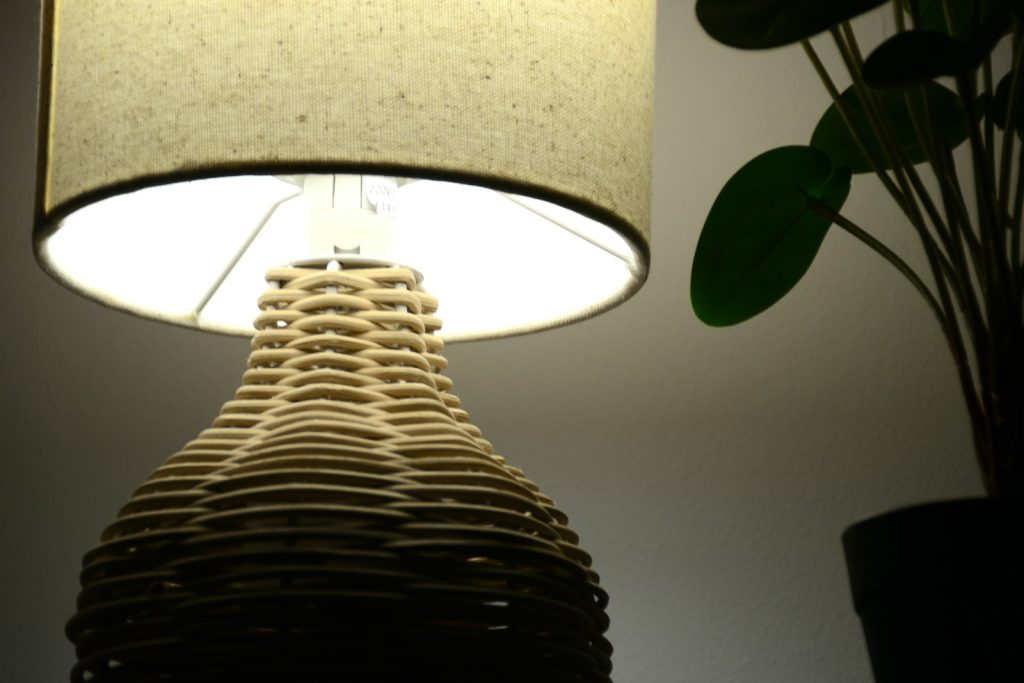
Honest buyer note: Our lamps are handwoven by village artisans in Bali and Java, so expect natural colour variation and a size tolerance of roughly ±1–3 cm on larger shades. All prices, MOQs, lead times and container counts are indicative ranges (2024–2025, FOB Indonesia) and final pricing is by quote. Standard wiring is E27 at 220–240 V; we can supply CE-compliant wiring or shade-only (no electrics) so you meet UL/UKCA or local standards in your market — we don’t imply certification we don’t hold. Natural fibre is moisture-sensitive, so we dry, treat and pack appropriately and recommend acclimatisation on arrival. Rattan is generally not CITES-listed. We coordinate vetted workshops and handle export documentation.
“Rattan vs synthetic rattan outdoor” is mainly a question of durability, maintenance and design intent: real rattan is a natural, indoor‑first fiber; PE “rattan” is an extruded plastic designed to live outdoors. For outdoor woven lighting, real rattan can work only in very controlled or semi‑outdoor situations, while PE rattan is the practical choice for year‑round exposure.
Quick definition: what we mean by rattan and synthetic (PE) rattan
Before we compare, we need to be precise. In the trade, both terms get used loosely.
Natural rattan (what we use by default)
- Botanical material: Solid, climbing palm (mostly Calamus species), not bamboo, not wood.
- Origin: Forest‑harvested in Kalimantan and Sulawesi, then shipped to Bali and Cirebon (Java) for processing.
- Forms we use for lamps:
- Core/rod (2–10 mm) – main structure and ribs.
- Split/skin – finer weaving, binding, open mesh.
- Koobo/kooboo, seagrass mix, wicker – trade names for specific weaves/looks, all still natural-fiber based.
- Use case: Indoor and semi‑indoor lighting; occasional outdoor use only under strict protection.
Synthetic “rattan” (PE rattan)
- Material: Extruded polyethylene (PE) or PVC strips, sometimes with UV stabilizers and color masterbatch.
- Often called: PE rattan, all‑weather wicker, resin wicker, poly rattan.
- Use case: Outdoor furniture and pe rattan outdoor lamp shades where rain/UV are constant.
- Weaving: Usually hand‑woven over metal or aluminum frames, using similar basketry techniques to natural rattan.
At Bali Rattan Lamps, our core catalog is natural rattan. For outdoor woven lighting we work in three ways:
- Natural rattan shades for covered outdoor (roofed terrace, veranda, hotel porte cochère).
- Hybrid builds: natural rattan look, but with extra sealers and drainage/gap design to mitigate moisture.
- OEM/ODM in PE rattan via our partner workshops in Java, for projects that truly need full outdoor performance.
This page is the honest comparison of rattan vs synthetic rattan outdoor performance, costs and trade‑offs, so you can specify the right material from the start.
Rattan vs synthetic rattan outdoor: core trade‑offs
| Aspect | Natural rattan (Bali/Java) | PE synthetic rattan |
|---|---|---|
| Outdoor durability (full exposure) | Low – swells, cracks, discolors; high mould risk | High – designed for rain, UV and temperature swings |
| Covered outdoor (roof, no direct rain) | Medium – workable with good drying and ventilation | High – almost maintenance‑free |
| Look & handfeel | Warm, organic, each piece unique | More uniform; can be made to imitate rattan |
| Color consistency | Natural variation between lots; patina over time | Highly consistent; slow fade with UV |
| Weight (per shade) | Lighter for same volume | Heavier strip + usually metal frame |
| Unit FOB for mid‑size pendant (40–60 cm) | ~US$12–28 FOB Bali/Java (2024–2025 by quote) | ~US$14–32 FOB Java (2024–2025 by quote) |
| MOQ typical | 50–100 pcs per model/size/color | 80–150 pcs per model/size/color |
| HS code (shades only) | 9405.99 (parts for lamps, of other materials – vegetable fiber) | 9405.99 (parts for lamps, plastic) |
| Wiring options from us | E27 220–240V CE wiring or shade‑only; UL by buyer | Same – wiring set is independent of the weaving material |
| End‑of‑life / recyclability | Biodegradable; can mould/rot if stored damp | Theoretically recyclable PE; practically often landfilled |
FOB price ranges are indicative, last checked for 2024–2025 contracts, and always confirmed by formal quotation based on volume, specs and finish.
How natural rattan actually behaves outdoors
Natural rattan is beautiful but honest: it is a forest vine, not a marine composite. Here is what happens in outdoor conditions.
Moisture, swelling and mould
- Moisture uptake: Rattan is hygroscopic. It absorbs and releases moisture with ambient humidity.
- Effects: In high humidity or occasional rain:
- Fibers swell slightly, then shrink as they dry.
- Weave can shift by a few millimeters, changing aperture size and roundness.
- Finish (stain/lacquer) may micro‑crack over time, especially at bend points.
- Mould/mildew risk: Biggest risk in shaded, poorly ventilated zones. Spores grow on surface, especially in crevices.
We manage this in production via:
- Controlled drying: Kiln or sheltered air‑drying to target 10–14% moisture content before weaving.
- Staggered QC: Moisture check at raw material, post‑weaving, and post‑finishing stages.
- Finishes: Sealers and top‑coats that slow (but cannot stop) moisture uptake.
Reality check: once the lamp is in a coastal hotel or rooftop bar, we cannot control climate. For open‑air decks with wind‑driven rain, we recommend PE rattan or metal/glass/ceramic options, not natural rattan.
UV and color change
- Untreated rattan: Yellows then greys over time with strong sun exposure.
- Stained finishes: Light natural, honey, and darker “coffee” tones will gradually lighten and lose sharp contrast under UV.
- Patchiness risk: If one side is sun‑exposed and the other shaded, you will see differential fading.
Architects sometimes like this patina. Retail brands usually do not. Clarify your expectation: “aged natural” vs “keep original look as long as possible”. That choice influences stain, topcoat and maintenance instructions we provide.
Mechanical stress and wind
- Flexibility: Rattan has good flex, but repeated wet/dry cycles + wind loading on big pendants (60–90 cm) can loosen lashings over years.
- Salt environment: Rattan itself is less affected by salt than metal fixings; the risk is corrosion on metal frames, hooks and canopy components.
If your project is cliff‑edge or direct oceanfront, we will probably steer you to PE rattan outdoor lamp or non‑woven shade types for the fully exposed zones, and keep natural rattan for interiors and covered areas.
How PE synthetic rattan behaves outdoors
PE rattan is engineered around outdoor furniture performance. For outdoor woven lighting, many of the same principles apply.
UV stability and color
- UV‑stabilized grades: Good‑quality PE rattan from established Indonesian extruders includes UV stabilizers in the polymer and pigment.
- Color retention: Expect gradual matte‑ing and slight fade over years, not dramatic peeling or cracking if the right spec is used.
- Dark colors & heat: Very dark browns and charcoals can get hot under direct sun, which may shorten life vs light sand/stone colors.
Water and temperature
- Non‑absorbent: PE does not wick water. No swelling, no fungal growth in the material itself (though dirt can still host mould on the surface).
- Drainage still matters: For pendant and floor lamps, we design PE weaves and frames so water does not pool around electrical components.
- Cold climates: Compared to rattan, PE handles freeze/thaw much better, though extreme cold can make some cheaper PE grades brittle.
Mechanical properties
- Tear and flex: PE strips can withstand bending and minor abuse better than fully dried rattan, especially over sharp metal edges.
- Frame dependency: PE “rattan” is usually woven over metal or aluminum frames. Long‑term life depends heavily on powder coating quality and frame design, not just the strip.
Our PE outdoor weaves for lamps generally sit in the same labor bracket as natural rattan, sometimes slightly higher due to metal frame prep. That is why FOB unit ranges overlap rather than PE being dramatically cheaper.
Cost, MOQ and container planning: rattan vs PE rattan outdoor lighting
For B2B buyers, the material decision affects more than performance. It also changes how you plan SKUs, cashflow and containers.
- Typical FOB ranges (2024–2025, by quote)
-
- Natural rattan pendants (30–60 cm): ~US$9–24 FOB Bali/Java, depending on complexity, finish and volume.
- PE rattan outdoor pendants (30–60 cm): ~US$11–26 FOB Java, depending on frame, weave density and volume.
- Large statement pendants (70–100 cm) in either material: ~US$25–60 FOB, more metal, more labor, more QC checks.
- Floor/table bases with shades: Wider spread, often US$28–90 FOB for full fixture sets. Shade‑only is lower.
- MOQ bands
-
- Per SKU per size/color: Often 50–100 pcs for natural rattan; 80–150 pcs for PE rattan where extrusion color runs must be economical.
- Per order (mixed SKUs): For efficient packing, 300–600 pcs mixed is a good target for a 20′ container of bulky woven shades.
- Container loading
-
- 20′ container: Roughly 600–900 mid‑size (40–50 cm) pendants in nested packing, mix of rattan and PE possible.
- 40′ HQ container: Roughly 1,200–1,800 mid‑size pendants, or fewer if you have a lot of 70–100 cm statement pieces and floor lamps.
- CBM focus: Woven lighting is volume‑driven, not weight‑driven. Material choice does not change CBM radically, but frames do.
- Lead times (production only)
-
- Sample development: 2–4 weeks for rattan; 3–6 weeks for new PE rattan color/weave + metal frame.
- Bulk production: 8–12 weeks from deposit and final PP sample sign‑off, for both materials.
- HS codes & classification (guideline only)
-
- Shades only (no electricals): Usually HS 9405.99, “parts of lamps” with sub‑classification by material.
- Complete wired fixtures: HS 9405.10 / 9405.20 depending on specific product and buyer’s customs practice.
All numbers above are indicative ranges based on our 2024–2025 experience with Bali and Java export. Final costing depends on your exact specs, Incoterms, packing method and port.
If you want us to run real CBM and FOB simulations for a mix of natural and PE outdoor woven lighting, you can plan your trip with us via email or WhatsApp — we will walk through your target retail and work backwards to viable ex‑factory ranges.
Wiring, certification and what “outdoor” really means
The fiber (rattan vs PE) is only half the outdoor question. The electrical standard and installation environment matter just as much.
Our standard wiring offer
- Socket: E27.
- Voltage: 220–240V, suitable for EU/UK and many other regions on that grid.
- Certification: CE‑conform components and assemblies for hanging pendants and floor/table lamps.
- Shade‑only option: Most B2B buyers choose shades only and source local electrical kits to match their market’s norms.
UL and North American markets
- We do not claim UL listing on complete fixtures ex‑factory.
- Buyers importing into the US/Canada usually:
- Import shades only and pair with UL‑listed cordsets/lamp holders locally; or
- Work with a North American lab to certify a complete fixture using our shade as a non‑electrical component.
Outdoor IP ratings
PE rattan strips and natural rattan by themselves do not define whether a lamp is “outdoor‑rated”. The IP rating (e.g., IP44, IP65) depends on the luminaire design and its protection of the live parts.
- As standard: Our hanging pendants with open‑bottom shades are designed for dry or covered zones, not driving rain.
- For true exterior zones: You should use certified outdoor lamp holders, gaskets and ceiling roses, often combined with a glass or acrylic inner diffuser/enclosure.
- Project basis: For large OEM projects we can work with your technical team to design shades around a certified outdoor gear tray you specify.
Handmade variance: what to expect in rattan vs PE
Every woven lamp that leaves Bali or Java has a human fingerprint, regardless of fiber type. That is part of the value, but you must budget for tolerances.
Dimensional tolerances
- Diameter/height: For both rattan and PE rattan:
- Typical variance: ±1–2 cm on 30–50 cm shades.
- Up to ±3 cm on 70–100 cm sizes, especially on very organic, open shapes.
- Roundness: Slight ovalization is normal. We pack and tie to minimize deformation, but full geometric perfection is not realistic.
Color and texture
- Rattan:
- Each batch of cane has slightly different base color and fiber density.
- Stain absorbs differently, especially between core and skin materials.
- Your first and second production lots may not match 100%; we manage this by controlling batch sizes and documenting reference samples.
- PE rattan:
- More uniform strip color from extrusion; less lot‑to‑lot variation.
- We still set acceptable shade variation, especially for “random” multi‑tone weaves.
QC stages
Our multi‑stage QC is the same philosophy for both materials:
- Incoming material QC: Visual and moisture checks for natural rattan; strip size and color for PE rattan; frame weld inspection.
- In‑process QC: Random inspections at weaving stations for pattern accuracy, structure, tension.
- Post‑weaving QC: Full check of dimensions, shape, weave integrity, trimming, surface defects.
- Post‑finishing QC: For natural rattan: color and coverage check; for PE: uniformity and clean surface.
- Pre‑packing QC: Final piece count, hang test for pendants, label and barcode check where applicable.
We will never promise every piece is identical. What we can promise is that no one can pay to change what we publish about our tolerances, and we will align acceptable ranges with you in advance.
Sustainability and compliance: honest comparison
Many marketing teams like to label natural rattan as “eco” and PE rattan as “bad plastic”. Reality is more nuanced.
Natural rattan
- Forest product: Rattan is generally not listed in CITES and is harvested as a non‑timber forest product in Indonesia.
- Certification: FSC/PEFC certification is possible but not the default. If you need certified chain‑of‑custody, say it upfront; it affects sourcing and price.
- End of life: Biodegradable if left in conditions that allow decomposition; can mould if stored damp in warehouses.
PE synthetic rattan
- Petrochemical origin: PE is plastic. Claims of “green” PE (bio‑based) require hard documentation; we do not assume it.
- Recyclability: In theory PE can re‑enter plastic recycling streams; in practice, multi‑material products (PE + metal frame) often are not separated at scale.
- Longevity: If PE rattan extends usable life of outdoor furniture or lighting significantly vs natural rattan replaced frequently, that is part of the environmental equation.
We do not describe either material as automatically “sustainable”. The best we can do is be transparent about what you are buying, and avoid greenwashing claims. If you have specific ESG requirements, we can discuss documentation and realistic options case by case.
How to choose: a practical decision framework
To make the rattan vs synthetic rattan outdoor decision clearer, map your project across four questions.
1. Exposure level
- Fully exposed: No roof, direct rain, snow or intense sun. Choose PE rattan or other true outdoor materials.
- Covered outdoor: Roofed terrace, pergola with solid cover, large eaves. Natural rattan is feasible if:
- Lamps are not in direct line of wind‑driven rain.
- There is ventilation to help pieces dry.
- You accept gradual patina and some maintenance.
- Indoor with high humidity (spa, pool edge): Natural rattan possible with careful design; PE may still be safer close to water.
2. Brand and design story
- Natural story: If your concept is “hand‑woven natural fiber from Bali”, you probably want real rattan, at least for all interior and covered zones.
- Visual continuity: We can match PE rattan colors to your indoor rattan palette, so your outdoor woven lighting reads coherently with indoor pieces.
3. Maintenance capability
- High‑touch hospitality: Resorts with active maintenance teams can manage cleaning and periodic repositioning of rattan pieces.
- Low‑touch retail or residential: For mass retail or projects without maintenance budgets, PE is usually a safer recommendation for outdoor SKUs.
4. Volume and margin
- Smaller, higher‑margin projects: A few dozen pieces for a boutique hotel may justify rattan outdoors in semi‑protected areas, accepting patina.
- Large roll‑outs: Hundreds or thousands of outdoor units for chain hotels or retail programs benefit from PE’s consistency and durability and simpler returns/warranty logic.
If you share your project drawings, exposure maps and target retail price points, we can recommend a rattan/PE split that balances aesthetics, risk and margin. Use plan your trip to send us your RFQ and WhatsApp contact; we are used to working off architectural plans and value‑engineering material choices.
FAQs: rattan vs synthetic rattan outdoor lighting
Can I use natural rattan pendants fully outdoors in the rain?
We do not recommend it. Natural rattan will swell, dry, and eventually crack or develop mould in direct rain and strong UV, especially in coastal climates. For fully exposed decks, poolsides and rooftops, PE rattan or non‑woven outdoor fixtures are the responsible choice.
Is PE synthetic rattan always cheaper than natural rattan?
No. Hand‑weaving labor and metal frames are similar cost drivers in both materials. For many SKUs, PE rattan FOB prices overlap natural rattan, sometimes slightly higher if the frame is complex or the strip is a premium, UV‑stabilized grade.
Do you offer CE or UL certification for outdoor woven lighting?
We can build and supply fixtures with CE‑conform components on 220–240V for covered outdoor use. For UL, buyers usually import shades only and pair them with UL‑listed electrical kits locally or certify a complete design through their own lab. We do not ship ready‑UL‑listed complete luminaires out of Bali/Java.
Will PE rattan and natural rattan in the same project look different?
Up close, yes. Natural rattan has more irregular pores and fiber variation. PE rattan is more uniform and slightly cooler to the eye. However, with careful color matching and weave selection, most guests in a hospitality setting will read them as one coherent design language, especially at typical viewing distances.
What is the typical MOQ for custom PE rattan outdoor lamps?
For custom PE rattan outdoor pendants and floor lamps, expect MOQs in the 80–150 pcs per model/size/color range, depending on extrusion color runs and frame complexity. Exact MOQ and FOB prices are confirmed by quote for 2024–2025. Send specs via our plan your trip page and we can refine numbers over email or WhatsApp.