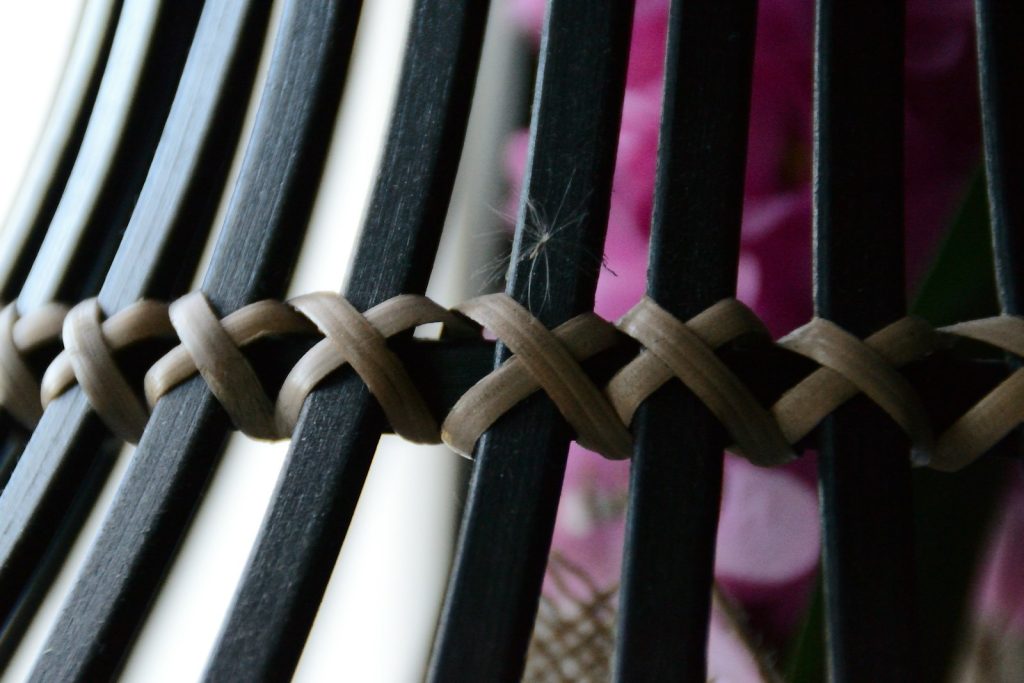
Honest buyer note: Our lamps are handwoven by village artisans in Bali and Java, so expect natural colour variation and a size tolerance of roughly ±1–3 cm on larger shades. All prices, MOQs, lead times and container counts are indicative ranges (2024–2025, FOB Indonesia) and final pricing is by quote. Standard wiring is E27 at 220–240 V; we can supply CE-compliant wiring or shade-only (no electrics) so you meet UL/UKCA or local standards in your market — we don’t imply certification we don’t hold. Natural fibre is moisture-sensitive, so we dry, treat and pack appropriately and recommend acclimatisation on arrival. Rattan is generally not CITES-listed. We coordinate vetted workshops and handle export documentation.
Rattan lighting quality control is the set of checks, tests and standards used to keep woven pendant, floor and table lamps consistent, safe and export-ready. For importers, good rattan lighting quality control means clear specs, realistic AQL, and a factory that understands both natural-fiber behavior and your market’s expectations.
What “Quality” Really Means for Rattan Lighting
Before talking about AQL and inspection checklists, it helps to define what “quality” means for woven lamps.
For Bali Rattan Lamps’ OEM and wholesale buyers, quality usually breaks down into:
- Meeting agreed sizes, shapes and weaves (within tolerances)
- Color consistency across a PO and between repeat orders
- Safe, compliant wiring or clean shade-only builds
- Dry, well-finished rattan that survives transit without mould
- Acceptable level of handmade variation (no two pieces 100% identical)
Rattan lamps are not CNC-milled metal. You get organic fibers, human hands, kilns and sun-drying. That means we manage deviation, not eliminate it.
Core Elements of Rattan Lighting Quality Control
Our rattan lamp QC inspection process covers five main areas:
1. Raw-material and frame control
Rattan sourcing. Most export-grade rattan cane and peel used in Bali and Java (Cirebon) lighting is harvested in Kalimantan and Sulawesi, then processed in Java. Typical species include Calamus manan and similar large-diameter canes for frames, and finer split peel for weaving.
Key controls at this stage:
- Diameter sorting (e.g. 16–20 mm for main frames, 8–12 mm for ribs)
- Rejecting canes with excessive insect damage or deep cracks
- Moisture content control after steaming/bending and drying
Frames and jigs. To keep sizes consistent, we build steel or plywood moulds/jigs. Artisans bend and tie the rattan around the jig, then fix with nails or bindings. This is where dimensional QC starts: if the jig is off, the whole batch will be off.
2. Weaving and shape tolerance
Weaves you often see in our catalog:
- Open diamond / lattice
- Vertical/parallel slat wrap
- Closed basket weave
- Combination patterns (e.g. open top/bottom, closed mid-band)
We define tolerances in the spec sheet:
- Diameter / width / depth: typically ±1–1.5 cm for pendants up to ~50 cm; ±2 cm for large shades 60–80 cm+
- Height: typically ±1–2 cm
- Roundness / symmetry: visual tolerance; slight ovalization accepted, sharp kinks not
Rattan is steamed and bent; it springs back a bit as it dries. That’s why a strict ±0.5 cm tolerance on a 60 cm shade is not realistic at volume.
3. Surface finishing and color control
We use three main finishing approaches:
- Natural, clear-coated: rattan sanded, sometimes lightly bleached, then clear topcoat (water-based or PU) to seal.
- Stained: water-based or solvent-based stains (honey, walnut, charcoal, etc.), then topcoat.
- Painted: mostly white, black or custom Pantone-like targets using spray systems.
Because rattan fibers vary, stain uptake is never 100% uniform like plastic. We manage:
- Color banding across a PO with a master sample board
- Light/dark tolerance defined as visual “OK range” samples
- Over-sanding that exposes pale core versus darker skin
You can expect minor shading differences within and between orders. “Exact Pantone match” on raw rattan is not realistic; we can get close for painted finishes.
4. Wiring, holders, and certifications
Most rattan lamps we ship are either:
- Shade-only: no wiring, just the woven body and frame
- Wired for EU/UK/other 220–240 V markets: E27 lampholders with cord sets
Key wiring facts:
- Voltage standard: Primary build is 220–240 V, 50 Hz.
- Lampholders: E27 for EU/UK; E26 for some other markets if specified.
- CE: We can source CE-marked components and build to common EU safety practices, but final product-level certification and responsibility sit with the importer.
- UL: We do not claim full UL-certified finished lamps by default. Buyers supplying North America typically:
- Import shade-only and add UL-listed kits locally, or
- Work with their own NRTL/UL partner for certification.
Be wary of any factory that throws “UL/CE certified” around without specifying whether they mean components (holders, cords) or a tested finished product. For B2B, this distinction matters.
5. Moisture, mould and export readiness
Indonesia is humid. Rattan is a hygroscopic material (absorbs and releases moisture). That combination is the main risk for mould complaints if QC and packing are weak.
For rattan lamp QC inspection, we focus on:
- Drying: kiln and/or sun-drying to target moisture content suited for export (often in the 12–18% range for rattan elements; exact number varies by part and structure).
- Stabilization: resting frames before weaving; resting finished lamps before packing.
- Anti-mould measures: optional anti-fungal dips or sprays, desiccant in cartons, breathable liners.
- Container loading: avoiding stuffing warm, just-finished goods into a hot container immediately before sailing; ventilating when possible.
No honest exporter can promise “zero mould risk.” We can minimize it; we cannot remove physics.
Understanding AQL for Woven Lighting
“AQL woven lighting” is just applying standard Acceptable Quality Limit methods to rattan lamps. The math is the same as for garments or electronics; the interpretation is a bit more nuanced because of natural variation.
What is AQL?
AQL (Acceptable Quality Limit) is a statistical sampling method:
- You define:
- Lot size (e.g. 1,200 lamps)
- Inspection level (e.g. General II)
- AQL level(s) for critical / major / minor defects (e.g. 0 / 2.5 / 4.0)
- You use an AQL table to get:
- Sample size (how many pieces to check)
- Accept / reject numbers (how many defects allowed in the sample)
The trick for rattan lighting quality control is defining what counts as a defect category:
- Critical: safety issues (exposed live wires, broken structure that could fall, sharp metal sticking out).
- Major: strong visual or functional issues (badly off-round, broken weave, large stains, wrong color, severe cracks, large dimensional off-spec).
- Minor: small cosmetic issues (tiny fiber “hair,” minor weave waviness, small color shade differences within the agreed range).
If you treat every tiny hand-woven irregularity as a major defect, you will reject most handmade production. The goal is to align AQL with real-world retail acceptance.
Typical AQL settings importers use
For mid- to upper-mid retailers, we commonly see:
- Critical: 0 (none allowed)
- Major: 2.5
- Minor: 4.0
For value-focused chains more tolerant of handmade variation:
- Critical: 0
- Major: 4.0
- Minor: 6.5
We’re comfortable working with third-party inspection companies or your in-house QC, as long as we agree defect definitions before production.
What a Rattan Lamp QC Inspection Actually Checks
Here is a simplified breakdown of what gets checked at different QC stages.
| QC Stage | Main Focus | Typical Checks |
|---|---|---|
| Incoming rattan | Material integrity & moisture | Diameter, insect damage, surface cracks, moisture, basic color uniformity |
| Frame & bending | Shape & dimension | Check against jig, join strength, symmetry, split/cracked areas |
| Weaving in-process | Pattern & density | Weave tightness, even spacing, no big gaps or looseness |
| Pre-finishing | Surface prep | Sanding quality, loose fibers trimmed, removal of dirt/oil marks |
| Finishing | Color & coating | Color compared to master sample, run/sag checks, coverage, tack-free curing |
| Wiring assembly | Safety & function | Holder fixation, cord strain relief, polarity where relevant, basic continuity test |
| Pre-packing | AQL visual | Dimensions, roundness, weave defects, color banding, cleanliness |
| Container loading | Transit protection | Carton condition, stacking, desiccants, space use, basic ventilation |
If you need a third-party rattan lamp QC inspection (SGS, Intertek, etc.), we coordinate time and place and share our internal defect list so everyone is aligned.
Pricing, MOQ, Container Loading: Quality’s Commercial Side
Clear numbers help align expectations. Below are indicative 2024–2025 FOB ranges from Bali/Java for woven lamps, based on data we track for our own lines and OEM projects. All numbers are by-quote only for live projects and can move with scale, design complexity and input costs.
- Typical FOB price range, small–medium pendants (25–40 cm)
- ~US$7–18 per piece FOB Indonesia, last verified June 2026, depending on weave complexity, finish, and wired vs shade-only.
- Typical FOB price range, large pendants (45–70 cm)
- ~US$14–35 per piece FOB Indonesia, last verified June 2026; complex multi-layer or oversized pieces can be higher.
- Typical FOB price range, rattan floor lamps
- ~US$28–75 per piece FOB Indonesia, last verified June 2026; driven by height, base material, and wiring spec.
- Typical FOB price range, rattan table lamps (shade + base)
- ~US$18–45 per piece FOB Indonesia, last verified June 2026.
- MOQ per design / color
- Commonly 30–50 pcs per size/color for small–medium pendants, and 20–30 pcs per size/color for larger items. Mixed-model containers are normal.
- Lead time (mass production)
- Roughly 6–12 weeks after deposit and approval of pre-production samples, depending on order size and weaving complexity.
- HS codes used for woven rattan lamps
- Often classified under HS 9405.10 or related lamp-and-lighting fittings codes; confirm with your customs broker for your market.
- Container loading (20′ vs 40′)
- Approx. 250–600 medium pendants (nested) in a 20′ and 700–1,400 in a 40′, depending on shape, nesting efficiency, and packaging style.
These ranges assume standard export packing: individual polybags or tissue wrapping, inner cartons for some SKUs, master cartons then container loading from Bali or Java.
If you want a project-specific estimate that factors in your required AQL level, extra QC steps, and shade-only vs wired, you can plan your trip with us via email or WhatsApp and we’ll build the numbers together.
Handmade Variance: What You Can and Can’t Control
Rattan lighting quality control is as much about education as inspection. A few realities that B2B buyers need to internalize:
Size and shape
You can control:
- A clear tolerance range in cm
- Jigs and go/no-go gauges for the workshop
- Rejecting obviously distorted or kinked pieces
You cannot expect:
- Every 50 cm shade to measure exactly 50.0 cm
- Perfect circles on all large-diameter pieces without any ovalization
Retail and hospitality buyers who embrace a “handmade range” (and train their store staff accordingly) have far fewer QC conflicts.
Color and grain
You can control:
- Stain type and number of coats
- Reference samples and rejection of pieces visibly outside that band
- Overly patchy or blotchy pieces being pulled
You cannot expect:
- Every piece to look like it came from the same plank of engineered wood
- Natural cane to hide all fiber and grain differences under translucent finishes
For very tight color control, many buyers now choose painted or opaque finishes on rattan and reserve natural/stained looks for ranges that can absorb variation.
Surface “imperfections”
Things that normally pass QC at reasonable AQL levels:
- Tiny fiber hairs at some joints (trimmed but not “laser smooth” everywhere)
- Minor weave waviness that doesn’t affect shape or safety
- Subtle color variation ring-to-ring or rib-to-rib
Things that should not pass:
- Broken or missing strips in a visible area
- Large dark stains or finish drips
- Sharp edges, nails, or wire ends that could cut a user
Clarity on this saves a lot of back-and-forth during rattan lamp QC inspection.
Moisture, Mould & How QC Helps (But Can’t Perform Miracles)
Buyers often ask: “Can you guarantee no mould?” The honest answer: no.
What we can do as part of rattan lighting quality control:
- Specify drying standards: Clear internal targets and moisture-meter checks for key components.
- Schedule production: Avoid compressing weaving, finishing and packing so tightly that goods go into cartons still “green.”
- Use appropriate packing: Ventilation where possible, desiccant, avoiding non-breathable wrappers if humidity is high.
- Consider transit season and route: Peak humidity + long transit + no desiccant = higher risk.
What importers can do:
- Allow realistic lead times (rushing is the enemy of good drying).
- Store containers and goods in dry, ventilated spaces on arrival.
- Open and air out goods early, especially for large, fully wrapped items.
We’ve seen that extra one or two weeks in the schedule, specifically reserved for drying and stabilization, can reduce mould incidents significantly compared with “finish today, pack tomorrow, load the day after.”
Wiring QC: CE, UL and Shade-Only Reality
Because rattan lighting is often sold in multiple markets, wiring choices are a core part of QC strategy:
- EU/UK clients: Typically request 220–240 V E27 sets with CE-marked components. We control assembly quality; you remain responsible for market compliance and final product labelling.
- US/Canada clients: Often import shade-only, then add UL-listed pendants or table/floor kits locally. This avoids complex NRTL testing in Indonesia.
- Hospitality projects: Frequently specify shade-only structures as they install custom fixtures on-site to local code.
For wired orders, our QC includes:
- Checking correct lampholder spec and marking
- Pull/strain tests on cable entries
- Polarity and continuity checks where applicable
- Visual inspection of cord length, color and routing
If your project’s success hinges on a particular certification path, detail it in the RFQ, not after mass production is booked.
How to Brief Rattan Lighting QC in Your RFQ
To make rattan lighting quality control work in a B2B setting, your initial brief should include:
- Target AQL: Critical/major/minor values and whether you will use an external inspector.
- Size tolerances: In centimeters, with separate lines for diameter/width/height.
- Color / finish expectations: Natural vs stained vs painted, and whether you expect a narrow or broad shade band.
- Wiring requirements: Shade-only or wired; market (EU/UK/US/other); component standards; plug type.
- Packaging: Individual cartons vs nested; gift box vs brown box; labeling requirements.
- Mould-risk appetite: E.g. mandatory desiccant, anti-fungal treatment, or additional drying time.
The more specific the brief, the fewer “surprises” at the pre-shipment rattan lamp QC inspection stage.
If you’d like to sanity-check your QC specs against what is actually feasible in Bali and Java workshops, you can plan your trip with our team via email or WhatsApp; we’re happy to go line-by-line through your requirements.
FAQs: Rattan Lighting Quality Control & AQL
What AQL level do you recommend for rattan lamps?
For most mid-market retail and hospitality projects, we suggest AQL 0 for critical, 2.5 for major and 4.0 for minor defects, combined with clear defect definitions that distinguish normal handmade variation from true defects.
Can you guarantee exact sizes and colors for each lamp?
No. With handwoven natural rattan, we work within agreed tolerances, usually around ±1–2 cm on key dimensions and an agreed visual color band. We can get close, but we cannot deliver CNC-like uniformity.
Do your rattan lamps come with CE or UL certification?
We can build with CE-marked components for 220–240 V markets and follow common EU safety practices, but final product certification and compliance are the importer’s responsibility. For North America, most buyers import shade-only and use UL-listed kits locally or handle certification with their own partners.
What’s the typical MOQ for custom rattan lighting?
As a guide, 30–50 pieces per size and color for small–medium pendants, and 20–30 pieces for larger or more complex items. Exact MOQ depends on design complexity, finish, and whether tooling or special jigs are needed.
How do you reduce mould risk in transit?
We control drying and stabilization, apply optional anti-fungal treatments, use desiccants and suitable packing, and avoid rushing goods into containers while still “green.” This reduces risk substantially but cannot eliminate it entirely given the nature of rattan and humid shipping conditions.
If you’re planning a new range or project and want to build QC, AQL and pricing into a realistic sourcing plan from Bali or Java, you can plan your trip with us—email or WhatsApp works, and we’ll reply with a structured RFQ checklist for rattan pendant, floor and table lamps.