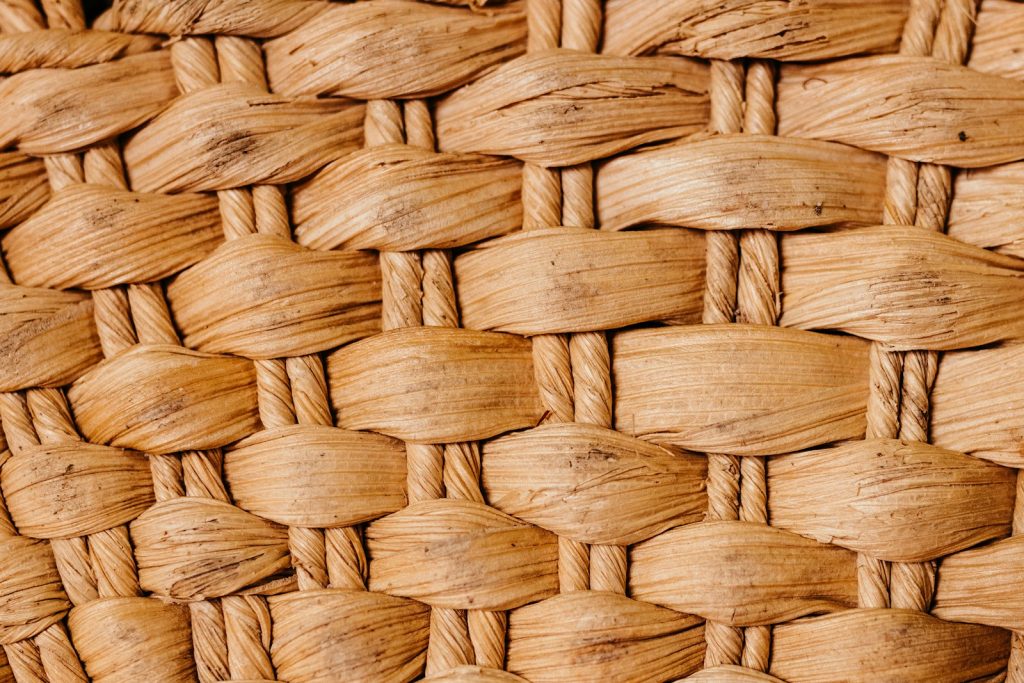
Honest buyer note: Our lamps are handwoven by village artisans in Bali and Java, so expect natural colour variation and a size tolerance of roughly ±1–3 cm on larger shades. All prices, MOQs, lead times and container counts are indicative ranges (2024–2025, FOB Indonesia) and final pricing is by quote. Standard wiring is E27 at 220–240 V; we can supply CE-compliant wiring or shade-only (no electrics) so you meet UL/UKCA or local standards in your market — we don’t imply certification we don’t hold. Natural fibre is moisture-sensitive, so we dry, treat and pack appropriately and recommend acclimatisation on arrival. Rattan is generally not CITES-listed. We coordinate vetted workshops and handle export documentation.
Rattan lamp FOB price by size is simply the export price from Indonesia for each lamp size (XS–XL), excluding sea freight, insurance and destination charges. Understanding rattan lamp FOB price by size helps importers plan realistic budgets, choose the right mix of pendant, floor and table lamps, and optimize container loading.
What “FOB price by size” really means for rattan lamps
FOB (Free On Board) Indonesia means the price per lamp covers:
– Production of the rattan shade (and optional wiring set)
– Local packaging suitable for export (usually inner box + master carton)
– Delivery to the export port (commonly Tanjung Priok Jakarta or Tanjung Perak Surabaya)
– Export documentation and terminal handling on the Indonesian side
FOB does NOT include:
– Ocean freight or airfreight
– Marine insurance
– Destination port charges, customs clearance, duties, VAT/GST
– Local delivery in your country
For rattan lighting, “by size” normally tracks three things together:
1. Shade diameter/height
2. Material volume (more core/peel rattan, more frame)
3. Packing volume (CBM per lamp, which dominates landed cost)
So two lamps with similar diameters but very different heights or shapes can fall into different price “size” bands.
All FOB ranges and MOQs below are indicative 2024–2025 levels, last verified June 2026, and confirmed case‑by‑case at quote time.
Typical rattan lamp size bands and price logic
Every factory groups SKUs a bit differently, but for Bali/Java woven lighting, FOB is usually quoted in size bands, e.g.:
- XS (mini pendants / bedside table lamps)
- S (standard pendants up to ~30 cm)
- M (core range pendants around 35–45 cm)
- L (large focal pendants 50–60 cm)
- XL (oversized feature pieces 70–90 cm+)
Within each band, price moves with:
– Weave complexity (simple open weave vs dense double‑wall)
– Frame work (plain ring frame vs sculpted rib structure)
– Rattan type (core vs peel vs mixed with bamboo or iron)
– Finishing (natural, whitewash, darker stains)
– Wiring included or “shade‑only”
Indicative rattan lamp FOB price by size (Indonesia, 2024–2025)
The table below summarizes typical ranges we see for handwoven rattan pendant, floor and table lamps FOB Indonesia. These are not fixed Bali Rattan Lamps price lists; they are trade‑credible ranges to guide your buying.
| Size band | Example dimensions (approx.) | Typical product types | Indicative FOB range / pc* (USD) | Indicative MOQ band (pcs / SKU) | Approx. CBM / pc |
|---|---|---|---|---|---|
| XS | Ø15–20 cm, H15–25 cm | Mini pendants, bedside table lamps, small wall lights | $6.50 – $10.00 | 50–100 | 0.020–0.035 |
| S | Ø25–30 cm, H25–30 cm | Small pendants, compact table lamps | $8.50 – $14.00 | 40–80 | 0.035–0.055 |
| M | Ø35–45 cm, H30–40 cm | Core range pendants, medium table lamps | $11.00 – $19.00 | 30–60 | 0.060–0.090 |
| L | Ø50–60 cm, H35–45 cm | Large feature pendants, small floor lamps | $16.00 – $28.00 | 20–40 | 0.100–0.150 |
| XL | Ø70–90 cm, H45–60 cm | Oversized pendant clusters, floor lamps | $24.00 – $45.00 | 10–25 | 0.180–0.300 |
*FOB Indonesia, by‑quote, last verified June 2026, assuming mixed 20’/40’ container orders and standard natural finish. Dense double‑wall weaves, custom colors, and complex frames can exceed these ranges.
Packing volume (CBM) varies by model, nesting, and carton strategy; use as planning guides only.
For a structured rattan lamp price chart specific to your project, we recommend sharing target sizes and approximate quantities by size band and country of import via plan your trip (we use WhatsApp a lot for faster clarifications and sketches).
How size affects pendant lamp FOB Indonesia
Because pendant shades are mostly “air,” their size drives cost mainly through CBM and labor time.
XS and S: entry-level pendants and small lamps
– Typical FOB range XS/S: roughly USD 6.50–14.00 per piece.
– Use cases: hospitality corridors, café clusters, bedside lamps, retail display accents.
– Pros:
– Highest packing density — you can often nest 3–4 per master carton.
– Strong value per CBM; ideal for first‑time import tests.
– Risks:
– High SKU fragmentation: easy to order too many references at too low volume, pushing up per‑SKU cost.
– If wiring is included, the wiring set can become a disproportionately large share of total cost.
M: the “core business” pendant size
Most commercial orders for pendant lamp FOB Indonesia cluster around Ø35–45 cm:
– FOB typically in the USD 11.00–19.00 bracket for mainstream open weaves and single‑wall shades.
– Good balance of:
– Presence over a dining table or bar
– Efficient packing (decent nesting, but fewer layers than XS/S)
– Mid‑range material and labor content
For many importers, M size forms 50–70% of volume in a container.
L and XL: statement pieces and volume killers
L and XL rattan pendants look great in hotels and high‑ceiling spaces but are expensive per CBM:
– FOB label price may only be 1.5–2.5x M size, yet CBM per piece can be 3–4x.
– FOB ranges:
– L: USD 16.00–28.00
– XL: USD 24.00–45.00 (and above for sculptural or double‑wall designs)
– Volume effect:
– A single XL pendant can occupy as much space as 4–6 S size pendants.
– Ideal as 5–15% of total pieces, not the bulk of a first‑time order unless you accept higher landed cost per lamp.
Floor and table lamps: size, structure and FOB price
Floor lamps and larger table lamps are more frame‑intensive than pendants. The rattan shade is often combined with:
– Iron or wood pole/legs
– Heavy base (metal, wood, or concrete‑filled)
– Additional wiring length and switches
This pushes FOB above pendant equivalents at the same height.
Indicative FOB ranges for rattan floor and table lamps
- Small table lamp (XS/S)
- Height ~25–35 cm, simple shade + basic base. Indicative FOB: USD 9.00–16.00 / pc.
- Medium table lamp (M)
- Height ~40–55 cm, more sculpted base or double‑shade structures. FOB: USD 14.00–24.00 / pc.
- Floor lamp (L/XL)
- Height ~140–170 cm, tripod or column designs. FOB typically USD 28.00–55.00 / pc, sometimes higher for complex woven bases.
Packing floor lamps efficiently often requires knock‑down (KD) construction (separate base and shade), which we can design into OEM/custom projects.
How MOQ works by size and design
Minimum order quantity is usually set per SKU, with flexibility across a mixed container.
Typical patterns we see:
SKU-level MOQ ranges
– XS/S pendants and small table lamps:
– 50–100 pcs per SKU is common.
– Below 50 pcs, FOB tends to creep up due to setup and weaving batch inefficiency.
– M pendants:
– 30–60 pcs per SKU.
– L pendants and medium table lamps:
– 20–40 pcs per SKU.
– XL pendants and floor lamps:
– 10–25 pcs per SKU, depending on complexity.
For assortment orders, factories usually require:
– Overall MOQ per order: from ~150–250 pcs total across SKUs for serious production scheduling.
– Mixed loading:
– You can often work with 5–20 SKUs in one 20’ container
– More SKUs are possible if design families share similar frames and finishing.
Custom / OEM designs
For OEM and custom rattan lamps:
– New mould/frame or jig:
– Expect MOQ 80–150 pcs per SKU for pendants, higher for floor lamps where frames dominate.
– Color development (e.g., specific whitewash/tint):
– MOQ can apply across a color rather than a single SKU if finishes are shared.
If you have a draft range plan, share your size and quantity targets through plan your trip and we can refine MOQ bands over WhatsApp or email with factory‑level feedback.
Rattan lamp HS codes, materials and origin
Correct HS classification affects duty rates and documentation.
Common HS codes for rattan lamps and shades
Exact HS code usage can differ by customs authority, but frequently used categories for rattan lighting include:
- 9405.10 / 9405.20 (HS 2017+)
- “Lamps and lighting fittings… of a kind used for… interior lighting” – electric and non‑electric. Many importers classify woven fixtures here.
- 9405.99
- Parts of lamps and lighting fittings (sometimes used for shades supplied without electrical parts).
- 4602.x
- “Basketwork, wickerwork and other articles… of rattan or other vegetable materials.” Sometimes applied to shade‑only products treated closer to baskets.
We always recommend:
– Confirm HS classification with your customs broker in the US, EU or Australia.
– Decide upfront whether you are importing:
– Complete lamps (shade + wiring), or
– Shades only (no electric parts)
Materials and geographic origin
For Bali/Java woven lighting:
– Weaving locations:
– Bali and Java (especially Cirebon region) host most weaving workshops used for export.
– Raw rattan origin:
– Often sourced from Kalimantan and Sulawesi forests and plantations, then processed (steamed, stripped, dried) in Java.
– CITES status:
– Most commercial rattan species used in Indonesian woven lamps are not under CITES controls, so standard commercial and phytosanitary procedures apply rather than CITES permits.
– Certifications:
– FSC/PEFC apply to wood, not to rattan as such. Some wood components may be certified, but blanket “certified sustainable rattan” claims should be avoided unless backed by specific documentation.
We do not use greenwashed language about “100% sustainable” materials; we focus on traceable supply, correct drying, and honest durability expectations.
Wiring, certification and what FOB really includes
Wiring is one of the most misunderstood parts of FOB pricing for rattan lighting.
Typical wiring spec from Indonesia
For export to Europe, UK and many international markets, the standard factory wiring package is:
– E27 lampholder (most common)
– Rated for 220–240 V
– Cable length typically 1–2 m for pendants, longer for floor lamps
– Often with inline switch for table/floor lamps
Key points:
– “CE-style” wiring:
– Many Indonesian suppliers will describe their sets as “CE style” or “for EU use,” but genuine CE conformity is the importer’s legal responsibility.
– Proper CE marking involves entire product testing and documentation, not just buying a “CE marked” cordset.
– UL/cUL for the US/Canada:
– Most Indonesian factories are not UL‑listed for complete lamps.
– Professional importers either:
– Import shade‑only and fit UL‑listed electrical kits in the US/Canada, or
– Work with a UL‑recognized assembler or lab to certify complete fixtures.
Shade-only vs wired: FOB price impact
– Shade‑only:
– Lower FOB per piece (no wiring cost, simpler packing).
– Often the preferred approach for US/Canadian importers targeting UL compliance locally.
– Complete lamp (with wiring):
– Adds wiring cost (typically USD 1.00–3.00 per set depending on spec and volume).
– Adds assembly labor and sometimes different packing.
When you request a pendant lamp FOB Indonesia quote, specify clearly:
– Shade‑only, or
– Wired for 220–240 V (and plug type: EU/UK/AU), or
– Special requirements (no switch, ceiling rose kit, etc.)
Moisture, mould risk and real-world quality
Handwoven rattan is not a sealed plastic product. Its performance depends on:
– Moisture content at packing
– Sea transport conditions
– Final use environment
Drying and moisture control pre‑export
Good factories in Bali/Java will:
– Sun‑dry and kiln‑dry rattan to target moisture levels before weaving.
– Keep finished shades in ventilated storage before packing.
– Use silica gel and vented cartons in more humid seasons.
Still, on long sea voyages, especially via humid transshipment ports, some risk remains:
– Mould spots on natural rattan
– Slight color variation or warping on poorly ventilated items
As buyers, you should plan for:
– Clear acceptance criteria in your PO (e.g., tolerance for slight shade differences).
– Simple cleaning/reconditioning protocols on arrival (soft brushing, light sanding on severe cases, re‑coating if you finish locally).
Indoor vs outdoor use
Standard rattan lamps from Bali/Java are:
– Designed for indoor or covered outdoor use only (patios, verandas with good protection).
– Not suitable for full exposure to rain or harsh sun without additional treatment or special synthetic rattan (PE rattan) construction.
If you need outdoor‑rated fixtures, discuss options explicitly — they may involve synthetic fibers, metal frames and specific coatings, which change FOB price and HS classification.
Container loading: how many rattan lamps per 20’ or 40’?
Because size and nesting drive CBM, “how many lamps per container?” is always an estimate until layouts are finalized.
Approximate container capacities by size band
Assuming efficient nesting and typical cartons:
| Container | XS (mini) | S (small) | M (medium) | L (large) | XL (oversized) |
|---|---|---|---|---|---|
| 20’ (28 CBM usable) | ~1,800–2,600 pcs | ~1,200–1,800 pcs | ~600–1,000 pcs | ~350–600 pcs | ~180–320 pcs |
| 40’ HC (60–65 CBM usable) | ~3,800–5,200 pcs | ~2,500–3,800 pcs | ~1,300–2,000 pcs | ~800–1,200 pcs | ~400–650 pcs |
These figures assume:
– Majority of SKUs can be nested (smaller sizes inside larger).
– Standard double‑wall export cartons.
– No extreme shapes that waste space.
Mixed loads (pendants, floor lamps, baskets, furniture) need more careful packing plans and will reduce the theoretical maximum counts.
If you already have a target SKU list and forecasted quantities, we can run a preliminary CBM and container loading estimation once we see dimensions — share them via plan your trip and we’ll coordinate details by WhatsApp if you prefer.
FOB price by size for US, EU and Australia import context
The FOB number is just the starting point. Different markets add different layers on top.
United States
– Many importers bring in:
– Shade‑only rattan pendants under a woven‑goods HS chapter, or
– Complete fixtures under 9405.x and then adapt for UL compliance.
– Key implications:
– Shade‑only:
– Lower unit weight and no electrical risk at US customs.
– You handle UL‑listed kits domestically.
– Complete lamps:
– You take on UL/ETL testing and product liability for the electrical part.
– Shipping:
– 40’ HC containers are common for volume import; LCL is economical only for starter orders or very high‑FOB items.
European Union and UK
– 230 V markets align better with standard Indonesian wiring:
– E27 220–240 V sets are widely used.
– Legal responsibility:
– The EU/UK importer or EU/UK based “responsible person” must ensure CE/UKCA conformity.
– Strategy:
– Many buyers still opt for shade‑only, especially for higher‑end brands who prefer to use local cordsets and can customize ceiling roses to each market.
– Others import fully wired pendants, then do sample testing and documentation for CE.
Australia and New Zealand
– Voltage is compatible (230–240 V), but:
– Plug type and electrical standards differ from the EU.
– Common approaches:
– Shade‑only importers wire locally with AS/NZS‑compliant kits.
– Full wiring in Indonesia only if the Australian partner has clear testing and approval processes.
In all regions, the most predictable path is:
1. Negotiate FOB price by size for shade‑only.
2. Cost separate electrical kits locally or via a specialist partner.
3. Compare that landed total against “wired FOB” options, including certification cost.
How to request a precise rattan lamp FOB price by size
To move from indicative ranges to factory quotes, share:
1. Product type
– Pendant / table / floor / wall
– Shade‑only or complete lamp
2. Sizes
– Target diameters and heights, or reference photos with scale
– Any maximum box size constraints (for your warehouse or e‑commerce)
3. Order structure
– Approximate quantity per SKU
– Total target volume (e.g., 250 pcs for first container, 2–3 repeats per year)
4. Destination
– Port (e.g., Long Beach, Rotterdam, Hamburg, Sydney)
– Whether you prefer FCL or LCL
5. Compliance/wiring preference
– CE/UKCA intention, UL strategy, or shade‑only
Send this via plan your trip and we can refine options by email or WhatsApp. For serious B2B projects, we typically provide:
– FOB ranges per size band and weave complexity
– Provisional MOQs per SKU
– CBM estimates and container loading approximations
– Notes on drying, finishing and wiring strategy for your market
FAQs: Rattan lamp FOB price by size
How much does a 40 cm rattan pendant lamp cost FOB Indonesia?
For a typical Ø35–45 cm (M size) open‑weave rattan pendant shade, indicative FOB Indonesia is around USD 11.00–19.00 per piece at commercial MOQs, last verified June 2026. Denser double‑wall weaves, complex shapes or special finishes can push that higher. Exact quotes depend on design, quantity and wiring choice.
Is it cheaper to import rattan lamps as shade-only?
Often yes. Shade‑only imports avoid the cost of Indonesian wiring sets and simplify electrical compliance in the US, EU and Australia. Your FOB per lamp goes down, and you can fit local certified cordsets. Overall landed cost depends on your local wiring costs and volumes, so we usually compare both options at quote stage.
What is a realistic minimum order quantity for mixed rattan lighting?
For a serious mixed order, expect total MOQs from roughly 150–250 pieces across SKUs, with per‑SKU MOQs around 30–100 pieces depending on size. XL and complex items can be 10–25 pcs per SKU. Exact numbers are negotiated by project and factory capacity.
Can rattan lamps from Indonesia be used outdoors?
Standard natural rattan lamps from Bali/Java are intended for indoor or well‑covered outdoor areas only. They are not designed for full weather exposure. For true outdoor use, you’ll need designs using synthetic rattan (PE) or specially treated frames and finishes, which change both FOB price and specifications.
Do I need fumigation or phytosanitary certificates for rattan lamps?
Many destinations accept industrially processed and finished rattan products without mandatory fumigation, but some buyers or authorities request fumigation or a phytosanitary certificate as an extra precaution. Costs and requirements vary by destination and current regulations, so this should be confirmed with your customs broker at the time of booking and specified clearly in your PO if needed.