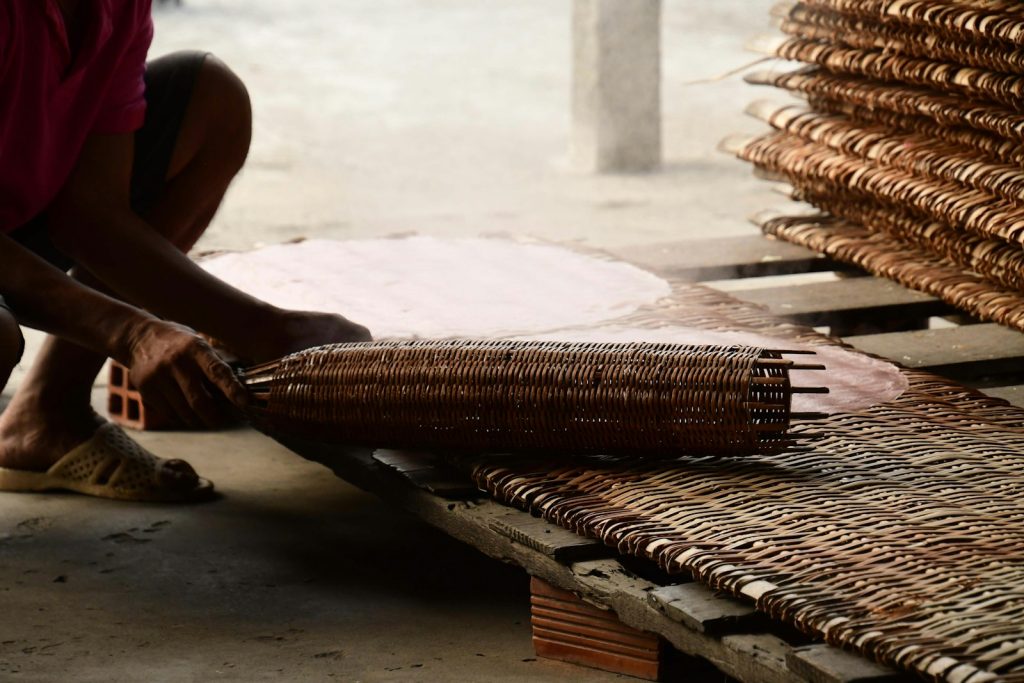
Honest buyer note: Our lamps are handwoven by village artisans in Bali and Java, so expect natural colour variation and a size tolerance of roughly ±1–3 cm on larger shades. All prices, MOQs, lead times and container counts are indicative ranges (2024–2025, FOB Indonesia) and final pricing is by quote. Standard wiring is E27 at 220–240 V; we can supply CE-compliant wiring or shade-only (no electrics) so you meet UL/UKCA or local standards in your market — we don’t imply certification we don’t hold. Natural fibre is moisture-sensitive, so we dry, treat and pack appropriately and recommend acclimatisation on arrival. Rattan is generally not CITES-listed. We coordinate vetted workshops and handle export documentation.
How to choose a rattan lamp supplier starts with checking three things: production capability, export reliability, and product compliance in your market. If you’re sourcing rattan pendant, floor or table lamps at scale, you need to vet both the weaving workshop and the exporter behind it, not just the catalogue.
At Bali Rattan Lamps, we sit on the trade and logistics side every day. Below is a practical, number-backed guide to help you vet a rattan lighting supplier, whether you work with us or not.
—
## What “good” looks like in a rattan lamp supplier
A reliable rattan exporter for lighting should be able to show you:
– Clear MOQ and realistic FOB price ranges
– Transparent lead times and capacity per month
– Honest moisture and mould risk management
– Wiring and certification options explained in writing
– Correct HS codes and basic export documentation
– Logical container loading plans for your SKUs
If a supplier cannot talk comfortably about these topics, you’re taking unnecessary risk.
—
## Step 1: Clarify your rattan lighting spec before you vet suppliers
You can only vet a rattan lighting supplier effectively if you know what you’re asking for.
### 1. Product category and complexity
Be specific on:
– Pendant vs. floor vs. table lamp vs. wall sconce
– Shade-only vs. wired and ready to hang
– Simple open-weave shades vs. intricate patterns or double-wall weaves
– Rough size ranges (e.g. 30–40 cm, 40–60 cm, 60–80 cm diameter pendants)
Complex weaves and oversize items increase labour cost, breakage risk and packing volume, which impacts both FOB and landed cost.
### 2. Intended market and compliance level
Tell suppliers:
– Destination market: US, EU/UK, Australia, other
– Voltage and socket: for Indonesia and EU we typically wire E27, 220–240V
– Your compliance strategy:
– Shade-only (you install your own certified electrics), or
– You handle third-party testing and certification, or
– You only buy from factories with specific marks (CE tests, UL-Listed components, etc.)
Many Bali/Java exporters, including us, are honest shade specialists first. We can supply basic wiring sets and CE-oriented documentation, but full UL/ETL listing for the US is usually organised by the buyer with their chosen lab.
### 3. Price position and quantity
Share an indicative target:
– Price band per item on FOB basis (e.g. “we’re targeting FOB US$12–18 for 40–55 cm pendants, 500+ units”)
– Typical order volume (per design and total)
– Order pattern: one-off container, seasonal drops, or regular monthly PO
Suppliers who know their own costs will tell you quickly if your target is realistic.
—
## Step 2: Check materials and origin transparency
A solid rattan lighting exporter should be clear about what they use and where it comes from.
### 1. Rattan type and structure
For lighting, most Indonesian producers use:
– Natural rattan pole/cane for structure
– Split rattan or wicker for weaving
– Sometimes seagrass, atta/ati, bamboo or synthetic rattan for accents
Ask:
– Which rattan species or grade? (e.g. manau, sega, mixed cane)
– Is the frame solid rattan, metal, or a mix?
– Are there plywood or MDF components near the bulb zone?
Pure rattan frames handle heat from typical LED bulbs well. Mixed frames with thin plywood near the lampholder may need more careful testing.
### 2. Source regions and CITES context
For Indonesia, the usual pattern is:
– Weaving and assembly: Bali and Java (e.g. Cirebon area in West Java)
– Raw rattan: typically from Kalimantan and Sulawesi forests and plantations
Natural rattan used for lamps is generally not listed under CITES, so you usually don’t need CITES permits. A reliable exporter will say this plainly rather than hiding behind vague “exotic species certifications”.
### 3. No greenwashing on certifications
If you need certified wood or paper parts, look for:
– FSC or PEFC claims on any timber or paper-based components
– Chain-of-custody certificates if you want to show it on your own packaging
Many small and medium workshops in Bali/Java are not FSC-certified. A credible supplier will avoid promising “sustainability certifications” they don’t hold. “Eco”, “green” or “sustainable” without documentation should not be the basis of your due diligence.
—
## Step 3: Understand realistic FOB price ranges and MOQ
You should expect a supplier to provide ranges, not exact numbers, before sampling. For 2024–2025, last verified June 2026, typical FOB Indonesia by-quote ranges for rattan lamps are:
– Small pendants (≈25–35 cm):
~US$9–15 FOB per piece at 200–300 pcs per design
– Medium pendants (≈35–50 cm):
~US$12–22 FOB per piece at 200–300 pcs per design
– Large pendants (≈50–70 cm):
~US$18–35 FOB per piece at 100–200 pcs per design
– Floor lamps:
~US$35–75 FOB per piece at 50–100 pcs per design
– Table lamps (shade + base):
~US$22–45 FOB per piece at 100–200 pcs per design
These are indicative only and depend on:
– Weave density and labour hours
– Frame material (full rattan vs. rattan + metal)
– Finishes (clear coat, stained, painted, distressed)
– Packaging spec (individual boxes vs. nested bulk pack)
– Shade-only vs. wired sets
### Typical MOQ patterns
For export-focused rattan lighting suppliers in Bali/Java, you’ll commonly see:
– Per design MOQ
– Pendants: 50–200 pcs per design per size
– Floor lamps: 30–80 pcs per design
– Table lamps: 50–150 pcs per design
– Per order MOQ (total)
– LCL start points: around 1–3 m³ or ~50–100 mixed lamps
– More efficient full 20’ container loads: roughly 300–600 mixed lamps depending on sizes
– 40’ HQ containers: roughly 700–1,200+ lamps depending on nesting and mix
Always treat MOQs as negotiable within reason, especially if:
– You accept longer lead times
– You consolidate more designs in one PO
– You commit to repeat orders
A supplier who refuses to talk about MOQ structure at all is harder to plan with.
—
## Step 4: Evaluate export readiness and logistics clarity
A reliable rattan exporter should handle more than just weaving. They should be fluent in basic export and logistics.
### Key logistics facts to confirm
| Checkpoint | What a reliable supplier should say |
|---|---|
| Port and FOB term | Clearly state FOB Benoa (Bali) or FOB Tanjung Priok / Tanjung Perak (Java), including export clearance in the quote. |
| HS code (lampshades) | Commonly use HS 9405 heading; many importers classify natural rattan lampshades under subheadings aligned with “lamps and lighting fittings, of other materials”. Always confirm with your customs broker. |
| Lead time (standard) | For rattan lamps: usually ~45–75 days from deposit to ready-for-shipment, depending on volume and season. |
| Lead time (sampling) | Custom sample development often 2–4 weeks, plus shipping time. |
| Fumigation / treatment | Explain if they provide ISPM-15 compliant fumigation or heat treatment for containers / pallets when requested. |
| Phytosanitary | Know when phytosanitary certificates are required (varies by country and product mix) and how to obtain them from authorities. |
| Container loading | Provide estimated CBM per design and realistic 20’/40′ loading plans, mentioning nesting and protective packing. |
If you need help benchmarking a quote or checking if their FOB term is structured sensibly, you can plan your trip with us via email or WhatsApp and we’ll walk through a sample quote structure with you.
—
## Step 5: Check wiring, certification, and shade-only options
Rattan lamps are often sold in two different configurations: shade-only or fully wired. Each has different compliance implications.
### 1. Shade-only supply
Many buyers in the US, EU and Australia prefer to import shade-only and:
– Use their own local-certified cord sets and lampholders
– Integrate shades into existing lighting systems
– Control final assembly and testing in their own facilities
Advantages:
– Lower compliance risk on the exporter side
– Easier to adapt to different plug types and voltages
– Simpler customs classification in some cases
A competent rattan lamp supplier should be comfortable shipping shade-only and packing to protect delicate crowns and rims.
### 2. Basic wiring sets from Indonesia
For EU/UK and other 220–240V markets, common options include:
– E27 lampholders, 220–240V
– PVC-insulated cables in white/black/cloth-look
– Ceiling roses/canopies in metal or plastic
Honest limitations you should expect to hear:
– Exporters provide basic component specs and, at best, test reports from component makers
– Full CE marking responsibility usually sits with the importer or brand owner
– For North America, UL/ETL listing is normally arranged by the buyer after import, not by small Indonesian workshops
If a supplier promises “fully certified in every country” without documentation, that’s a red flag. You want someone who says: “we can wire to this standard and provide documentation X; for full market certification you or your lab will do Y.”
—
## Step 6: Understand handmade variance, moisture and mould risk
Rattan lamps are handwoven from a natural material. That’s the appeal, and also the source of most quality issues.
### 1. Accepting handmade variance
Expect and specify:
– Dimensional tolerance:
– ±1–2 cm on small/medium pendants
– ±2–3 cm on larger or complex shapes
– Colour variation:
– From honey to slightly darker straw tones on natural finish
– More controlled look on painted or stained items
You should ask how the supplier manages:
– Jig or mould use to standardise shapes
– Final trimming and rim alignment
– In-line QC vs. end-of-line only
Agreeing a tolerance sheet upfront reduces later disputes.
### 2. Moisture, mould, and transit
Rattan is hygroscopic; it absorbs and releases moisture. Risk points:
– High humidity during production/packing
– Rainy-season shipping from Indonesia (especially in containers without dehumidifiers)
– Long transit and port dwell times
Questions for your supplier:
– How do you dry rattan before weaving and before packing?
– Do you kiln-dry, sun-dry, or both?
– Do you use desiccant packs, container desiccant poles, or dehumidifier bags in each shipment?
– What’s your policy on mould-affected items in transit?
No serious supplier will promise “zero mould” in all conditions. They should show you what they do to minimise risk and how they respond if a problem occurs.
—
## Step 7: Check sampling, OEM/custom capability, and CAD support
If you need private-label or custom designs, you must test the supplier’s development process early.
### 1. OEM vs. ODM
Ask:
– Can you develop from my drawings/photos (OEM)?
– Do you have your own designs I can brand (ODM)?
– How many iterations of samples are included in a quoted sampling fee?
An exporter with real OEM capability usually has:
– Pattern makers who can work from 2D drawings and basic 3D references
– Clear file format preferences (e.g. .STEP, .DWG, .DXF, .AI, .PDF)
– Basic CAD skills or a partner to translate your drawings into workable weaves and frame dimensions
### 2. Sampling cost and timings
Normal patterns:
– Sample fees charged per design, often deductible from bulk PO above a threshold
– 2–4 weeks production for samples depending on queue
– Sample shipping by courier at buyer’s cost
If a supplier offers “free custom samples with no conditions”, check where they are recouping that cost—usually in higher FOB prices.
—
## Step 8: References, factory visits, and basic due diligence
To vet a rattan lighting supplier beyond the catalogue:
### 1. Ask for trade references
Within reasonable confidentiality limits, a good exporter should be willing to share:
– Years in operation and main markets (e.g. EU, US, Australia)
– Trade show participation (e.g. Indonesian furniture fairs)
– Possibly, anonymised examples of past projects or retailers (without pricing)
You’re not looking for glossy endorsements; you want evidence they understand export expectations.
### 2. Site or video visits
If you can, visit:
– Weaving workshops (often in Bali or Cirebon area in Java)
– Final QC and packing facility
– Consolidation warehouse for container loading
If you cannot visit in person, request:
– Live video walkthroughs of production and packing
– Photos of real outgoing orders, not just showroom shots
### 3. Basic paperwork checks
Ask to see:
– Company registration in Indonesia
– Exporter identification number (if applicable under current Indonesian regulations)
– Sample commercial invoice and packing list format
These are simple filters that quickly separate established exporters from casual middlemen.
—
## How Bali Rattan Lamps positions itself
To give you a benchmark for what a transparent supplier looks like:
– Production: We work with weaving partners in Bali and Java (notably the Cirebon cluster), using rattan raw material typically sourced from Kalimantan and Sulawesi.
– Product scope: Handwoven rattan pendant, floor and table lamps; shade-only or with basic E27, 220–240V wiring for suitable markets; OEM and custom weaves and frames.
– FOB ranges: As outlined above, always quoted as 2024–2025 FOB Indonesia ranges, last verified June 2026, confirmed per RFQ—not fixed price lists.
– MOQs: Flexible by design and total order, with realistic ranges and honest feedback if a project is too small to be economical.
– Compliance stance: We are direct about what we can and cannot certify. Shade-only is often the cleanest route for US buyers; for EU/UK/Australia we support well-documented component specs and you manage final legal marking.
– Handmade honesty: We define tolerances, talk openly about variance and moisture risk, and suggest dehumidifier/desiccant strategies in every shipping plan.
If that type of transparency matches how you want to work, you can plan your trip with us—share your moodboard, target FOB range and volumes via email or WhatsApp, and we’ll respond with a structured RFQ checklist.
—
## FAQs on how to choose a rattan lamp supplier
How do I quickly vet a rattan lighting supplier from Bali or Java?
Ask for their indicative FOB ranges by size, standard MOQs per design, typical lead times, and which port they ship from on FOB terms. Then request photos or video of real packing and container loading, not just showroom displays. Finally, check how they answer basic questions on HS codes and wiring compliance for your destination market.
Should I import rattan lamps wired or shade-only?
If you sell into the US, many importers prefer shade-only and handle all wiring and certification locally. For EU, UK and Australia, some buyers accept wired sets with E27, 220–240V components and then arrange or confirm testing and documentation themselves. Shade-only reduces compliance complexity but increases your assembly work. Decide based on your in-house technical capacity.
What HS code do rattan lamps usually use?
Most importers classify rattan lamps under the general heading 9405 for lamps and lighting fittings, often in subheadings for “of other materials”. Exact subheadings and duty rates vary by country and product configuration, so always confirm with your customs broker. A reliable exporter will share how past clients have classified similar goods but will not claim to override your local customs authority.
How many rattan lamps fit in a 20-foot container?
As a rough planning range, a 20-foot container can often take around 300–600 mixed rattan lamps, depending heavily on sizes, shapes and nesting strategy. Large dome pendants with no nesting may reduce that count significantly, while smaller nested shades can push it higher. Ask your supplier for CBM per design and a simulated loading plan based on your SKU mix.
What deposit and payment terms are normal for rattan lamp suppliers?
For Indonesian rattan exporters, a common pattern is a 30–50% deposit on order confirmation, with the balance against copy of shipping documents or before container release. Exact terms depend on relationship length, order size and risk profile. Be cautious with suppliers who demand 100% prepayment on first contact without offering any verifiable references or secure payment options.