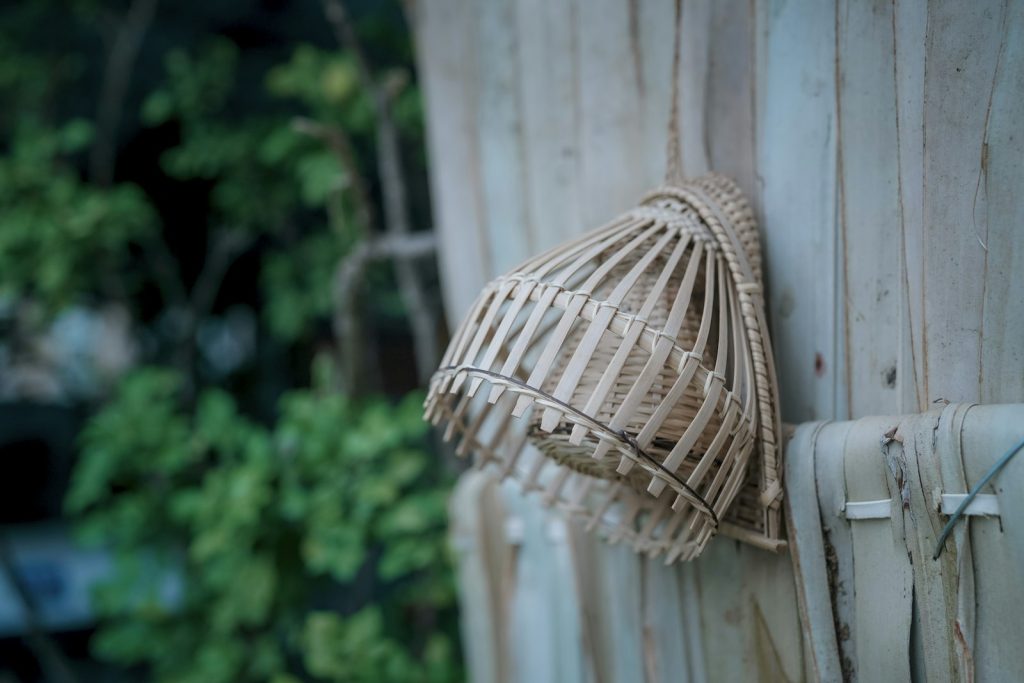
Honest buyer note: Our lamps are handwoven by village artisans in Bali and Java, so expect natural colour variation and a size tolerance of roughly ±1–3 cm on larger shades. All prices, MOQs, lead times and container counts are indicative ranges (2024–2025, FOB Indonesia) and final pricing is by quote. Standard wiring is E27 at 220–240 V; we can supply CE-compliant wiring or shade-only (no electrics) so you meet UL/UKCA or local standards in your market — we don’t imply certification we don’t hold. Natural fibre is moisture-sensitive, so we dry, treat and pack appropriately and recommend acclimatisation on arrival. Rattan is generally not CITES-listed. We coordinate vetted workshops and handle export documentation.
Fumigation natural fiber export is the set of treatments and documents required to ship plant-based products (like rattan and bamboo lighting) across borders without pest or mould issues. For rattan lamps, it usually covers pre‑export fumigation, moisture control, and sometimes a phytosanitary certificate depending on the destination and product classification.
At Bali Rattan Lamps, we sit in the middle of this every week: we ship handwoven pendant, floor and table lamps from Bali and Java (Cirebon), using mostly rattan from Kalimantan and Sulawesi. This guide explains how fumigation and phytosanitary requirements actually work for natural‑fiber lighting, what they cost, and how they affect your FOB pricing, lead time and import risk.
—
## What “fumigation & phytosanitary” really mean for rattan lighting
### Fumigation for rattan and other natural fibers
For rattan lamps, “fumigation” generally refers to:
– Pest control treatment of:
– Solid wood packaging (pallets, crate parts)
– Sometimes raw rattan bundles and thick cane components
– Methods typically used in Indonesia:
– Methyl bromide fumigation for wood packaging (to ISPM 15 standard)
– Sulfuryl fluoride (where available) for broader cargo fumigation
– Heat treatment or kiln‑drying for some components (not a gas but part of the pest/mould control chain)
Most finished rattan shades classified as household décor are not individually fumigated under current practice; instead, the emphasis is on:
– Making sure moisture is under control (to avoid mould)
– Treating any solid-wood pallets/boxes under ISPM 15
### Phytosanitary for rattan export
“Phytosanitary” refers to plant‑health measures and documents. For rattan lighting, this often means:
– A phytosanitary certificate from the Indonesian agricultural authority (Karantina Pertanian) in specific cases:
– Some buyers request it for any plant‑based goods as internal policy
– Certain countries/ports occasionally ask for it at their discretion
– More commonly, phytosanitary focus is on raw plant materials:
– Unprocessed rattan poles
– Baskets or raw handicrafts in certain HS headings
Finished rattan lamps under household lighting HS codes are often cleared without a phytosanitary certificate into the US, EU and Australia, but this can change by port and by shipment profile. Many of our mid‑size and larger buyers now treat phytosanitary as “cheap insurance.”
—
## HS codes and why they matter for fumigation & phytosanitary
Your HS code determines how customs and quarantine officers view your shipment.
For rattan lighting, the most common headings we see buyers use (always confirm with your customs broker) are:
| Product type | Typical HS code range* | Customs view on plant health risk | Typical document focus |
|---|---|---|---|
| Rattan pendant lampshades (non‑electrified) | 9405.10 / 9405.99 (household lighting parts/decor) | Finished decor, moderate plant origin concern | Invoice, packing list, fumigated pallet cert (ISPM 15) |
| Rattan floor/table lamps (electrified) | 9405.20 / 9405.50 / local variations | Finished electrical goods | Invoice, packing list, wood packaging cert; wiring compliance checked by buyer/country |
| Rattan baskets / raw handicrafts | 4602.x (basketwork / wickerwork) | Higher plant origin concern | Phytosanitary more commonly requested |
| Raw rattan poles / cores | 1401.x / 4601.x | High plant origin concern | Phytosanitary almost always required |
*Always confirm HS classification with your own customs broker in the importing country. We share typical patterns we see; we do not provide binding tariff classification.
Because we sit in the finished household lighting space, our export files focus on:
– Correct HS heading for lamps and shades
– ISPM 15 treatment proof for wood pallets/crates
– Optional phytosanitary certificate if requested in the purchase order
– Good photographic packing evidence to support any customs questions
—
## Where our rattan comes from and why moisture matters
Our supply chain in short:
– Weaving & assembly: Bali and Java (especially Cirebon workshops)
– Raw rattan: Primarily from Kalimantan and Sulawesi
– Other fibers: Water hyacinth, seagrass, bamboo, and combinations with metal frames
Natural fibers carry three main export risks:
1. Residual moisture in the cane or plant fiber
2. High ambient humidity in Bali/Java during rainy periods
3. Transit conditions (especially in unventilated containers or during winter sea legs)
These risks are far more important to your landed quality than “fumigation rattan lamps” as a slogan. Fumigation kills pests; it does not dry rattan or prevent mould if moisture is trapped.
We manage this via:
– Pre‑drying: Sun‑drying and/or kiln‑drying rattan poles before splitting/peeling
– Workshop storage: Elevated racks, airflow, avoiding direct ground contact
– Pre‑packing checks: Moisture checks on thicker pieces and base structures
– Container loading discipline:
– Avoiding plastic wrap directly around damp products
– Using desiccant bags in cartons/containers
– Not loading products obviously damp from rain events
We still state clearly:
Handmade natural‑fiber lighting can develop mould spotting in transit, especially on long sea routes or through winter ports. Fumigation does not guarantee this will never occur.
—
## Fumigation and phytosanitary: what buyers should expect (US, EU, AU)
### United States import context
For the US, natural‑fiber lighting normally triggers attention from:
– CBP (Customs and Border Protection) – classification, valuation, admissibility
– USDA / APHIS (Animal and Plant Health Inspection Service) – plant health
Common patterns we see with our US buyers:
– Finished rattan lamps under household lighting HS headings are regularly cleared with:
– Commercial invoice
– Packing list
– Bill of lading
– ISPM 15‑compliant pallets/wood packaging
– Phytosanitary is not always requested by US brokers for finished lamps, but:
– Some large retailers mandate it internally for any plant‑based goods
– If your shipment profile includes baskets or raw plant goods, APHIS may ask more questions
Our recommendation for US importers:
– Decide with your customs broker if you want phytosanitary as standard. If yes, we obtain it at origin and include it in FOB.
– Ensure your pallets or wood crates comply with ISPM 15; gas or heat‑treatment certificates need to match your documents.
– Build in time and budget in case a shipment is selected for inspection or additional treatment on arrival.
### European Union import context
For EU imports (including ports like Rotterdam, Antwerp, Hamburg):
– Customs and plant‑health authorities focus heavily on:
– Correct HS classification
– The nature of plant material (raw vs finished)
– Wood packaging compliance (ISPM 15)
We observe:
– Many EU importers of rattan lighting rely on:
– Standard commercial docs
– ISPM 15 packaging
– Phytosanitary certificates are requested more often than in the US for mixed natural‑fiber homeware shipments, especially if:
– HS 4602.x (basketwork) appears in the same container
– The buyer’s quality/compliance team prefers clear plant‑health documentation
Our EU‑focused guidance:
– Clarify with your customs broker if your lighting shipments should always carry phytosanitary. We can align your purchase orders with that policy.
– For programs with major retailers, ask your compliance team to confirm:
– If they treat rattan as “high‑risk plant material”
– What document wording they expect on phytosanitary and fumigation certificates
– Plan for occasional border inspection delays, particularly in peak seasons or after regulatory updates.
### Australia import context
Australia is one of the strictest markets for plant‑based imports. Natural fiber + “Made in Indonesia” will always attract attention from DAFF (Department of Agriculture, Fisheries and Forestry).
From experience with Australian buyers:
– Wood packaging must strictly follow ISPM 15, and certificates must match:
– Exporter name
– Container numbers
– Treatment dates
– Rattan lighting often enters under lighting HS codes, but plant origin still matters.
– Phytosanitary certificates are commonly requested by Australian brokers for:
– Rattan, bamboo, and similar natural‑fiber homewares
– Any mixed shipment with raw or semi‑raw plant products
Our Australia‑specific recommendation:
– Treat phytosanitary certification as standard for rattan shipments into Australia.
– Budget a bit more time in transit planning for potential quarantine inspection.
– Work closely with your customs broker; if they issue specific DAFF wording requests, we can adapt export documentation on our side.
—
## Fact sheet: fumigation, phytosanitary, and FOB ranges (2024–2025)
Below are indicative, by‑quote‑only ranges based on our current pattern of shipments and export services. All figures are FOB Indonesia, last verified June 2026, and may vary by order mix, treatment provider and port.
- Typical HS codes for rattan lighting
- Primarily in 9405.x heading (household lighting and parts); confirm exact subheading with your broker.
- Fumigation of pallets/wood packaging
- ISPM 15 treatment (methyl bromide or heat treatment), certificate issued by licensed provider.
- Indicative fumigation cost range (per 20’–40’ container)
- Approx. USD 60–180 per shipment added to FOB quote, depending on port, provider, and treatment scope.
- Phytosanitary certificate (if requested)
- Issued by Indonesian agricultural/quarantine authority; usually 3–7 working days lead‑time impact, plus physical inspection schedule.
- Indicative phytosanitary cost range (per certificate)
- Approx. USD 50–150 per shipment added to FOB quote; higher if additional lab checks or repeat inspections are needed.
- Typical MOQ for rattan lamps (mixed SKUs)
- From ~50–100 pcs per style for OEM/custom; smaller MOQs possible for running designs but with higher unit prices.
- Lead time for production (excluding fumigation/phytosanitary)
- ~6–12 weeks from deposit to ex‑factory for standard mix; complex custom weaves and oversize pendants trend to the longer end.
- Additional lead‑time impact from fumigation & phytosanitary
- Allow +3–10 working days to coordinate treatment, inspections, and certificates before vessel cut‑off.
- Container loading reference – 20’ FCL
- Roughly 400–700 medium pendant lampshades, depending on sizes/stacking; large domes and floor lamps reduce count significantly.
- Container loading reference – 40’ HQ FCL
- Roughly 900–1,600 medium pendants or mixed pendants/table lamps; actual counts by packing plan and carton dimensions.
Every serious project should be costed against your actual SKU list and target HS classification. Share your item list and preferred HS with us and your broker, and we will structure an FOB-by-quote that includes the specific fumigation and phytosanitary services you want.
If you are mapping out a new rattan lighting program and need realistic export assumptions, you can plan your trip through the process with us via email or WhatsApp; we can help you build a working landed‑cost model without any pressure to commit before you are ready.
—
## How fumigation and moisture control fit into your QC plan
Fumigation and phytosanitary reduce pest and plant‑disease risks. They are not a replacement for good product‑level quality control. A resilient import program usually has four layers:
### 1. Material preparation
– Selecting properly cured rattan from Kalimantan/Sulawesi suppliers
– Pre‑drying and pre‑treating thick cores and structural parts
– Avoiding moldy or visibly stained raw material from the outset
### 2. Workshop process
– Consistent weaving tension; avoiding overly tight weaves on wet material
– Sanding and finishing that limits fibre fraying (which can trap moisture)
– Controlled storage: raised racks, air movement, basic segregation of fresh and older stock
Handmade pieces will always show variance in:
– Strut spacing
– Color tone between batches
– Exact diameter and height (usually within agreed tolerances)
We consider this a normal part of handwoven lighting, but it must be acknowledged in your specifications and buyer expectations.
### 3. Pre‑shipment inspection
Depending on order size, buyers often opt for:
– AQL‑based pre‑shipment inspection via third‑party QC partners
– Focus checklist for natural fibers:
– Visible mould or black spotting
– Broken cane ends or splinters
– Structural stability (frames not twisting)
– Consistency of weave and key dimensions
– Correct labeling and barcodes
We can support this with:
– High‑resolution packing photos
– Sample measurements and random checks before handover
### 4. Fumigation, phytosanitary, and container care
– Performing pallet/wood fumigation and obtaining certificates
– If requested, coordinating phytosanitary inspection and documentation
– Using desiccants, breathable carton layouts, and reasonable stuffing density
– Avoiding loading in heavy rain where cartons might get soaked just before sealing
This layered approach is more effective than relying solely on “fumigation rattan lamps” as a line on a certificate.
—
## Wiring and certification: what’s covered, what’s not
Much of the export discussion for lighting rightly focuses on electrical safety certification. Here is where we draw the line clearly:
– Shades‑only exports:
– Many of our shipments are lamp shades without wiring.
– In that case, you manage:
– Local wiring
– CE/UL/SAA compliance
– Local testing
– Customs still cares about the natural‑fiber aspect, but electrical regulations are handled in your market.
– Electrified lamps (E27, 220–240V):
– We typically supply fittings configured for 220–240V with E27 holders.
– Components can be sourced with CE‑marked parts, but:
– This is not the same as end‑product CE or UL certification.
– For the US and Canada, UL/ETL listing is normally the buyer’s responsibility in the destination market.
– We are always transparent: we do not claim UL listing or market‑specific household safety marks unless explicitly arranged and documented for a project.
Fumigation and phytosanitary processes do not interact meaningfully with electrical compliance. They only address plant health and pest risks.
—
## Is rattan CITES‑listed?
Rattan species used in our lamps are generally not CITES‑listed under current regulations. However:
– Some plant species globally are CITES‑controlled.
– Timber and wildlife rules can shift.
For rattan lighting specifically, the primary cross‑border concerns today are:
– Plant‑health/quarantine (mould, pests)
– Correct HS classification and valuation
– Local electrical compliance (for wired items)
If your compliance team expects CITES documentation for any reason, we can coordinate with our upstream suppliers for species and origin declarations, but this is not a standard requirement for our rattan lighting range at the time of writing.
—
## How fumigation and phytosanitary show up on your documents
On a typical FOB shipment file for natural‑fiber lighting, you may see:
– Commercial invoice & packing list
– Product descriptions (e.g., “Handwoven rattan pendant lampshade”)
– HS code references
– Carton count, net/gross weight
– Fumigation certificate
– Issued by an Indonesian licensed fumigation provider
– Shows treatment method (e.g., methyl bromide, heat treatment)
– Identifies container/pallets and dates
– Phytosanitary certificate (if requested)
– Issued by Indonesian quarantine/agricultural authority
– Describes goods and plant materials
– States that the consignment has been inspected and meets import requirements as understood at time of issue (this is not a universal guarantee; importing countries can still inspect)
– Bill of lading
– Confirms vessel, container, and route
For some buyers, we also include:
– Manufacturer declaration on origin of materials
– Moisture‑related handling notes for warehouse teams in the destination country (how to unwrap and ventilate natural‑fiber products on arrival)
—
## Working with us on your next rattan lighting shipment
Bali Rattan Lamps is built to be an honest B2B desk: clear on what’s possible on FOB, on MOQ, on fumigation and phytosanitary realities, and open about the risks of natural fiber and handwork.
If you are:
– Building a new rattan lighting category
– Shifting production from another country to Indonesia
– Consolidating multiple homeware suppliers into fewer containers
…we can help you map:
– SKU‑level packing and container loading scenarios
– Indicative 2024–2025 FOB ranges by quote, including:
– Fumigation of pallets/wood packaging
– Optional phytosanitary certificates by destination
– Production and export lead times that reflect real workshop and treatment capacity
Share your draft SKU list and target ports and we’ll work through a practical shipment plan. You can plan your trip through design, sampling, compliance, and shipping via email or WhatsApp; our role is to give you enough detail to make solid decisions.
—
## FAQs on fumigation & phytosanitary for rattan lamps
Do all rattan lamp shipments need fumigation?
Wood packaging (pallets, crates) almost always needs ISPM 15‑compliant fumigation or heat treatment for export. The rattan shades themselves are not usually individually fumigated as finished household lighting goods, but some buyers or countries may request broader cargo fumigation as a policy. We factor any required treatments into your FOB quote on a shipment‑by‑shipment basis.
Is a phytosanitary certificate mandatory for rattan lighting?
For finished rattan lamps under household lighting HS headings, many shipments clear without phytosanitary certificates in the US and EU, though Australia is stricter. However, some customs brokers and large retailers make phytosanitary a standard requirement for all plant‑based goods. We can obtain phytosanitary certificates where requested, adding cost and a few extra days for inspections.
Will fumigation prevent mould on rattan lamps?
No. Fumigation targets insects and plant pests; it does not dry the material or guarantee mould prevention. Mould risk is a function of raw material moisture, workshop conditions, packing method, and container environment. We manage this through drying, storage, desiccants and sensible stuffing density, but natural‑fiber products will always carry some moisture‑related risk in long sea shipments.
Can you ship rattan lamps with UL‑certified wiring for the US?
We can export electrified lamps with E27, 220–240V fittings and components that carry certain markings, but end‑product UL or ETL listing for the US is normally handled by the buyer with local testing and certification labs. We do not claim UL certification for our standard rattan lamps; many US clients instead import shades‑only and complete wiring and certification domestically.
How much extra time should I allow for fumigation and phytosanitary?
For most shipments, fumigation of pallets and documentation can be completed within a few days alongside final packing. Phytosanitary inspections and certificates typically add around 3–10 working days, depending on authority schedules and the complexity of the shipment. We build these ranges into your critical path so that vessel cut‑off dates remain realistic.