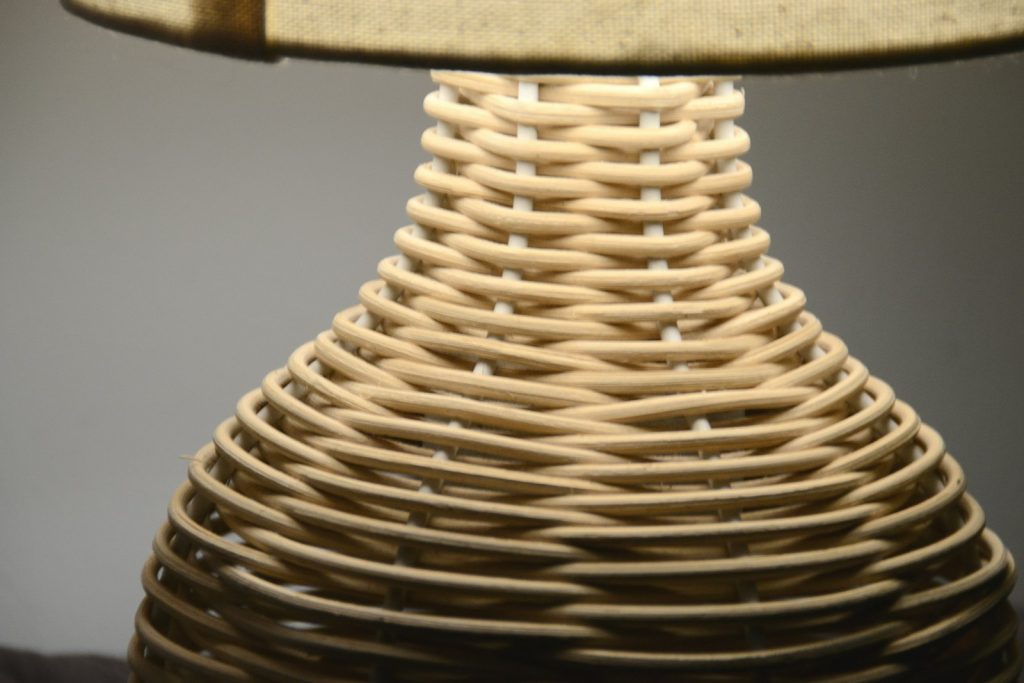
Honest buyer note: Our lamps are handwoven by village artisans in Bali and Java, so expect natural colour variation and a size tolerance of roughly ±1–3 cm on larger shades. All prices, MOQs, lead times and container counts are indicative ranges (2024–2025, FOB Indonesia) and final pricing is by quote. Standard wiring is E27 at 220–240 V; we can supply CE-compliant wiring or shade-only (no electrics) so you meet UL/UKCA or local standards in your market — we don’t imply certification we don’t hold. Natural fibre is moisture-sensitive, so we dry, treat and pack appropriately and recommend acclimatisation on arrival. Rattan is generally not CITES-listed. We coordinate vetted workshops and handle export documentation.
Importing rattan lamps to Australia means buying handwoven pendant, floor or table lamp shades and bases from Indonesia (mainly Bali and Java) under an import program that respects Australian biosecurity, wiring and labelling requirements. On this page we walk through how australia rattan lamp import projects are typically priced, packed, documented and cleared, so you can plan volumes and landed costs with fewer surprises.
What “importing rattan lamps to Australia” really involves
Bali and Cirebon (Java) are major hubs for woven-rattan lighting. For Australian buyers, the supply chain usually looks like this:
- Raw rattan cane and core harvested in Kalimantan and Sulawesi
- Stripping, splitting, drying and pre-processing in Java
- Handweaving, finishing and packing in workshops around Bali and Cirebon
- Export via Port of Tanjung Perak (Surabaya) or Port of Tanjung Priok (Jakarta) to Australian ports such as Melbourne, Sydney or Brisbane
On the import side you need to control five main risks:
- Biosecurity rattan Australia: moisture, mould, live insects and soil contamination
- Tariff classification: correct HS code for woven lighting and rattan goods
- Electrical conformity: 220–240V, E27 and Australian standards if you import wired fixtures
- Labelling & packaging: country of origin and safe packaging that survives a long sea voyage
- Cost & capacity planning: FOB ranges, MOQs and container loading efficiency
At Bali Rattan Lamps, most Australian buyers work on an FOB Surabaya or FOB Semarang basis, then handle freight and customs with their own forwarder or import agent. We focus on accurate piece counts, honest quality grading and reliable documentation.
Typical product scope for Australia rattan lamp import
Australian customers usually combine several product families in the same shipment to hit volume and freight-efficiency targets. For reference, here is how we define the main rattan lamp categories we export:
- Rattan pendant lamp shades – open-weave or tight-weave shades in PE rattan (synthetic) or natural rattan, generally 25–60 cm diameter for residential and up to 80–100 cm for hospitality projects.
- Rattan floor lamps – woven shades with wooden or metal frames, 140–180 cm tall, usually shipped KD (knock-down) where possible to save volume.
- Rattan table lamps – smaller shades (20–35 cm diameter) with rattan-wrapped or wooden bases, popular for coastal and boho interiors.
- Rattan lamp bases only – for buyers who source shades and wiring locally but want the texture of woven rattan on the base.
- Shades-only – no wiring, for Australian lighting brands who prefer to add compliant lampholders and plugs locally.
All lamps are handwoven. That means you get character and some variation: slight differences in weave tension, colour tone between batches, and minor dimensional variance (usually ±1–2 cm on shade diameters) are normal. For multi-store roll-outs we recommend early sampling and confirming acceptable tolerance ranges in your PO terms.
FOB price ranges, MOQs and container loading (2024–2025)
Every project is ultimately by-quote, but Australian buyers need planning numbers. The following indicative 2024–2025 FOB ranges (last verified June 2026) are based on our current production in Bali and Cirebon.
| Item type | Typical size range | Indicative FOB range* (USD/pc) | Indicative MOQ | Approx. pcs / 20’ FCL |
|---|---|---|---|---|
| Rattan pendant lamp shades (natural) | Ø30–50 cm | USD 9–22 | 50 pcs / design | 350–800 (mixed sizes) |
| Rattan pendant lamp shades (PE rattan / outdoor-rated material) | Ø30–50 cm | USD 11–26 | 50 pcs / design | 350–700 |
| Oversized pendant shades | Ø60–100 cm | USD 24–60 | 20 pcs / design | 120–350 |
| Rattan floor lamps (KD where possible) | H140–180 cm | USD 38–95 | 20 pcs / design | 120–260 |
| Rattan table lamps | H35–55 cm | USD 16–45 | 40 pcs / design | 450–1,000 |
| Shades-only (no base, no wiring) | Ø20–45 cm | USD 7–18 | 50 pcs / design | 600–1,400 |
*FOB Surabaya / Semarang, by-quote only, depending on weave complexity, finish, hardware and packing specification.
Very dependent on nesting efficiency, carton spec and mix of SKUs; counts above are planning ranges, not guarantees.
For mixed orders below a full container, Australian buyers often start at 5–15 m³ LCL. At that size the freight cost per lamp is higher, but it allows you to test the market. As volumes grow, shifting to a 20’ or 40’ FCL generally makes better sense on a landed-cost-per-unit basis.
Key ordering terms for Australian buyers
- Lead time (mass production)
- Typically 6–10 weeks from deposit and final approval of samples/technical drawings, depending on order volume and season.
- Sampling
- 1–3 prototype rounds are common for OEM/custom designs; sample lead time 2–4 weeks plus courier to Australia.
- Deposit & balance
- Standard terms are 30–50% deposit with order, balance against final documents or before container release.
- Payment currency
- USD is standard; some buyers work in EUR or AUD at agreed FX on quotation date.
- Tolerance & quality grading
- Handmade rattan will always show some variance in colour and weave; we define acceptable thresholds and reject criteria with you upfront.
If you want to model a specific project, share your target retail price and volume, and we can suggest constructions and sizes that ship efficiently. You can plan your trip or set up a WhatsApp call to walk through options and draft an RFQ.
HS codes and tariff classification for rattan lighting
For Australia, most woven rattan lamp products from Indonesia fall under standard HS chapters for lighting and vegetable-material goods. Your customs broker will make the final call, but these are the references many Australian importers use as a starting point:
- 9405.10 – Chandeliers and other electric ceiling or wall lighting fittings (often used when wiring is installed and the item is primarily a light fitting).
- 9405.20 – Electric table, desk, bedside or floor-standing lamps (for finished, wired lamps).
- 9405.99 – Parts of lamps and lighting fittings (sometimes used for shades only).
- 4602.19 / 4602.90 – Basketwork, wickerwork and other articles made directly to shape from plaiting materials (for some decorative non-electrical items).
Many Australian buyers importing shades-only prefer to classify them as lamp parts or basketwork rather than full lighting fittings, as there is no electrical function in the imported product. For wired lamps, you should expect classification under chapter 94. Indonesia-origin goods may benefit from reduced duty under applicable trade frameworks; your broker can confirm current rates and any required certificates of origin.
Rattan from Indonesia is generally not listed under CITES, so you are not dealing with the same permit regime as certain hardwoods or exotic species. That said, Australian biosecurity authorities treat any plant-based product as a potential pathway for pests, so biosecurity remains critical.
Biosecurity rattan Australia: fumigation, moisture and mould
Australia’s biosecurity rules are strict. Rattan, bamboo and timber articles are regularly inspected on arrival, especially if there are signs of mould, insect activity, bark or soil. For rattan lamps the main risk factors are:
- Insufficient drying before weaving and packing
- High humidity during sea transit
- Dead or live insects in the material
- Organic contamination in cartons (loose straw, leaf litter, unprocessed wood)
Drying and finishing on the Indonesian side
In our workshops, raw rattan is processed and kiln-dried or sun-dried until moisture content is within a target range appropriate for export. For Australia, we recommend a conservative approach:
- Use fully peeled/core rattan, not bark-on cane, for most visible parts.
- Avoid unprotected raw timber bases unless kiln-dried and sealed.
- Add a clear sealant where design allows, to stabilise the surface and reduce moisture uptake.
Fumigation and phytosanitary documentation
Depending on the product mix and current Australian regulation, your consignment may require:
- Fumigation certificate – Typically methyl bromide or approved alternatives performed by a licensed provider in Indonesia.
- Phytosanitary certificate – Issued by Indonesian authorities for certain plant-based products.
- Pest-free declarations on commercial invoices and packing lists.
Many Australian importers choose to fumigate all mixed natural-material homewares shipments bound for Australia, even if not strictly required for every HS code, because a single biosecurity hold can be far more expensive than preventive treatment.
Container packing to minimise biosecurity issues
How we pack your rattan lamps has a direct impact on the risk of delays in Australia:
- Clean, new cartons with no organic fillers (no straw, no reclaimed food cartons).
- Silica gel or desiccant packs inside master cartons to manage humidity on the water.
- Nesting of shades to reduce empty air and limit movement.
- Palletisation if required by your 3PL / DC in Australia, using ISPM 15-compliant pallets.
Even with careful drying and packing, a 3–4 week tropical sea journey can create condensation inside containers, especially during winter arrivals into southern Australian ports. Factor in time and cost for potential quarantine inspection and, if needed, onshore treatment.
Wiring, voltage and Australian standards
Indonesia operates on 220–240V with E27 lampholders, which matches the voltage range in Australia. That does not mean every factory-fitted cable set automatically complies with Australian electrical standards.
Three wiring scenarios we see with Australian buyers
- Shades-only imports (no electrical parts)
This is the most common pattern for Australia. You import purely the woven shade (and sometimes a frame), then add Australian-compliant lampholders, flex and plugs locally. It simplifies compliance and reduces the risk of rework at destination. - Export with generic CE-style wiring
Some buyers accept non-certified but functionally suitable E27 / 220–240V wiring sets for internal use or further modification in their own facility. These are usually not sold to end customers without additional checking and relabelling. - Buyer-specified or buyer-supplied wiring
Larger brands sometimes ship their own pre-approved lampholders and cords to Indonesia, or specify exact components, then handle final approval and certification in Australia.
At Bali Rattan Lamps we are transparent: we can supply woven shades and bases, and simple E27/220–240V cord sets or bulb holders on request, but we do not claim Australian electrical certification. For UL, SAA or other marks, testing and certification must be planned and paid for by the buyer or their appointed lab.
Handmade variance and QC for the Australian market
Rattan lighting is not a moulded plastic SKU where every piece is identical. Australian retailers and designers usually accept some individuality but still need predictable QC. We handle this by defining:
- Dimensional tolerances – e.g. ±1–2 cm on diameter and height for pendants, depending on design.
- Colour tolerance bands – natural rattan will age and darken slightly; we photograph and define acceptable ranges for each batch.
- Weave density and pattern – small gaps or overlaps are inevitable in handweaving; we document reject samples versus “good handmade” samples before production.
- Hardware standards – consistency of frames, rings and hanging hardware, so installation in Australia is straightforward.
For chain retailers and multi-property hospitality projects, a pre-shipment inspection (internal or via a third party) is strongly recommended. In many cases, the cost of one extra QC step is far lower than the cost of field replacements across Australia.
Shipping options: LCL vs FCL to Australia
From Indonesia to Australia, most rattan lamp buyers use sea freight. The choice between LCL (less than container load) and FCL (full container load) depends on your volume and how quickly you expect to turn stock.
LCL (consolidated) shipments
- Good for first orders, small test ranges or seasonal top-ups.
- Charged by cubic metre (m³); rattan lamps are light but bulky, so you pay for volume, not weight.
- More handling at depots along the way, which can increase damage risk and transit time variability.
- Biosecurity checks may be influenced by the broader content of the consolidated container, not just your goods.
FCL (20’ or 40’ container)
- Better unit economics once your volume exceeds roughly 12–15 m³.
- We can optimise packing for your exact SKUs, nesting lamps to maximise count per container.
- Less cross-handling, generally lower risk of physical damage.
- Easier documentation and identification if a container is pulled for biosecurity inspection.
For reference only, a well-designed assortment of mid-sized rattan pendants might reach approximately 350–800 pcs in a 20’ FCL and 800–1,800 pcs in a 40’ FCL, assuming efficient nesting. Very large or rigid shapes reduce those counts.
OEM and custom rattan lamps for Australia
Australian interior brands and project specifiers often need proprietary shapes, sizes or finishes that differ from standard catalogue items. OEM and custom work is possible, with some practical guardrails:
- Technical drawings or reference samples – clear dimensions, intended bulb types, hanging method and target look.
- Material choices – natural rattan, combination with bamboo, or synthetic PE rattan for covered outdoor use (note: “outdoor” performance is still about controlled exposure; constant direct weathering will shorten life).
- Finish – natural clear, white-wash, darker stains, or colour paint. Each affects texture, price and production time.
- MOQ per design – usually higher than for existing SKUs. For complex custom pendants, MOQs from 50–100 pcs per size are typical.
Sampling is always required before bulk production. Because everything is handwoven, small design tweaks (frame diameter, curvature, weave density) can dramatically affect both the visual result and how well shades nest for shipping. Taking one extra round of development to optimise both aesthetics and container loading usually pays for itself quickly.
Cost planning: beyond FOB price
To understand real landed cost into your Australian warehouse, add the following items to the indicative FOB ranges:
- International freight (LCL m³ rate or FCL container rate)
- Insurance (optional but prudent for full containers)
- Australian port charges and terminal handling
- Customs brokerage and entry fees
- Import duties and GST, based on HS code and any preferential trade rates
- Biosecurity inspection fees and any onshore treatment charges, if imposed
- Domestic transport to your DC or 3PL in Australia
On bulky but relatively low-weight items like rattan lamps, the freight and logistics portion can be a significant part of the landed cost. That is why container optimisation, product nesting and thoughtful SKU selection are as important as negotiating a sharp FOB price.
If you share your target landed price and port-of-entry preferences, we can help you model different scenarios. Use our plan your trip page to reach us by email or WhatsApp and we can build a first-draft costing file together.
Working with Bali Rattan Lamps for the Australian market
Bali Rattan Lamps positions itself as an honest B2B “desk” rather than a glossy retail brand. For Australian buyers that means:
- Transparent material sourcing – woven in Bali and Cirebon from rattan that largely originates in Kalimantan and Sulawesi.
- Clear 2024–2025 FOB ranges – always framed as indicative and by-quote, never as fixed catalogue prices.
- Quality disclosure – we explain handmade variance, moisture sensitivity and how to handle products in the warehouse and in-store.
- Export-ready documentation – commercial invoices, packing lists, HS code suggestions, fumigation and phytosanitary paperwork coordinated with your forwarder or broker.
We do not overstate environmental labels or certifications. If a batch uses FSC- or PEFC-certified material, it will be stated and documented; if not, we will not “green” it in the marketing copy. Many Australian buyers today appreciate clarity over claims.
If you are building or refreshing an Australia rattan lamp import program and want grounded guidance—not just catalogues—you can plan your trip with us and continue the discussion over WhatsApp, including time-zone friendly calls.
FAQs: importing rattan lamps to Australia
Do rattan lamps from Indonesia need fumigation for Australia?
Often yes. Because rattan is a plant-based material, Australian biosecurity may require fumigation or other treatment, especially if the shipment includes mixed natural materials. Many importers choose to fumigate all such shipments proactively to reduce the risk of holds and onshore treatment costs. Your broker can confirm the latest requirements for your specific HS codes.
Can I import wired rattan lamps directly into Australia?
You can, but you remain responsible for compliance with Australian electrical standards. Indonesian factories usually supply 220–240V E27 wiring, but they do not automatically come with Australian approvals. Many buyers import shades-only, then add certified lampholders, cord sets and plugs in Australia to simplify compliance.
What is the typical MOQ for rattan lamps for the Australian market?
For standard designs, indicative MOQs are often around 50 pcs per pendant shade design, 40 pcs per table lamp design and 20 pcs per floor lamp design. For custom OEM shapes, MOQs per size and colour may be higher. Mixed-SKU containers are common, as long as each design hits its minimum.
How long does sea freight from Indonesia to Australia take?
Transit times vary by port and service, but many shipments from Surabaya or Jakarta to major Australian ports such as Melbourne or Sydney take roughly 2–4 weeks on the water, plus time for consolidation, customs clearance and any biosecurity inspections. It is wise to allow 5–7 weeks door-to-warehouse for planning purposes.
Are rattan lamps from Indonesia covered by CITES or special wildlife permits?
No, standard rattan species used in Indonesian homewares are generally not listed under CITES, so you are not dealing with the same permit regime as protected timbers or wildlife products. The main regulatory focus is on Australian biosecurity (pests, mould, soil) rather than wildlife conservation for these items.