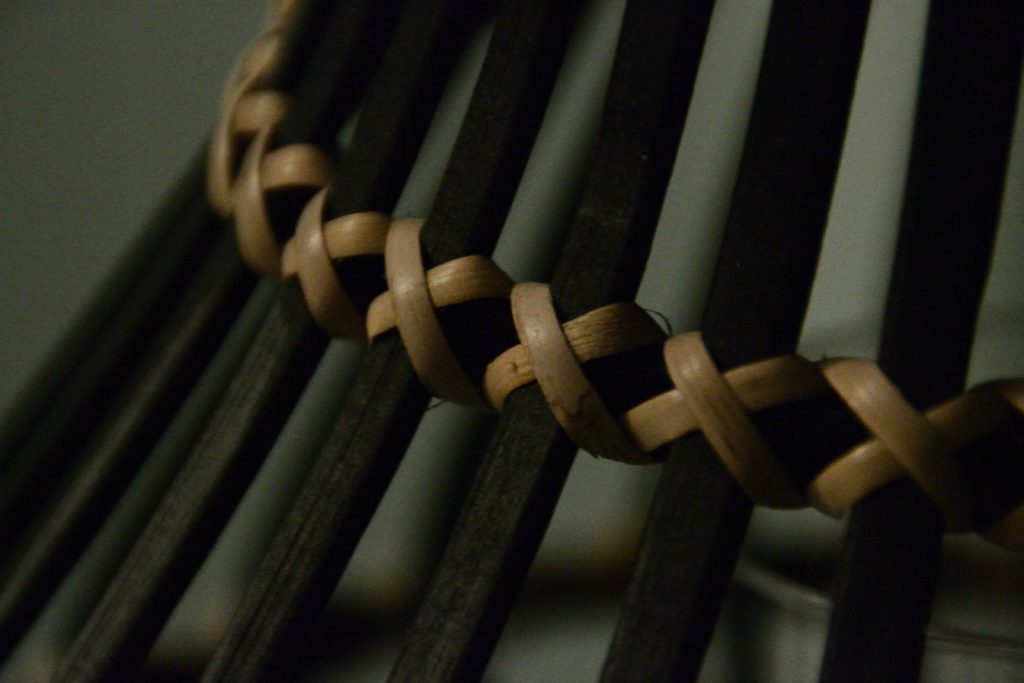
Honest buyer note: Our lamps are handwoven by village artisans in Bali and Java, so expect natural colour variation and a size tolerance of roughly ±1–3 cm on larger shades. All prices, MOQs, lead times and container counts are indicative ranges (2024–2025, FOB Indonesia) and final pricing is by quote. Standard wiring is E27 at 220–240 V; we can supply CE-compliant wiring or shade-only (no electrics) so you meet UL/UKCA or local standards in your market — we don’t imply certification we don’t hold. Natural fibre is moisture-sensitive, so we dry, treat and pack appropriately and recommend acclimatisation on arrival. Rattan is generally not CITES-listed. We coordinate vetted workshops and handle export documentation.
The hs code rattan lamps exporters and importers usually use is under chapter 94 for lamps and lighting fittings, most often in heading 9405 for non‑electrical and electrical lighting. For Bali rattan pendant, floor and table lamps, this 9405 lighting hs code classification is what your customs broker and freight forwarder will expect on commercial invoices and packing lists.
What is the HS code for rattan lamps?
The Harmonized System (HS) is a global tariff classification set by the WCO. Rattan lamps are primarily classified by their function (lighting) and material (vegetable plaiting material), not by origin country.
For natural rattan lighting from Indonesia, importers typically use:
- 9405 – Lamps and lighting fittings, including searchlights and spotlights, and parts thereof, not elsewhere specified or included
Within 9405, your customs broker will usually narrow further based on your market and wiring status:
- Non‑electrified rattan lamp shades (shade-only, no cable set): often classified under subheadings for lamps and lighting fittings, of other materials (e.g. 9405.99.x)
- Electrified rattan pendant, floor, table lamps (with E27 holder and cable set): usually under other electric lamps and lighting fittings (e.g. 9405.40.x or 9405.29.x, depending on jurisdiction tariff schedule)
The exact last two or four digits are country‑specific. For example, the U.S. HTS, EU CN code, and Australian HTS all branch 9405 differently. Your broker should confirm the final six‑ to ten‑digit code for your lane.
From our export desk in Bali and Java, most buyers simply refer to this as their core rattan lamp customs code and align all SKUs under the same family to keep documentation and duty calculation clean.
Why the HS code matters for rattan lighting imports
Getting the HS code right for rattan lamps is not just paperwork. It has direct impact on:
- Import duty – Each 9405 subheading carries its own MFN duty rate and, in some markets, preference under FTAs.
- VAT/GST base – In the EU, UK, and Australia, VAT/GST is calculated on CIF + duty; misclassification can change the tax bill.
- Risk of delays – Incorrect code is a common trigger for inspections, re‑classification, and demurrage.
- Statistical reporting – Trade statistics, proof of origin, and quota monitoring all follow HS codes.
For natural rattan from Indonesia, there is usually no CITES requirement; rattan is a fast‑growing vine, not a protected hardwood. That said, customs may still ask for:
- Material breakdown (rattan, bamboo, metal frame, electrical parts)
- Country of origin statement – typically Made in Indonesia (Bali/Java, raw rattan from Kalimantan/Sulawesi)
- Fumigation certificate and/or phytosanitary certificate for some destinations
Our sourcing team in Bali and Cirebon (Java) works with raw rattan mainly from Kalimantan and Sulawesi, then processes, steams, and weaves it into lamp bodies and shades before export.
Typical HS code mapping for Bali rattan lamps (by product type)
Below is an indicative mapping of how importers and customs brokers commonly classify rattan lighting under heading 9405. Always verify with your own broker for your destination country.
| Product type | Electrified? | Typical 9405 family used | Notes for importers |
|---|---|---|---|
| Handwoven rattan pendant lamp shade, open weave | No (shade-only) | 9405.99.x – Other non‑electrical lamps/parts, other materials | Shipped without cable set; buyer wires locally to UL/CE. |
| Handwoven rattan pendant, with E27 cable set | Yes | 9405.40.x or 9405.29.x – Other electric lamps/lighting fittings | E27, 220–240V; not UL listed unless buyer arranges. |
| Rattan floor lamp on metal base | Yes | Same electric 9405 subheading as pendants | Metal base share of value is usually minor vs. shade. |
| Rattan table lamp, small sizes < 35 cm | Yes/No | Non‑electrical 9405.99.x or electric 9405.40.x | Classification depends on inclusion of cable set. |
| Rattan wall sconce shade | No (shade-only) | 9405.99.x – Parts, other materials | Often declared as parts for wall lighting. |
| Outdoor‑styled rattan lamp (indoor use) | Yes | Same electric 9405 subheading | Not rated IP65; declare as indoor lighting. |
Because the HS is harmonized only to six digits, sub‑classification beyond that is national. A U.S. HTS code and an EU CN code can differ in the 7th–10th digits even when the first six digits match.
Key documentation for 9405 rattan lamp shipments
For each FCL (full container load) or LCL (less than container load) shipment, we prepare export documentation around the agreed HS code. Typically required documents include:
- Commercial invoice – Listing HS code 9405.x, FOB port (e.g. FOB Semarang, FOB Surabaya, FOB Benoa), unit FOB price, total FOB value.
- Packing list – SKU, quantities, net/gross weight, volume (CBM), and packaging details.
- Certificate of origin – Issued in Indonesia, if your lane or FTA prefers it.
- Fumigation certificate – For wooden pallets and mixed natural materials, frequently requested by AU and some EU ports.
- Phytosanitary certificate – Sometimes requested for high‑volume natural fiber shipments; your broker will advise.
- Bill of Lading – Ocean freight document, matching HS family on manifest.
The HS heading 9405 appears clearly on the commercial invoice and packing list. Your customs broker then maps that to their country‑specific code and declares import duty accordingly.
FOB price ranges, MOQ and container loading for HS 9405 rattan lamps
FOB pricing depends on design complexity, size, weaving density, finish, and whether we include electrics. All pricing here is indicative 2024–2025 FOB Indonesia ranges, last verified June 2026, and always finalized by formal quotation.
- Small rattan pendant shades (20–35 cm Ø)
- Indicative FOB range: USD 6–12 per piece, depending on weave, pattern, and finish. Typical OEM MOQ: 100–150 pcs per design/size.
- Medium rattan pendants (36–50 cm Ø)
- Indicative FOB range: USD 10–22 per piece. MOQ usually 80–120 pcs per design/size.
- Large statement pendants (60–90 cm Ø)
- Indicative FOB range: USD 22–60+ per piece (complex multi‑layered or extra‑large forms at the higher end). MOQ often 40–80 pcs per design/size due to volume.
- Floor lamps (with rattan shade, metal/wood base)
- Indicative FOB range: USD 35–95 per piece, depending on base, height and weave. MOQ often 40–80 pcs per model.
- Table lamps (20–45 cm total height)
- Indicative FOB range: USD 18–45 per piece. MOQ typically 60–120 pcs per model.
- Cable sets (E27, 220–240V) if supplied
- Added FOB impact: usually USD 2–6 per pendant depending on finish and ceiling canopy quality.
For serious planning, our team will review your spec, volume, and port choice, then align HS code, FOB levels and packing efficiency within one consolidated RFQ. You can start that process via plan your trip on WhatsApp or email with your target SKUs and markets (US/EU/AU).
Typical container counts for 9405 rattan lamps
Rattan lighting is cubic‑volume heavy but relatively light in weight. Container planning is about CBM, not kilograms. As a broad guideline for well‑nested pendant assortments:
- 20’ GP container – Roughly 600–1,000 medium pendants, or 300–450 large pendants, depending on nesting, internal supports, and mix of sizes.
- 40’ HQ container – Roughly 1,200–2,000 medium pendants, or 700–1,200 large pendants.
Mixed loads with floor and table lamps reduce counts because bases and cartons do not nest as tightly as shades. Likewise, if you require individual retail boxes, expect lower piece counts per container than bulk‑packed sets with master cartons.
Wiring, certification and HS classification: how they connect
For HS code purposes, adding electrics converts a lamp shade into an electric lamp, but customs generally does not check in detail for CE, UL, or other marks; that is a product safety and market‑access topic, not a tariff one. Still, you should understand the wiring setup when ordering by HS 9405 family.
- Standard wiring we can supply: E27 lampholder, 220–240V, for EU/AU style grids. Cable length, color, and canopy finish by specification.
- CE context: Components can be CE‑conformant, but we do not issue a full CE certification package for the entire lamp by default. EU importers usually take responsibility for final conformity assessment.
- UL context: We do not supply UL‑listed ready‑wired sets. U.S. and Canadian buyers typically import shade‑only under 9405.99.x and then wire locally with UL components.
- Shade‑only strategy: Many clients in stricter markets choose HS codes for non‑electrical lamp parts, then complete electrical assembly in their destination country to manage certification, plug type and inspection risk.
Be transparent with your broker about whether your shipment includes electrics. Misdeclaring an electrified pendant as a non‑electrical shade for a lower duty rate is a compliance risk.
Handmade variance, moisture and quality transparency
All Bali Rattan Lamps products under HS code 9405 are handwoven. That means:
- Dimensional variance: +/- 1–2 cm on diameter/height is normal on organic weaves, especially on larger pendants.
- Color variation: Natural rattan shades can vary from piece to piece and between batches, especially with natural or light stain finishes.
- Weave character: Minor irregularities, joints, and nodes are inherent to handwork and to real rattan cane.
Moisture is the main technical risk with natural fiber lighting:
- Mould and mildew: Rattan is hygroscopic. If loaded at high moisture content or exposed to condensation in transit, it can develop surface mould. We manage this via drying stages, ventilated packing, and – if required – desiccants inside containers, but risk can never be reduced to zero.
- Climate sensitivity: Extreme humidity swings can lead to minor warping or fiber movement, especially for very open or thin weaves.
- Not truly outdoor: Unless you specify synthetic rattan/PE or special finishing, these lamps are designed for covered, dry spaces, not full weather exposure, even if customs code remains in the same 9405 family.
We do not badge our lighting as “eco” or “sustainable” in any technical certification sense unless it is backed by actual chain‑of‑custody documents (e.g. FSC, PEFC for wood components). Natural rattan has a lower material footprint than many petrochemical options, but we avoid greenwashing claims.
HS code 9405 by destination: US, EU and Australia context
United States (HTSUS) – rattan lamps under 9405
For U.S. imports, your customs broker will select a 10‑digit HTSUS code based on whether lamps are electric or not. Typical practice:
- Shade‑only imports: Often under the other non‑electrical lamps and lighting fittings; parts; other materials family.
- Electrified imports: Under the other electric lamps and lighting fittings family within 9405.
Considerations for U.S. buyers:
- Many U.S. wholesalers choose to import shade‑only and wire domestically with UL components, then label as assembled in the U.S. or in a third country depending on the substantial transformation rules.
- Increased U.S. enforcement on electrical safety means CBP can pay attention to obviously wired imports, even though HS coding itself is straightforward.
- Anti‑dumping and special duties are currently more prominent on some metal and LED parts than on natural rattan shades; check for up‑to‑date measures with your broker.
European Union (CN code) – rattan lamps under 9405
In the EU, the Combined Nomenclature mirrors the WCO structure for the first six digits and then adds EU‑specific splits. For natural rattan lighting:
- Importers often specify origin Indonesia with CN mappings for 9405 electric or non‑electric lamps.
- CE conformity is handled separately under EU product safety law; HS code 9405 itself does not certify conformity.
- For some EU members, plant‑health rules trigger more frequent fumigation and phytosanitary checks on natural materials, even if rattan is not CITES‑listed.
Intra‑EU distributors sometimes re‑declare under a new CN code when adding electrics or converting shades into complete lamps. Be clear internally about how you manage this chain of responsibility.
Australia – rattan lamp customs code and biosecurity
Australia uses a similar HS structure, with 9405 headings applied to rattan lamps. However, biosecurity is more stringent than in many markets.
- Fumigation – Natural rattan products are often required to be fumigated, with certificates issued prior to loading.
- Inspection on arrival – DAFF may inspect shipments for insects, mould, bark contamination on wooden pallets, etc.
- HS code + biosecurity – Your 9405 code should be paired with a clear material description (e.g. “Handwoven rattan lamp shades, kiln dried and fumigated, on wooden pallets”).
Australian importers should share their latest biosecurity instructions with us at the PO stage so we can align packing and treatment with your lane requirements.
Ordering rattan lamps under HS 9405: workflow and timelines
MOQ and product development
- Standard collection orders: MOQ typically USD 5,000–8,000 total FOB per shipment, with per‑SKU minimums as listed earlier.
- OEM/custom development: We can work from sketches, spec sheets, or reference samples. Development usually requires:
- Prototype sampling round (with sampling fees credited against orders above a certain volume)
- Material testing (rattan size, peel, color, frame thickness)
- Confirmation of shade‑only vs. wired for correct HS family.
Lead times
For handwoven rattan lamps, lead times depend on complexity and volume, but typical patterns for 2024–2025 are:
- Sampling: ~3–6 weeks for first physical samples, longer in peak season.
- Production: ~8–14 weeks from deposit and final approval for orders that fill a 20’–40’ container, subject to workshop capacity and design mix.
- Ocean transit:
- Indonesia–US West Coast: ~3–4 weeks port‑to‑port
- Indonesia–US East Coast: ~5–7 weeks (via canal routes)
- Indonesia–EU main ports: ~4–6 weeks
- Indonesia–Australia: ~1–3 weeks
Load planning and documentation for HS 9405 are integrated into our booking process. We schedule fumigation, phytosanitary inspections, and stuffing so that certificates match the actual loading dates.
If you already know your target market and approximate product mix, you can share that with us via plan your trip – our export team can respond on WhatsApp with a draft packing and HS code strategy before you commit to tooling or photography.
FAQ: HS code 9405 for rattan lamps
Is there one single HS code for all rattan lamps?
No. Most rattan lamps fall under HS heading 9405, but the final six‑ to ten‑digit code varies by country and by whether the lamp is electrified or shade‑only. Your customs broker should confirm the exact code for your market.
Does adding wiring change the HS code for my rattan lamp?
Yes, it usually shifts the product from a non‑electrical lamp or part subheading (often 9405.99.x) to an electric lamp subheading (such as 9405.40.x or similar). You should declare shipments according to what is actually inside the cartons.
Is rattan a CITES‑listed material for customs?
No. Rattan used in lighting is typically not CITES‑listed, so we do not normally need CITES permits. However, customs can still ask for fumigation or phytosanitary certificates because rattan is a natural plant fiber.
Can you ship rattan lamps wired and ready for the US under HS 9405?
We can physically supply wired lamps with E27, 220–240V sets, but these are not UL‑listed finished products. Most US buyers import shade‑only under a non‑electrical 9405 subheading and add UL‑compliant wiring domestically to meet local safety rules.
What information do you need from me to quote HS 9405 rattan lamps?
We need your target SKUs or sketches, approximate sizes, finish preferences, shade‑only or wired choice, target port and market (US/EU/AU), and estimated order volume. With that, we can propose FOB ranges, MOQs, packing assumptions and an HS code family for your broker to confirm. You can send this via our plan your trip page and we will follow up by email or WhatsApp.