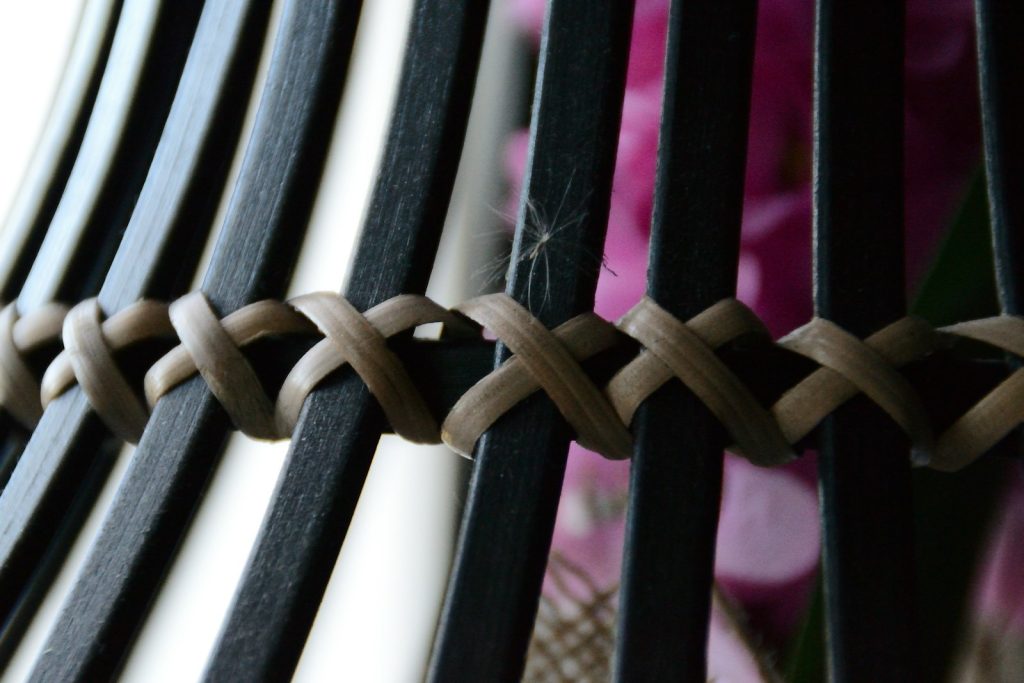
Honest buyer note: Our lamps are handwoven by village artisans in Bali and Java, so expect natural colour variation and a size tolerance of roughly ±1–3 cm on larger shades. All prices, MOQs, lead times and container counts are indicative ranges (2024–2025, FOB Indonesia) and final pricing is by quote. Standard wiring is E27 at 220–240 V; we can supply CE-compliant wiring or shade-only (no electrics) so you meet UL/UKCA or local standards in your market — we don’t imply certification we don’t hold. Natural fibre is moisture-sensitive, so we dry, treat and pack appropriately and recommend acclimatisation on arrival. Rattan is generally not CITES-listed. We coordinate vetted workshops and handle export documentation.
How to import rattan lamps from Indonesia is essentially a sourcing, quality, and logistics exercise: choose the right suppliers, verify materials and wiring, and plan your FOB shipments correctly. This importing rattan lighting guide walks step‑by‑step through product specs, pricing ranges, compliance, and container loading so you can buy rattan lamps wholesale with realistic expectations.
What “import rattan lamps from Indonesia” actually means
Importing rattan lamps from Indonesia usually involves:
1. Selecting a factory or workshop (Bali and Java are the main production hubs).
2. Confirming designs: handwoven pendant, floor, and table lamps; OEM or custom.
3. Agreeing on FOB pricing, MOQs, lead times, and payment terms.
4. Managing export documents, fumigation, and loading at an Indonesian port.
5. Handling ocean freight and import clearance in your own country.
At Bali Rattan Lamps, our production is based in Bali and Java (especially Cirebon), using raw rattan sourced mainly from Kalimantan and Sulawesi. That supply chain structure is standard across Indonesia: weaving on Bali/Java; raw cane from the big rattan islands.
Core product decisions: what kind of rattan lamps are you importing?
1. Lamp types: pendant, floor, table
Most import programs fall into one or more of these lines:
– Pendant lampshades
– Single‑shade domes, bells, drums, saucers, tiered forms.
– Diameter typically 25–60 cm for retail ranges; up to 80–100 cm for statement pieces.
– Ship nested (small inside larger) to optimize volume.
– Can be supplied shade‑only or with basic E27 cable set (220–240V).
– Floor lamps
– Rattan shade on a metal or rattan stand; or sculptural full‑rattan forms.
– Height usually 120–170 cm packed.
– Bulkier per unit than pendants, so fewer pieces per CBM and per container.
– Table lamps
– Small to medium: 25–45 cm tall, with rattan base plus shade, or shade‑only for your own bases.
– Good SKU count for retailers, but wiring compliance (UL/ETL for the US) needs clear planning.
2. Materials and weaves you should specify
Imported rattan lighting is not all the same. In your RFQ (request for quotation), specify:
– Core materials
– Natural rattan pole (frame)
– Natural rattan peel / split rattan (weaving)
– Optional accents: bamboo, seagrass, rayon cord, iron frames, wood caps.
– Weaves and finishes
– Open “birdcage” / cage weave for more light output.
– Tight basket weave for softer diffusion.
– Chevron, diamond, or cross weaves for mid‑ to upper‑market lines.
– Finishes: natural, light honey, antique brown; water‑based stains and clear top coats.
For trade buyers, having weave and finish codes (for example, “open cage 8 mm pole, peel binding, natural clear coat”) will save months of sampling confusion.
FOB prices, MOQs and payment terms (2024–2025 ranges)
You should always get a formal quote, but you need realistic ballparks to plan. The table below summarizes typical FOB Indonesia ranges we see across the market for handwoven rattan lamps, last verified June 2026. These are indicative, by‑quote only, and vary with design complexity, size, and finish.
| Item type (example) | Typical size | Indicative FOB range* (USD/pc) | Usual MOQ per design |
|---|---|---|---|
| Pendant shade, simple dome | Ø30–40 cm | ~USD 9–16 | 50–100 pcs |
| Pendant shade, large / layered | Ø50–70 cm | ~USD 16–32 | 30–80 pcs |
| Table lamp shade‑only | Ø20–30 cm | ~USD 6–11 | 80–200 pcs |
| Table lamp with basic E27 set | H30–45 cm | ~USD 11–22 | 50–150 pcs |
| Floor lamp, sculptural | H130–160 cm | ~USD 35–75 | 20–60 pcs |
*FOB ranges are indicative only, last verified June 2026, and must be confirmed by formal quote based on your final specifications, volume and packing.
Key points:
– MOQ by design is usually higher for small items (table shades) and lower for large items (oversized pendants, floor lamps).
– Assortment MOQs: Many factories allow a mixed model container as long as you reach a total production MOQ (for example, 150–300 pcs per shipment across all SKUs).
– Deposits:
– Common terms: 30–50% deposit at order confirmation, balance before shipment (after final QC photos or third‑party inspection).
– Price drivers:
– Larger diameter, double/triple tiers, finer weaving, colored finishes, and custom metalwork push FOB up.
– Efficient nesting and standard finishes keep FOB in the lower half of the range.
For a tailored quotation and current FOB levels, send your designs, target volumes, and destination in a short brief via plan your trip — our team also supports WhatsApp follow‑up for faster sampling and costing decisions.
Lead times, sampling, and production planning
Sampling timeline
– Design and RFQ stage: 3–10 days to review drawings or reference photos and confirm feasibility.
– Sample production: Typically 2–4 weeks for handwoven prototypes, depending on complexity and workshop load.
– Sample shipping: Express courier 5–10 days door‑to‑door, depending on destination and customs.
For new collections, budget 6–8 weeks from first contact to having physical prototypes in your hands.
Bulk production lead times
For standard designs:
– Off‑peak: Around 6–8 weeks from deposit to goods ready for inspection.
– Peak (ahead of Christmas / summer seasons): 8–12 weeks is safer, especially for large or highly complex pieces.
Variables that extend lead time:
– Very large diameters (>80 cm) that need special framing and drying.
– Heavy custom metal components or powder‑coating.
– Tight QC protocols with rework cycles for weave consistency.
Plan backwards from your retail or project deadlines: add production lead time + ocean freight + customs clearance + local trucking.
Container loading, carton sizes, and shipping choices
Understanding volume: CBM and nesting
Rattan lamps are light but bulky. The main constraint is cubic meters (CBM), not weight.
Typical outer carton rough guides (these are approximate and depend on your exact design and nesting strategy):
– Small to mid pendants (Ø30–40 cm):
– 4–8 pcs per master carton by nesting.
– 0.20–0.35 CBM per carton.
– Large pendants (Ø50–70 cm):
– 2–4 pcs per carton by nesting.
– 0.30–0.60 CBM per carton.
– Floor lamps:
– 1–2 pcs per carton.
– 0.40–1.00+ CBM per carton (depends on shape and knock‑down options).
A practical rule: you will usually “cube out” (fill the volume) before you reach weight limits in a 20’ or 40’ container.
FCL vs LCL
– FCL (Full Container Load)
– Best for consistent programs or launch ranges with significant volume.
– Lower per‑unit freight cost and less handling risk.
– Typical choices:
– 20’ container: roughly 28–30 CBM usable.
– 40’ HQ container: roughly 58–60 CBM usable.
– LCL (Less than Container Load)
– Useful for smaller test orders or samples after approval.
– You pay per CBM in a shared container.
– More handling and sometimes more damage risk, so packing quality matters.
Your Indonesian supplier will quote FOB (goods loaded on board, export cleared). You or your forwarder arrange:
– Ocean freight
– Insurance
– Destination port handling & import customs
– Trucking to your warehouse
HS codes, documents, fumigation and phytosanitary
Typical HS codes for rattan lamps
Exact classification is the responsibility of the importer and may vary by country, but commonly used headings include:
– Rattan lamp shades (no electrics):
– Often declared under HS Chapter 94 (lighting parts) or 46 (plaiting materials) depending on local rules.
– Many importers use subheadings under 9405 (lamps and lighting fittings) where “of other materials” applies; the specific 6–10 digit code depends on your jurisdiction.
– Complete lamps with electrics:
– Typically classified under 9405 as lamps with electrical fittings.
Your customs broker in the US, EU or Australia should confirm the exact HS code based on the physical product.
Fumigation and phytosanitary
Rattan is a plant‑based material, so some destinations or buyers prefer additional assurances against pests and mould.
Common practices:
– ISPM‑15 pallets: Needed for many countries if you are using solid wood pallets.
– Fumigation certificate:
– For some routes, especially if combined loads include solid wood or mixed natural materials.
– Often requested by importers proactively to avoid quarantine delays.
– Phytosanitary certificate:
– May be required by certain countries or big‑box retailers for natural products.
– Issued by Indonesian authorities if your shipment and supplier comply.
Rattan from Indonesia is generally not CITES‑listed. That means you do not need CITES permits for typical commercial rattan species used in lighting. This is different from certain tropical timbers or protected species.
Your forwarder can advise what your port and country usually expect for rattan household goods. Align these requirements clearly with your supplier before they start production, as certificates must reference actual packing lists and container details.
Moisture, mould and quality control: what importers must manage
Rattan is hygroscopic: it absorbs and releases moisture. This is both a strength and a risk.
Drying and finishing
Good QC on rattan lamps includes:
– Pre‑drying of raw material before weaving.
– Post‑weave drying in ventilated rooms or kilns, especially in wet season.
– Sealing: clear or stained coating to slow moisture exchange and help surface cleaning.
Even with solid processes, there is handmade variance:
– Slight differences in color tone between batches.
– Minor dimensional tolerances (often ±1–2 cm).
– Subtle asymmetry in complex weaves.
You should define acceptable tolerances in advance, especially for large retail chains or hospitality projects.
Container moisture risk
During ocean transit, temperature and humidity shifts can condense moisture in the container:
– Desiccant bags / container drying agents: strongly recommended for all‑rattan loads.
– Ventilated stuffing (correct airflow, avoiding wet floor, wet pallets).
– Avoid loading goods that are still fresh from spraying or finishing; allow adequate curing and drying.
Discuss these controls with your supplier and inspect (or ask for photos of) packing, desiccant placement, and container sealing before departure.
Wiring, certification and market specifics (US, EU, Australia)
This is an area that is often misunderstood. Rattan lamps are primarily about the woven shade; electrical components are a separate compliance domain.
Shade‑only vs wired products
Many importers prefer:
– Shade‑only imports
– HS classification usually as lamp parts or woven articles.
– You pair them with locally certified electrical components (UL/ETL for US, CE‑compliant for EU, RCM for Australia, etc.).
– Minimizes certification complexity and liability at origin.
Other buyers request:
– Basic wired sets from Indonesia
– Typically E27 lampholder, 220–240V, with 2‑ or 3‑core cable and ceiling cup or plug, depending on target market.
– Must be discussed carefully, because full certification for US (UL/ETL), UK (BS standards), or AU/NZ (RCM) is rarely held by small workshops.
At Bali Rattan Lamps, we generally supply:
– Rattan shades only, or
– Rattan shades with basic E27 / 220–240V components suitable for markets that accept general CE‑grade or equivalent household fittings, but not as a substitute for UL/ETL/RCM certification.
For North America in particular, most serious retailers and project specifiers:
– Import shades only, then
– Assemble finished luminaires with UL or ETL‑listed components and wiring done domestically.
Voltage and plug types
Indonesia itself is 220–240V with Type C/F plugs, but your target market may vary:
– US/Canada: 110–120V, Type A/B; UL/ETL focus.
– EU: 220–240V, Type C/E/F; CE compliance.
– UK/Ireland: 230V, Type G; BS standards.
– Australia/NZ: 230V, Type I; RCM compliance.
Be explicit in your PO:
– Shade‑only, no wiring; or
– Shade + cable set type, clearly described, and with understanding that formal market‑specific certification may still need to be handled by you or your local assembler.
US, EU and Australia import context
This guide is not legal advice; work with your customs broker. But here are practical patterns we see from trade buyers.
United States
– Many buyers import shades only to avoid complex electrical listings.
– HS classification often under 9405 headings; exact code confirmed by broker.
– There are no routine CITES requirements for rattan lamp shades.
– Main compliance focuses:
– Electrical safety for any wired components (UL/ETL if marketed as finished lamps).
– General consumer product safety and labeling.
European Union
– 220–240V is standard, which aligns with common E27 cable sets in Indonesia.
– EU buyers may accept imported wired pendants if components carry appropriate conformity evidence, but importers remain responsible for CE marking on the finished product.
– Eco‑design and energy labeling now relate mainly to light sources (bulbs), not shades.
Australia
– Very focused on electrical compliance and RCM marking.
– Many Australian importers also choose shade‑only strategies, then wire locally.
– Quarantine/biosecurity can be strict: good documentation and clean, properly fumigated loads help.
In all three markets, import formalities and tariff rates depend on your exact HS code. Always involve your broker early.
OEM and custom rattan lighting: how development works
If you want to buy rattan lamps wholesale under your own brand, you can:
– Adapt existing models
– Adjust size, color, weave density, or minor shape changes.
– Fastest route, with lower sampling costs.
– Develop full OEM/custom designs
– You provide sketches, 3D files, or sample references.
– Workshop creates metal/rattan frames and weaving methods according to your drawings.
– Expect higher sampling fees and potentially higher MOQs for complex or large pieces.
Typical OEM flow:
1. NDAs and design protection understanding (if needed).
2. Technical drawings with dimensions and views.
3. Prototype; review via photos and video, then physical sample.
4. Test hanging/installation and packaging mock‑ups.
5. Production quote once the design and packing are locked.
Because everything is handwoven, do not expect CNC‑level geometric precision; the beauty is in the material and craft. Build that into your brand positioning and product photography.
Quality, inspections and acceptable variance
Important points to align with your supplier:
– Rattan quality
– Minimal black spots and insect marks on visible surfaces.
– Even bending without cracks; tight joints and bindings.
– Weave consistency
– No large gaps or loose ends.
– Pattern alignment especially where lamps are sold as pairs or sets.
– Color and finish
– Tolerance for natural color variation agreed in advance (for example: “up to one shade lighter/darker across units”).
– No heavy drips or uneven patches in stained products.
– Dimensional tolerances
– For example: diameter and height ±1–2 cm, depending on design size.
– Critical for hospitality or architectural projects where fittings and ceiling layouts are fixed.
Third‑party inspections (pre‑shipment) are common for container orders, and can be arranged at buyer cost. For LCL or trial orders, detailed photo and video checks are often sufficient.
Practical steps: how to start importing rattan lamps from Indonesia
1. Define your collection
– Number of SKUs, target retail price bands, core sizes, and target markets (US, EU, AU, etc.).
2. Prepare an RFQ pack
– Reference images or drawings.
– Target dimensions and finish.
– Estimated order quantities per SKU and per shipment.
– Shade‑only vs wired preferences.
3. Get indicative FOB ranges and MOQs
– Expect banded prices rather than fixed numbers at first.
– Compare suppliers not just on unit cost, but on packing efficiency, communication, and QC transparency.
4. Order samples
– Test weave quality, finish, and packaging.
– Trial‑hang pendants in real spaces to check spread and shadow.
5. Confirm order and deposit
– Lock in SKUs, final prices, MOQs, lead time, packing specs, and payment terms.
– Ensure all compliance and documentation needs (HS codes, certificates) are written into the PI (Proforma Invoice).
6. Arrange freight
– Decide LCL vs FCL with your forwarder.
– Share stuffing plans (CBM, carton counts) with both supplier and forwarder.
7. Inspection and balance payment
– Review photo/video evidence, or arrange third‑party QC.
– Pay balance against approved inspection and shipping docs.
8. Track shipment and plan warehouse intake
– Prepare for moisture checks on arrival, especially in humid climates.
– For shade‑only imports, coordinate local wiring/assembly schedule.
If you’d like structured help building a first container plan — SKUs, nested packing, FOB estimates, and HS code guidance — you can plan your trip with us and continue the discussion over WhatsApp for faster technical back‑and‑forth.
FAQs: how to import rattan lamps from Indonesia
What is the minimum order quantity (MOQ) for Indonesian rattan lamps?
MOQs vary by design and workshop, but for handwoven rattan lighting you can expect roughly 50–100 pcs per pendant design, 80–200 pcs for small table shades, and 20–60 pcs for floor lamps, with a total shipment MOQ across all SKUs usually in the 150–300 pcs range. Exact MOQs are confirmed by formal quote.
Can Indonesian rattan lamps be supplied with UL-certified wiring for the US?
Most small to mid-size Indonesian workshops do not supply fully UL- or ETL-listed finished fixtures. A common solution is to import rattan shades only, then combine them with UL/ETL-listed electrical components and wiring done in the US. If wiring is supplied from Indonesia, it should be treated as basic components; final certification remains the buyer’s responsibility.
Do I need CITES permits to import rattan lamps?
Standard commercial rattan species used for lamps from Indonesia are generally not listed under CITES, so CITES permits are not typically required. You still must comply with normal customs, fumigation or phytosanitary rules in your destination country, which your broker or forwarder can clarify.
How long does shipping from Indonesia take for rattan lighting?
Once your order is produced and ready, typical ocean transit times range roughly 3–5 weeks to major ports in the US, 3–4 weeks to Europe, and 1–3 weeks to Australia, plus time for port handling and customs clearance. Overall, plan around 6–8 weeks production plus 3–5 weeks logistics buffer.
How much handmade variation should I expect in rattan lamps?
Because rattan lamps are handwoven, expect minor differences in weave tightness, slight color tone variation, and small dimensional tolerances (often around ±1–2 cm). Agree on acceptable variances and QC criteria with your supplier in advance so the natural character of handmade work aligns with your brand expectations.