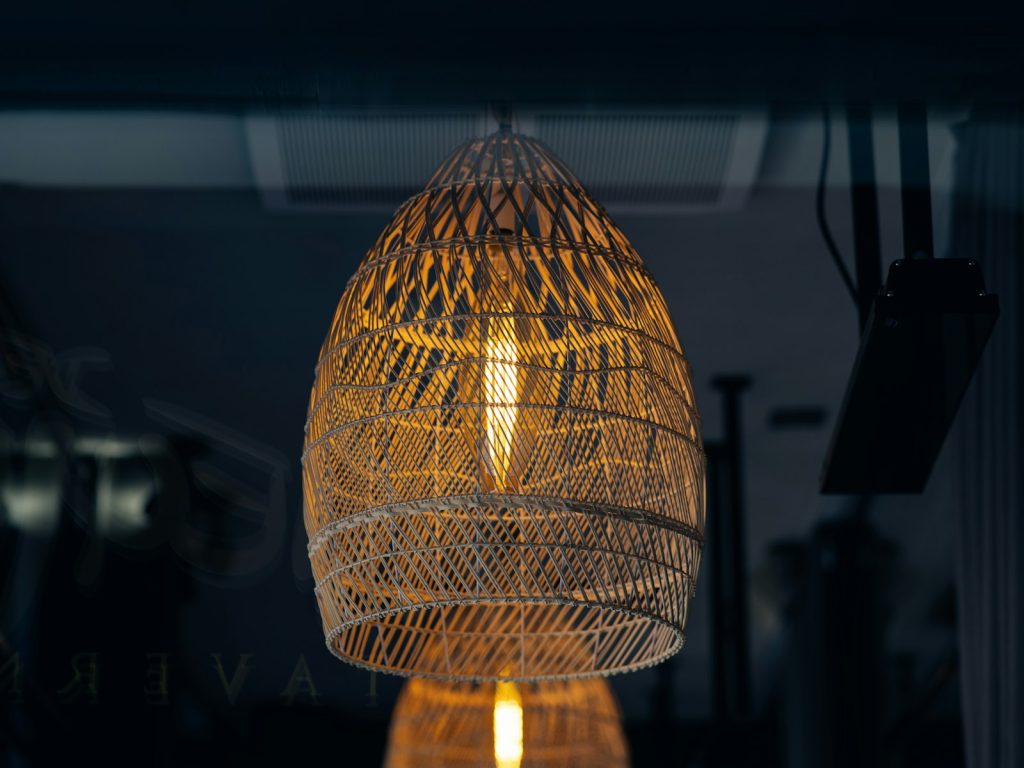
Honest buyer note: Our lamps are handwoven by village artisans in Bali and Java, so expect natural colour variation and a size tolerance of roughly ±1–3 cm on larger shades. All prices, MOQs, lead times and container counts are indicative ranges (2024–2025, FOB Indonesia) and final pricing is by quote. Standard wiring is E27 at 220–240 V; we can supply CE-compliant wiring or shade-only (no electrics) so you meet UL/UKCA or local standards in your market — we don’t imply certification we don’t hold. Natural fibre is moisture-sensitive, so we dry, treat and pack appropriately and recommend acclimatisation on arrival. Rattan is generally not CITES-listed. We coordinate vetted workshops and handle export documentation.
Best selling rattan pendant shapes in retail today are the forms that translate handweaving logic into clean silhouettes your customers recognise instantly: domes, drums, cones and a handful of sculptural statement pieces. In this guide I’ll walk through the popular rattan lamp shapes we see going out of Bali and Java weekly, what they cost FOB by range, and how they behave in real store environments.
As context: I’m Wayan Sukerta, Lead Editor for Rattan Lighting & Weaving at Bali Rattan Lamps. My day is spent between workshops in Bali and Cirebon (Java), talking to weavers, checking weaving tensions and loading containers. This page is written for retail, project and private‑label buyers who need trade‑level detail, not moodboard slogans.
All ranges below are indicative 2024–2025 FOB out of Indonesia, by quote only and subject to raw material, wage and freight changes.
—
What “best‑selling rattan pendant shapes” really means in 2024–2025
For export from Bali/Java, best‑selling shapes are the pendants that:
– Pack efficiently in cubic metres for 20″/40″ HQ containers
– Sit in the “easy yes” visual zone for mid‑market retail (Scandi, Japandi, coastal, tropical)
– Survive long‑haul shipping with minimal deformation
– Work with basic E27 / 220–240V fittings or as shade‑only for UL markets
From our workshop and partner network, four shape families consistently dominate volumes:
1. Classic Domes / Oysters
2. Cylinders & Drums
3. Cones & Bells
4. Organic & Sculptural Forms (UFO, tiered, wave, onion/pear)
Within each family, there are high‑volume entry SKUs and slower, high‑margin statement pieces. The examples below describe *how they’re actually woven*, plus typical FOB ranges and MOQs we see across Bali and Cirebon producers.
—
1. Dome & Oyster Pendants – Number One Best‑Seller Globally
Dome and shallow “oyster” pendants are the single most common export shape for rattan lighting from Indonesia.
How dome pendants are woven in Bali/Java
– Frame:
– Simple steel rod skeleton (often 4–6 ribs) welded in Cirebon
– Some fully organic domes use thicker rattan core hoops bent with steam, but metal frames dominate for size accuracy
– Weaving:
– Open or semi‑open lattice using 3–5 mm peeled rattan
– Horizontal binding around ribs; vertical ribs often exposed to keep weight down
– Tight weave variants use 2–3 mm split rattan in plain under‑over, giving a softer, diffused light
– Finishes:
– Natural/light honey (most popular) from clear varnish
– Whitewash and black stain for coastal or monochrome ranges
– Occasional two‑tone (natural outside, white inside) for private label
Common retail diameters: 30 cm (small), 40–45 cm (medium), 50–60 cm (large living room).
Why domes are consistent rattan pendant bestsellers
– Familiar silhouette — customers “get it” instantly
– Efficient for over‑table, kitchen island, and small hospitality projects
– Stackable for export: smalls nested into mediums, mediums into larges
– Even light pool on tables and counters
From a weaving workshop perspective, domes are also forgiving: if a rib is a few millimetres off, you still get a sellable lamp, making them reliable for large orders.
Indicative specs and FOB ranges (domes)
All data below is summarised from typical producers in Bali and Cirebon; exact numbers vary by design and finish.
| Size (diameter x height) | Weave & finish | Typical MOQ* | Indicative FOB range (USD/pc) | Approx. 40′ HQ load (pcs) |
|---|---|---|---|---|
| Ø30 x 20 cm | Open lattice, natural | 100–200 mixed sizes | $7–$11 | 1,800–2,400 (nested) |
| Ø40 x 25 cm | Open lattice, natural/whitewash | 100–200 mixed | $9–$14 | 1,400–1,800 (nested) |
| Ø50 x 30 cm | Semi‑tight weave, stained | 100+ per finish | $12–$20 | 900–1,300 (nested) |
| Ø60 x 35 cm | Tight weave, premium finish | 50–100 per size | $18–$30 | 600–900 (nested) |
*MOQ: typical combined MOQ per order; many workshops allow mixed sizes in one colorway.
FOB ranges are indicative 2024–2025, last verified June 2026, final prices by quote.
If you want a dome assortment tailored to your price points, you can plan your trip or share your moodboard and target landed price by WhatsApp; we’ll map your brief to specific weaving workshops and frame tooling already in use in Bali and Cirebon.
—
2. Cylinders & Drums – Straight‑Line Retail Workhorses
Cylindrical and drum pendants are the second major family in popular rattan lamp shapes, especially for:
– Hospitality corridors
– Over‑bar runs
– Minimalist and contemporary‑leaning retailers
Weaving construction: why cylinders are efficient
– Frame:
– Metal hoops top and bottom, linked by 3–6 vertical rods
– Some smaller diameters can be all‑rattan frames (bent core rings), but most export drums use steel for consistency
– Weave options:
– Vertical wrapped: long strands of peeled rattan wrapped around top and bottom hoops, leaving vertical “pickets”
– Basketweave: tight under‑over with 2–3 mm split rattan for a solid drum
– Combined: open lower half, tight upper section for glare control
– Edge finishing:
– Rattan binding on top and bottom rings to hide welds and protect against chipping in transit
These shapes are fast for experienced weavers — almost like making a basket without a base — keeping labour costs predictable.
Typical size runs and FOB ranges (drums)
– Ø25–30 x 25 cm: bedside/small counter
– Ø35–40 x 30 cm: general living area / commercial
– Ø45–50 x 30–35 cm: dining table / statement single
Indicative 2024–2025 FOB ranges (shade‑only):
– Small (Ø25–30 cm): USD 6–10
– Medium (Ø35–40 cm): USD 8–14
– Large (Ø45–50 cm): USD 12–22
MOQs commonly start at 100–150 pcs per size/finish if you want a full custom color, less if you plug into existing running production.
Light behaviour and retail positioning
– Open drums throw a patterned light on ceilings and walls — an easy upsell for “atmosphere” lighting.
– Tight‑weave drums are closer to fabric shades in light diffusion, with rattan grain as the selling point.
– Straight walls also make it easier to quote bespoke heights for contracts (same diameter, longer cylinder).
From a retailer’s point of view, drums are an easy add‑on to dome collections: same weaving language, different function.
—
3. Cones & Bells – The “Design” Alternative to Domes
Cone and bell pendants take the same basic rattan weaving skills but sculpt the silhouette downward. They’re part of the rattan pendant bestsellers list for buyers who want something more directional or “restaurant‑ready.”
Construction details
– Cone pendants:
– Frame often formed from a circular bottom ring and a small top ring, joined by 6–10 angled ribs
– Angle of ribs defines how sharp or soft the cone appears
– Lattice weaving in diagonal or horizontal patterns to follow the taper
– Bell pendants:
– Similar to cones but with a flared lip or “skirt” at the bottom
– Requires experienced hand shaping; cheap copies often twist at the rim during drying
Weavers in Java (especially Cirebon) excel at maintaining clean tapers. In Bali workshops, bells often get a looser, more organic curve.
Why cones & bells sell
– Strong downlight: good over kitchen islands, narrow tables, bar counters
– Grouping friendly: three small cones in a row is a common lifestyle photo and retail merchandising tactic
– Differentiation: they sit apart from the mass of dome imports in many markets
Sizes, MOQs and FOB ranges
– Small cones (Ø20–25 x 25–30 cm): targeted for 3‑pendant lines
– Medium bells (Ø30–35 x 30–35 cm): kitchen and bar
– Large statement bells (Ø45–50 x 40–45 cm): single‑drop dining
Indicative 2024–2025 FOB (shade‑only, natural/weaked finish):
– Small: USD 7–11, MOQ 100–150 pcs
– Medium: USD 9–16, MOQ 80–150 pcs
– Large: USD 15–28, MOQ 50–100 pcs
Cones and bells don’t nest as efficiently as perfectly hemispherical domes, so count on roughly 10–20% fewer pcs per 40′ HQ for the same volume.
—
4. Organic & Sculptural Pendants – Higher Margin, Lower Volume
Beyond the core shapes, certain sculptural forms are now firmly among the popular rattan lamp shapes for design‑led retailers and boutique hospitality.
Typical categories:
– UFO / flying saucer: wide, shallow disc, often two or three layers
– Tiered / pagoda: stacked concentric shapes
– Onion / pear: swollen mid‑section with narrow neck
– Wave / cloud: undulating profiles driven by free‑hand bending
How these are made in the workshops
– Frames:
– Almost always steel skeletons, pre‑jigged for each design
– Multiple hoops with complex rib work; frame fabrication is a significant part of cost
– Weaving:
– Combination of tight and open sections to emphasise curves
– Weavers often work in halves, then join, to access tight areas
– Drying and fixing:
– Sculptural forms are more prone to twisting in high humidity
– Workshops in Java typically use controlled drying rooms; Bali producers may sun‑dry then finish in covered areas
Because of the complex frame, these shapes are less flexible for custom height/diameter changes without retooling.
Commercial reality of sculptural best sellers
– Volumes per SKU are lower, but margins are higher at retail
– Bigger cubic volume per unit, so fewer pcs per container
– Great for “lead image” products on your site or catalog, with domes/drums doing the volume underneath
Indicative 2024–2025 FOB ranges (shade‑only):
– Medium organic (max Ø40–45 cm): USD 14–26, MOQ 50–100 pcs
– Large sculptural (max Ø60–70 cm): USD 24–45, MOQ 30–80 pcs
For these designs, we almost always recommend a pre‑shipment physical check or third‑party QC because symmetry and tension are harder to maintain in large runs.
—
5. Weave Types & Finishes That Keep These Shapes Selling
Shape is only half the story. The same dome can sell or sit, depending on weave and finish.
Common rattan weaves used on pendant shapes
- Open lattice
- 3–5 mm round rattan in under‑over or diagonal pattern; fast to weave, light passes freely, strong shadow play. Most common on domes and cones.
- Semi‑open grid
- Stronger frame exposure with thicker ribs; used where buyers want “graphic” lines and industrial feel.
- Tight wicker
- 2–3 mm split rattan, usually plain weave. More labour‑intensive, higher unit cost, softer, fabric‑like light.
- Combination weave
- Open around the bottom for glow, tighter around mid‑section to reduce glare, especially for restaurant and cafe use.
Finishes that actually move stock
– Natural / clear‑coated:
– Highest share of export volume. Raw rattan from Kalimantan or Sulawesi is peeled and kiln‑dried, then sealed with a clear topcoat.
– Light honey:
– Slight amber tone from tinted lacquer; hides minor colour variation between canes.
– Whitewash:
– Popular in coastal and Scandinavian markets; uses diluted paint or stain, then wipe‑off to keep grain visible.
– Black / espresso stain:
– Smaller volume but good for urban or hotel projects; tight weave tends to look more premium in dark finishes.
Realistically, “eco” finishes often just mean water‑based stains and clear coats. If you need FSC or PEFC certified material, that must be specified up‑front; not all raw rattan from Kalimantan/Sulawesi is chain‑of‑custody certified, and rattan itself is generally *not* CITES listed at the time of writing.
—
6. Wiring, Certifications and Safety: What Retailers Need to Know
Most Indonesian rattan pendants are made as shades, with wiring kits added either locally for CE markets or in the destination country.
Standard specs we see
– Lampholder: E27 (E26 on request), 220–240V by default for CE markets
– Cable: PVC or textile‑covered, 1–1.5 m length commonly supplied on wired models
– Ceiling rose/canopy: powder‑coated steel matching the finish or in standard white/black
Certification landscape:
– CE‑style wiring sets are available through several Jakarta and Surabaya suppliers; these are suitable for EU/UK on a self‑certification basis if your technical file is in order.
– For UL/ETL markets (US/Canada), most serious buyers import shade‑only and add a certified kit locally. Full UL assemblies in Indonesia are possible but involve higher tooling and certification costs and often only make sense for large, stable SKUs.
Because rattan is organic and flammable, clear distance between bulb and shade needs to be maintained. Most frames are built to keep the bulb central and away from the sides, but you should still specify maximum bulb wattage in your POS and online listings.
—
7. Moisture, Mould and Handmade Variance – The Non‑Glossy Truth
You can’t seriously trade in rattan lighting without talking about humidity and variance.
Moisture and mould risk
– Rattan is hygroscopic: it absorbs and releases moisture.
– Low‑quality or under‑dried stock can develop mould spots in transit, especially if containers sit in tropical ports during wet season.
– Most Bali and Java exporters now use:
– Kiln‑drying before weaving or after assembly
– Anti‑mould sprays on raw and finished pieces
– Silica gel or moisture absorbers in export cartons
However, risk is reduced, not eliminated. Unventilated, very humid retail storage can trigger mould growth even on well‑prepared product. Your warehouse SOP matters as much as our drying curve.
Handmade variance
These pendants are woven by hand around frames:
– Diameter tolerance is typically ±1–2 cm on larger pieces
– Color can shift slightly between batches as raw cane from Kalimantan/Sulawesi lots differ
– Weave tension can produce minor waviness on long vertical or diagonal runs
High‑volume projects should agree acceptable tolerances in the purchase contract and use pre‑production samples as the benchmark.
—
8. HS Codes, Packing and Container Loading for Rattan Pendants
Most rattan pendants ship under:
– HS 9405.10 – “Chandeliers and other electric ceiling or wall lighting fittings” (if wired)
– HS 9405.99 / 9405.99.90 – parts / non‑electrical lighting fittings (shade‑only, depending on destination customs practice)
Your freight forwarder and customs broker should confirm the correct subheading for your country; classification can vary.
Packing methods
– Individual polybag and/or tissue wrap
– Inner 3‑ply carton for medium/high‑value pieces
– Master cartons with nested sizes (e.g., 30/40/50 cm domes) to optimise volume
Typical counts per 40′ HQ, if you focus on best selling rattan pendant shapes and nest sizes intelligently:
– Mixed domes (30/40/50 cm): 800–1,600 pcs
– Cylinders/drums: 900–1,500 pcs depending on height
– Sculptural/large organic pieces: 350–800 pcs
Exact counts swing widely based on your mix of large vs small, use of inner boxes, and your damage tolerance in final unloading.
—
9. Pricing, MOQs and Lead Times – Realistic Ranges
Across Bali and Cirebon, for standard‑complexity best‑selling shapes (domes, drums, cones):
– FOB price ranges (2024–2025, last verified June 2026):
– Small (≤Ø30 cm): USD 6–11 / shade‑only
– Medium (Ø35–45 cm): USD 8–18 / shade‑only
– Large (Ø50–60 cm): USD 12–30 / shade‑only
– MOQs:
– Commonly 100–150 pcs per design/finish for catalogue shapes
– OEM/private label with new frames may require 250–500 pcs per SKU to amortise tooling
– Lead times:
– Sampling: 3–5 weeks depending on workshop load and complexity
– Bulk production: 8–12 weeks from deposit to ready‑to‑ship for standard items; add time if you require external QC or consolidated shipments
For a mixed 20′ or 40′ container with a blend of best sellers (domes/drums) and a few sculptural leaders, many B2B buyers land on 8–12 SKUs total to balance volume efficiency and range appeal.
If you have target FOB or landed price points, share them early. You can plan your trip or send your brief and WhatsApp contact; we can usually suggest 2–3 shape/weave combinations per price band that make sense for your market.
—
10. How to Build a Winning Assortment from the Best‑Selling Shapes
For retail buyers assembling or refreshing a range, a practical framework is:
– 40–60% volume SKUs:
– Natural domes and drums in 2–3 sizes
– Open or semi‑open weave, neutral finishes
– 20–30% “interest” SKUs:
– Cones/bells and one darker finish option
– A mix of tight and open weave to show variety
– 10–20% statement SKUs:
– 1–2 sculptural pieces (UFO, wave, onion) in medium or large sizes
– Priced to reward the extra cube and handling
Match cable kits and ceiling roses consistently across the range if you sell wired; or, for multi‑country e‑commerce, consider listing shade‑only and bundling market‑specific kits locally.
—
FAQs on Best‑Selling Rattan Pendant Shapes
Which rattan pendant shape sells best across most markets?
Across our exports from Bali and Java, classic dome and shallow oyster pendants in natural or light honey finish are the highest‑volume sellers. A simple open or semi‑open lattice on Ø30–50 cm domes consistently works in Scandinavian, coastal, Japandi and tropical‑inspired interiors.
What is the typical MOQ for custom rattan pendant shapes?
For a new OEM shape that requires a fresh metal frame jig, expect MOQs of around 250–500 pieces per SKU to keep the frame cost per unit under control. If you adapt an existing frame (for example, changing weave pattern or finish on a standard dome), many workshops will work from 100–150 pieces per size/finish.
Can you supply rattan pendants with UL certified wiring?
Most Indonesian producers, including our partner workshops, primarily supply shade‑only or CE‑style E27 / 220–240V wiring. Full UL or ETL certified assemblies are technically possible but involve separate component sourcing and certification and usually only make sense for large, stable SKUs. Many North American buyers import shade‑only and pair them with locally certified pendants.
Are rattan pendants suitable for outdoor use?
Standard rattan pendants woven in Bali and Java are intended for indoor or sheltered use only. Rattan will absorb moisture and can go grey, deform or mould in exposed outdoor conditions, even with clear coats. For semi‑outdoor use, buyers normally specify very well‑ventilated, covered areas and accept faster ageing, or they move to synthetic (poly‑rattan) in similar shapes.
How much size variation should I expect in handmade rattan pendants?
On common best‑selling shapes from well‑managed workshops, a realistic tolerance is around ±1–2 cm in diameter and height on larger pieces, and slightly less on small pendants. This is due to hand tension in weaving and natural cane variability. If you require tighter tolerances, that should be agreed in advance and will usually increase rejection rates and costs.
If you need a shaped‑by‑market assortment, with real lead times and FOB targets, you can plan your trip or request a working catalogue and WhatsApp follow‑up to talk directly about domes, drums, cones and sculptural options that fit your retail or project brief.